Comparison
Active vs passive bass: the real differences and which to choose
An active bass has a battery-powered preamp that can boost as well as cut; a passive bass has none. Here is what that changes in sound, controls and upkeep.
Published
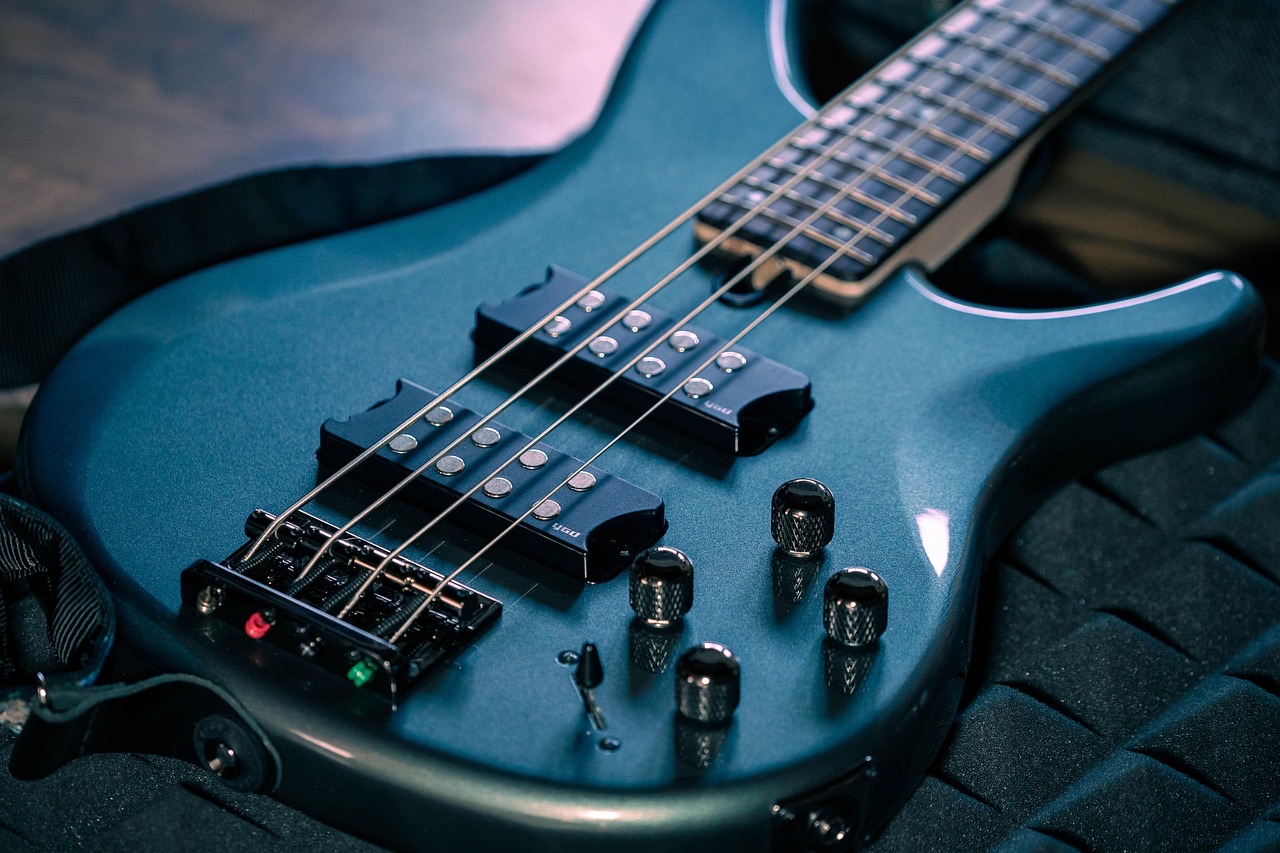
The short answer to active vs passive bass: a passive bass sends the signal from its pickups through simple volume and tone controls that can only cut; an active bass adds a battery-powered preamp that strengthens the signal and lets its EQ boost as well as cut. Active basses give more tone shaping and a stronger, quieter signal; passive basses are simpler, never run out of power and are often described as warmer and more responsive to touch. Neither is better. Choose by the sound you want, how much you like to adjust and whether you will remember a spare battery.
Active vs passive bass at a glance
| Passive bass | Active bass | |
|---|---|---|
| Power | None | Battery, usually 9 V, sometimes 18 V |
| Tone controls | Cut only, usually one tone knob | Boost and cut, often 2, 3 or 4 bands |
| Output | Lower | Stronger, buffered |
| Noise | Can pick up hum and interference | Usually quieter |
| Long cables | More affected by long runs | Buffered, less affected |
| If the battery dies | Nothing happens | Sound stops, unless it has a passive mode |
| Sound, as players describe it | Warm, round, sensitive to touch | Snappy, sparkly, sometimes compressed |
| Upkeep | Nothing extra | Spare batteries; unplug when not playing |
What makes a bass active

Yamaha's definition is the clearest: an active bass has an onboard, battery-powered preamp; a passive bass has none. The preamp sits between the pickups and the output jack. It strengthens the signal and lets the tone controls boost frequencies, not just cut them.
Active bass vs active pickups
"Active" usually refers to the preamp, not necessarily the pickups. Guitar World notes that passive pickups can be paired with an onboard preamp, and Yamaha that some active basses also have pickups that need power. Active pickups are those with their own circuitry built in; Wikipedia notes that they need a battery to run it. EMG's J set, for example, is sold as an active pickup set with a battery clip, its own pots and an output jack. Either way, the bass needs power, and the practical differences below are the same. Our bass pickups guide explains the pickup types themselves.
The passive bass
A passive bass is the original design: magnets and coils, a volume knob or two and a tone knob. Guitar World describes the classic passive tone control: a potentiometer and a capacitor that roll off treble as you turn the knob down, making the sound bassier. A passive bass needs no battery and performs no amplification.
Strengths
- Nothing to run out. It will play as long as the strings are on.
- Touch. Yamaha says passive basses are more sensitive to touch from a player who works with dynamics, and that players describe their sound as earthy, warm, full, punchy or round.
- Simplicity. Fewer controls, so less time adjusting and more time playing. The original Jazz Bass and Precision Bass designs are passive.
Weaknesses
- Weaker signal. Yamaha notes that the signal is not as strong as an active bass's, which can cause problems with long cables.
- Noise. A passive bass can pick up noise and interference from computer screens and fluorescent lights, according to Yamaha; single-coil pickups are especially prone to hum.
- Limited EQ. The tone control can only cut treble; any boost has to come from the amp or a pedal.
The active bass

The preamp and EQ
Guitar World says active preamps let you boost or cut two or three bands, either bass and treble or bass, mids and treble, and mentions semi-parametric EQ, which lets you sweep the frequency a knob works on. Yamaha adds that many active basses have three- or even four-band EQs. More knobs are a clue, but not proof, that a bass is active; check the maker's spec sheet.
Output and noise
The preamp gives a stronger signal and acts as a buffer. Guitar World says active electronics minimize the interaction between pickups, long cables and the amp input, which can give a stronger signal free of degradation, and Yamaha says active basses introduce far less noise and interference than passive ones.
Battery
Active electronics typically run on one 9-volt battery; many use two for 18 volts. Guitar World explains that the higher voltage can improve headroom: how big a signal the preamp can handle before it distorts.
The two habits that matter:
- Unplug when you stop playing. Yamaha warns that leaving the cable plugged in drains the battery, so you end up replacing batteries faster than you expect.
- Carry a spare. When the battery dies, Yamaha says, your sound dies with it, unless the bass can switch to passive. Yamaha also points out that a hinged battery compartment makes a change easy; one behind screws is much harder on stage.
How long a battery lasts depends on the preamp and how many hours the bass stays plugged in, so check your bass's manual.
Active/passive switch
Guitar World notes that some basses have a preamp bypass in the shape of a toggle or push switch, so you can move between the active and passive sounds. Yamaha calls the passive mode a safety net in case the battery gives up.
Sound
Yamaha notes that players describe active basses with words like snappy, sparkly or sizzling, and that the sound can come across as compressed. Yamaha also says the active EQ can help you dial in a signature sound for a genre such as slap or grind metal.
Which to choose
Choose a passive bass if
- You want a simple instrument with few controls, especially as a first bass. Our beginner bass guide covers the usual starting points.
- You play styles built on the classic P or J sound, or you like shaping tone with your hands rather than knobs.
- You don't want to think about batteries.
Choose an active bass if
- You play in a cover band and need many different sounds from one instrument; Yamaha suggests exactly that case.
- You play slap or heavy styles and want EQ to shape a sound for them.
- You use long cable runs, where a strong, buffered signal helps. For a passive bass going to a PA or recording interface, a DI box is the usual tool.
Can't decide?
Look for an active bass with a passive mode. You get the EQ when you want it, the passive sound when you prefer it, and a bass that still works when the battery runs out. Whichever you choose, set the amp's EQ flat first and learn what the bass itself sounds like before reaching for its knobs.
Converting a passive bass to active
Active pickup sets and preamps are sold for fitting into passive basses; EMG's J set, for example, is listed with its own pots, output jack and battery clip. The work usually involves wiring inside the control cavity and finding room for a battery. Follow the maker's wiring diagram if you do it yourself, or have a technician do it.
Questions
What is the difference between an active and a passive bass?
An active bass has a battery-powered preamp between the pickups and the output jack, which strengthens the signal and lets the tone controls boost as well as cut. A passive bass has no battery: the pickups go through simple volume and tone controls, which can only cut.
Is an active or passive bass better for beginners?
Either works. A passive bass is simpler, with fewer knobs and no battery to forget; an active bass is fine too if you like its sound, as long as you keep a spare battery.
What happens when the battery dies in an active bass?
On most active basses the sound stops. Basses with an active/passive switch can keep playing in passive mode until you change the battery.
How do I make the battery in an active bass last longer?
Unplug the cable from the bass when you stop playing: on an active bass, leaving the cable plugged in drains the battery.
Can I make a passive bass active?
Yes. Active pickup sets and preamps are sold for fitting into passive basses, but the job usually involves soldering and room for a battery in the body, so have a technician do it unless you are confident with the maker's wiring diagram.
Sources
Read next
Guide
Bass pickups: P, J, humbucker and soapbar explained
What each common pickup layout does to the sound of a bass, why some hum and some don't, and what to check before you buy a replacement set.
Guide
Fender Jazz Bass: two pickups, a slim neck and a growling tone
Two single-coil pickups and a slim neck: what sets the J bass apart from the Precision, how to dial in its sound, and what changes on a five-string Jazz.
Buying guide
5 string bass: what the low B adds and how to choose one
A fifth string extends the bass downward to a low B. Here is what that changes in the neck, the sound and your playing, and how to compare five-string basses.