Buying guide
Beginner bass guitar: how to choose your first bass
The types of first bass, the few specifications that change how one feels in your hands, and how to match them to your body, your music and your budget.
Published
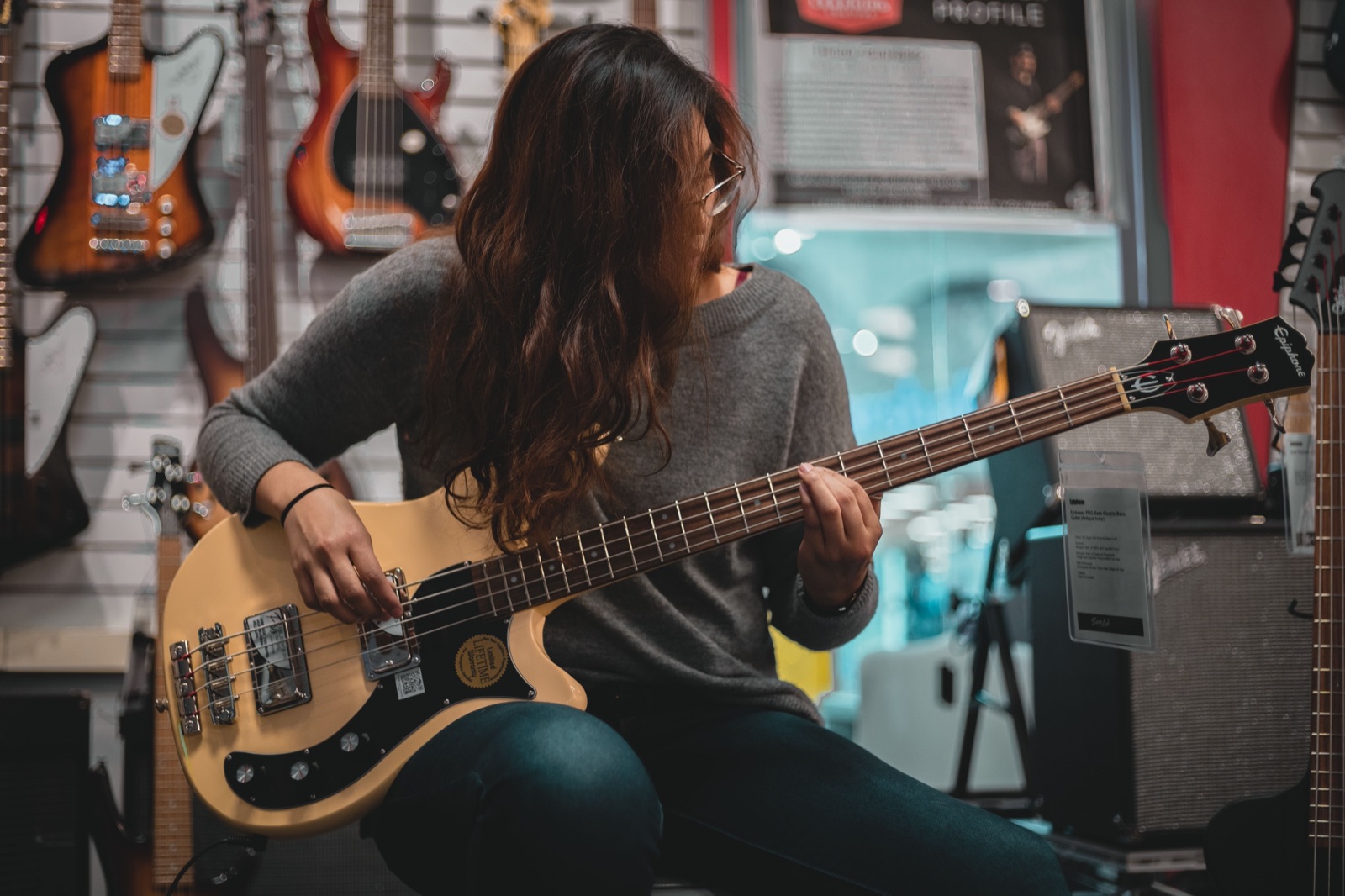
A good beginner bass guitar is not the most expensive one you can afford. It is the one that fits your body, stays in tune and is easy enough to play that you keep picking it up. This guide explains the types of first bass, the specifications that actually change how a bass feels, and which type suits which player. It does not rank models: what suits a tall adult with big hands will not suit a twelve-year-old, and the right choice comes from matching a few measurements to you.
What a bass guitar does in the band
The bass guitar plays the lowest notes in most popular music. It has four strings in standard tuning, E A D G, an octave below the four lowest strings of a guitar. Its job is to lock in with the drums and outline the harmony, usually by playing the root of each chord and notes around it. That is why the first things a beginner needs from an instrument are a clear, even low end and a neck that lets you play in time without fighting the strings.
Types of beginner bass guitar
Full-scale solid-body electric bass
The most common first bass. The 34-inch scale length was set by the Fender Precision Bass in 1951 and became the standard for the instrument, so most bass lessons, string sets, cases and stands are made with it in mind. A solid wooden body is rarely prone to feedback, even at volume.
Short-scale electric bass
A short-scale bass has a scale of about 30 inches or less. The frets are closer together and the first fret sits closer to your body, which many players with smaller hands or shorter arms find easier. Some are much shorter: the Ibanez GSRM20 miKro, for example, is listed by Ibanez with a 28.6-inch scale. Our short scale bass guide covers these in detail.
Medium-scale bass
A medium-scale bass sits at about 32 inches, halfway between short and full scale. Less common, but worth trying if a 34-inch neck feels like a stretch and a 30-inch one feels cramped.
Acoustic bass guitar
A hollow body like a large acoustic guitar. It is quiet without amplification, so most have a pickup and preamp built in. The Ibanez PCBE12MH, for instance, has a 32-inch scale, an undersaddle pickup and an onboard preamp with a tuner, according to Ibanez. Read acoustic bass guitars before choosing one as your only bass.
Comparison of first-bass types
| Type | Scale length | Feel | Suits | Watch for |
|---|---|---|---|---|
| Full-scale electric | 34 in | Standard fret spacing, longest reach | Most adults, anyone following standard lessons | Weight and neck dive on some bodies |
| Short-scale electric | 30 in or less | Closer frets, shorter neck | Smaller hands, children, comfort-first players | Fewer string choices; buy short-scale strings |
| Medium-scale electric | About 32 in | Between the two | Players who find 34 in a stretch | Fewer models to choose from |
| Acoustic bass | Varies by model | Wide body, quieter | Unplugged practice, acoustic groups | Needs a pickup and amp to keep up with a band |
| Five-string electric | Often 34–35 in | Wider neck, extra low B | Players whose music goes below E | More strings to mute, heavier |
What to look for in a beginner bass
Scale length and your reach
Scale length is the distance between the nut and the bridge saddle, the part of the string that vibrates. It decides how far apart the frets are and how far your fretting arm has to reach to the first fret. If you can, hold the bass standing up with a strap and play the first fret on the lowest string: your shoulder should stay relaxed.
Weight and balance
Electric basses vary a lot in weight, depending on body wood and size. Weight matters more than most specifications because you will wear the instrument for an hour at a time. Also check balance: if the headstock drops toward the floor when you let go of the neck, the bass suffers from neck dive. A wide bass strap helps with both.
Neck shape and width
Necks differ in width at the nut and in thickness front to back. Ibanez lists both figures on its spec pages: the GSRM20 has a 38 mm nut width, while the PCBE12MH acoustic is 43 mm. Small differences like these change how a neck feels in your hand more than the logo on the headstock does.
Pickups and electronics
Pickups turn string vibration into an electrical signal. The common layouts on beginner basses are:
- Split-coil (P-style): one pickup in two halves, standard on the Precision Bass since 1957. A round, solid sound with few controls.
- Two single-coils (J-style): two pickups you can blend, for a wider range of tones.
- P/J combination: a split-coil near the neck and a single-coil near the bridge.
- Humbucker: a larger, two-coil pickup on some models, often with a fuller sound.
Active or passive electronics

A passive bass has no battery; the pickups run straight to volume and tone controls. An active bass has a battery-powered preamp that usually adds bass and treble controls. Both are fine for a beginner. With an active bass, keep a spare battery in your bag, and check the manual for how the battery is changed and how long it should last.
Four or five strings

A five-string bass adds a low B below the E. Basses with a low B often have a 35-inch scale to help that string sound clearly. The extra string brings a wider neck, more strings to mute and usually more weight. Start on four strings unless the music you want to play clearly needs the notes below E; most beginner books, videos and tablature assume four.
New or used
A new bass from a shop usually comes with a warranty, a return period and, in better shops, a basic setup. A used bass can give you more instrument for the money, but you take on the checking yourself:
- Sight down the neck from the headstock: it should have only a slight forward bow, with no twist.
- Play every fret on every string and listen for buzzing or dead notes.
- Plug it in and turn each knob: crackling usually means dirty controls, while silence on one pickup means a wiring or pickup fault.
- Look for cracks where the neck meets the body and around the headstock.
The cheap bass guitars guide goes further into buying used.
Budget levels, in plain words
You do not need to spend a lot to get a playable bass. Roughly:
- Entry level: the lowest-priced new basses, often from the budget lines of big makers (Squier, for example, is the brand Fender uses for lower-priced versions of its instruments). Many are perfectly playable; finish, hardware and quality control vary more.
- Middle: better tuners, more consistent necks and electronics, more choice of scale length and body.
- Above that: you pay for woods, hardware, origin and finish. These differences matter less while you are learning.
Whatever you spend, keep part of the budget for the things you need to play: a tuner, a cable, a strap, a gig bag or case, and something to hear the bass through, such as a small bass combo (see the practice amp guide).
Which type suits whom
- Most adult beginners: a four-string, full-scale electric bass with a P, J or P/J pickup layout. It matches the lessons and string sets you will find.
- Children, smaller players, or anyone with a short reach: a short-scale or medium-scale four-string.
- Players who will mostly practice unplugged or play in acoustic groups: an acoustic bass with a built-in pickup, ideally alongside an electric later.
- Metal, gospel or modern pop players who need low notes from day one: a five-string, accepting the wider neck.
Setting up and looking after your first bass
A cheap bass that has been set up properly often plays better than an expensive one straight out of the box. A setup adjusts neck relief with the truss rod, string height at the bridge and intonation. Ask the shop to check the setup when you buy, or take the bass to a technician; if you want to learn the basics yourself, start with our bass setup guide and make only small adjustments at a time.
Day to day: wipe the strings after playing, keep the bass in its bag or on a stand away from heaters and windows, and change strings when they sound dull. Then spend the money you saved on time with the instrument: how to play bass covers the first lessons.
Questions
What is the best starter bass?
There is no single best starter bass. A good one is a four-string electric bass with a scale length that suits your reach, a weight you can hold standing up, and a neck that has been set up so the strings sit low and play in tune.
Is a short-scale bass good for beginners?
Yes, especially for smaller hands, younger players or anyone who finds a full-size bass a stretch. A short-scale bass usually has a 30-inch scale instead of 34, so the frets sit closer together and the instrument is shorter overall.
Should my first bass have four or five strings?
Four strings is the usual start. The neck is narrower, most lessons and tablature are written for E A D G, and you can add a five-string later if your music needs the low B.
Is it better to buy a new or used bass as a beginner?
Both work. A used bass can get you a better instrument for the money, but check the neck, frets and electronics or bring someone who knows basses; a new one from a shop usually comes with a warranty and a return period.
Do I need an amp with my first bass?
You need some way to hear it: a small bass amp, headphones through a headphone amp or audio interface, or a multi-effects unit with a headphone output. A guitar amp is not designed for low frequencies, and pushing one loud with a bass risks damaging its speaker.
Sources
Read next
Buying guide
Short scale bass: who it suits and what to look for
A shorter neck, closer frets and a lighter instrument: what changes when you leave the 34-inch standard, and what to check before you buy.
Guide in Learn bass
How to play bass: your first notes, hands and practice routine
Get the bass in tune, set up both hands, play your first notes in time and learn what to practice each day after that.
Buying guide in Amps & effects
Bass practice amp: small combos, headphone amps and how much power home playing needs
A small combo, a headphone amp or a modeling amp: what each does at home, how much power quiet practice needs, and the jacks that matter.