Guide
Bass preamp pedal: what it does, how it differs from a DI and an amp, and how to set one up
The tone-shaping part of a bass amp in a pedal: what it adds to your rig, which features matter and three ways to connect it.
Published
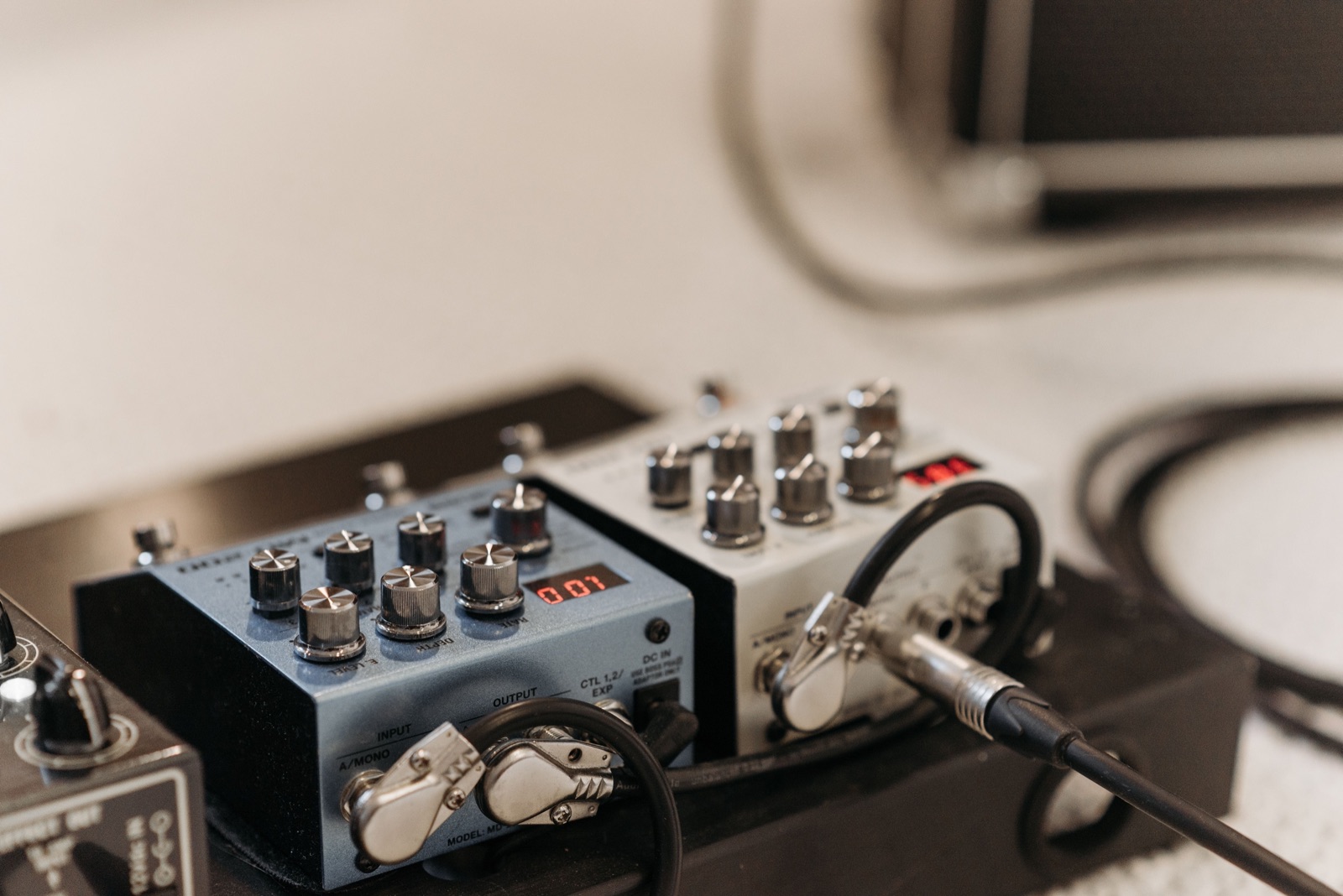
A bass preamp pedal is the tone-shaping part of a bass amp, built into a stompbox. It raises your signal, gives you EQ (and often some drive), and on many models sends the result to a PA or recording interface through a DI output. That makes it the pedal that lets your sound stay the same from one venue's amp to the next, or reach the mixing desk with no amp at all. By the end of this guide you'll know how a preamp differs from a DI box and an amp, which features matter, and how to connect and set one up.
What you'll need
Essentials
-
Bass preamp pedal
: with the EQ and outputs you need; a DI output if you'll play into a PA. -
Instrument cables
: from the bass to the pedal, and from the pedal to your amp. -
Power for the pedal
: a battery or adapter as the manual specifies; some preamp DIs also accept phantom power.
Optional
-
XLR cable
: from the pedal's DI output to the mixer, stage box or recording interface. -
Headphones
: for silent practice, if the pedal has a headphone output.
Step 1: Understand preamp vs DI vs amp
Yamaha's guide to bass amps describes every amp as three parts: a preamp for tone control, a power amp that amplifies the signal, and a speaker in a cabinet. A preamp pedal takes the first part out of the amp and puts it at your feet.
| Device | What it does | What it doesn't do |
|---|---|---|
| Preamp pedal | boosts and shapes your tone with EQ, sometimes drive | can't drive a speaker on its own |
| DI box | converts your signal to balanced, low impedance for a mixer | doesn't try to change the tone |
| Preamp DI pedal | both: shapes the tone and sends it to the mixer | still needs an amp or PA to be heard |
| Bass amp | preamp, power amp and speaker in one rig | doesn't travel to every gig as easily |
Radial Engineering, which makes DI boxes, explains that a DI converts the unbalanced, high-impedance signal from an instrument into a balanced, low-impedance one that can run long distances and plug into a mixer. The bass DI box guide covers that side in detail. A preamp pedal with a DI output combines the two jobs: you shape the sound, and the engineer gets exactly that sound.
Where the "preamp bass" idea comes from
If your bass has active electronics, it usually already has a small preamp inside, powered by a battery, which is why its tone knobs can often boost as well as cut. A preamp pedal does the same job outside the bass, and with a passive bass it adds the boost-and-cut EQ that passive tone controls usually lack.
Step 2: Choose the features you need
EQ
Every bass preamp pedal has EQ; the differences are in how many bands and how precise they are.
- Three-band EQ (bass, middle, treble) is the common layout.
- A sweepable midrange lets you choose which mids you boost or cut. MXR lists the M81 Bass Preamp's midrange as sweepable from 250 Hz to 1 kHz.
- Switched frequency centers are a simpler version. Tech 21's SansAmp Bass Driver DI has a Mid Shift switch (500 Hz or 1,000 Hz) and a Bass Shift switch (40 Hz or 80 Hz), with ±12 dB of cut or boost on each band.
The midrange matters most for bass: it is where your notes become audible in a band mix, so a flexible mid control is worth more than extra bands.
Drive and amp character
Some preamps add overdrive or emulate the character of a particular amp. Ampeg describes its SCR-DI as a preamp and DI with a classic Ampeg tone stack, Ultra-Hi and Ultra-Lo filters and a Scrambler bass overdrive that can be on at the same time as the preamp. Tech 21 describes the SansAmp Bass Driver DI's circuit as 100% analog tube amplifier emulation, with Drive, Presence and Blend controls; Blend mixes your direct bass signal with the emulation. For a fuller look at drive on bass, see the bass overdrive pedal guide.
A note on "bass tube preamp"
Some preamps contain real vacuum tubes; many popular pedals do not and instead emulate the sound of a tube amp with solid-state circuits, as the SansAmp does. If tubes matter to you, check the maker's specifications rather than the name.
DI output and its options
For playing into a PA or recording, look for:
- A DI or direct output. The SCR-DI has a dedicated balanced XLR line out; the SansAmp Bass Driver DI has an effected XLR output. MXR lists a Direct Out on the M81 for sending your signal to the house.
- Pre/post EQ switching. The M81's PRE/POST EQ switch decides whether the Direct Out carries your EQ settings or a clean signal for the engineer to work with.
- Ground lift. For hum caused by ground loops. The M81 and SCR-DI both have one.
Practice and power features
The SCR-DI adds a headphone output and an aux input, which turns it into a silent practice rig. Power varies: the M81 runs on a 9-volt battery or a Dunlop 9-volt adapter; the SansAmp Bass Driver DI runs on a 9-volt battery, Tech 21's DC9 adapter or phantom power from the mixer. Check your pedal's manual before connecting any power supply.

Step 3: Connect your bass preamp pedal
There are three common setups.
Into an amp
Bass → other pedals → preamp → amp input. The preamp sets your tone before the amp; set the amp's own EQ flat so you are not fighting two EQs. BOSS's guide to bass signal chains places EQ after drive pedals and notes it can also sit at the very end of the chain, which is where a preamp usually lives too.
Straight into a PA or interface
Bass → pedals → preamp → XLR cable → mixer, stage box or interface. No amp needed. Ask the engineer whether they want your DI pre- or post-EQ, and whether they can supply phantom power if your pedal accepts it.
Both: amp on stage, DI to the PA
Bass → pedals → preamp. The 1/4-inch output feeds your amp so you hear yourself; the XLR output feeds the PA. This is a common gig setup with a preamp DI. If the PA hums when both are connected, try the ground lift switch first.
Step 4: Set it up
- Turn the amp or PA channel down before plugging in.
- Set all EQ knobs to their center (flat) and any drive or blend to minimum.
- Set the input level if your pedal has one, so your loudest playing doesn't distort the input. Active basses usually need less.
- Match the output to your bypassed level, so switching the pedal on doesn't make you jump.
- Shape the EQ one band at a time, starting with the midrange. Small moves first.
- Check it with the band. A tone that sounds huge alone may be lost in the mix; often it's the mids that help you cut through, not more bass. Keep stage volume sensible: long or repeated exposure to sound at or above 85 dBA can cause permanent hearing loss, according to the NIDCD, so wear earplugs at rehearsals and gigs.
Common mistakes
- Boosting every band. Turning everything up mostly makes the pedal louder and closer to distortion. Cut what you don't want instead.
- Two EQs fighting. If the amp's EQ is far from flat, its settings and the pedal's add up. Flatten one.
- Forgetting the DI setting. A post-EQ direct out with heavy drive sends that drive to the whole room. Agree with the engineer before the show.
- Wrong power. Check voltage and polarity before using a shared pedal power supply.
What to check next
A preamp works best on a steady signal, so many players put a bass compressor pedal early in the chain. If you are choosing an amp to pair with it, see bass amp head and cabinet or the guide to bass combo amps, and the bass pedals guide for where everything else goes.
Questions
What does a bass preamp pedal do?
It does the job of the tone section of a bass amp: it boosts your signal and shapes it with EQ, sometimes with drive. Many also have a DI output so you can send that tone straight to a PA or a recording interface.
What is the difference between a preamp and a DI box?
A DI box converts your bass signal into a balanced, low-impedance signal that a mixer expects, without trying to change the tone. A preamp shapes the tone. A preamp DI pedal does both in one box.
Do I need a preamp pedal if my amp already has EQ?
Not necessarily. A preamp pedal is most useful when you play different amps at different venues, go straight into a PA or record, or want a sound your amp's own EQ can't give.
What controls does the MXR M81 Bass Preamp have?
MXR lists input and output levels, a three-band EQ with a midrange sweepable from 250 Hz to 1 kHz, a pre/post EQ switch for the Direct Out and a ground lift switch. It runs on a 9-volt battery or a 9-volt adapter.
Is a bass tube preamp better than a solid-state one?
Neither is better for everyone; it is a matter of tone and practicality. Some pedals, such as the Tech 21 SansAmp Bass Driver DI, use analog circuits to emulate a tube amp rather than containing tubes.
Sources
Read next
Guide
Bass DI box: what it does, passive vs active, and preamp DIs like the SansAmp
How a DI turns your bass signal into one the mixer can use, which kind suits your bass, and where a preamp DI pedal fits.
Guide
Bass amp head and cabinet: how heads, cabs and ohms fit together
What a head and a cabinet each do, how cabinet sizes differ, and the one calculation in ohms that keeps your amp safe.
Buying guide
Bass compressor pedal: what compression does, the controls and the types
What compression does to your bass, what each knob changes, the kinds of compressor pedal you'll find and a careful way to set one up.