Guide
Bass amp head and cabinet: how heads, cabs and ohms fit together
What a head and a cabinet each do, how cabinet sizes differ, and the one calculation in ohms that keeps your amp safe.
Published
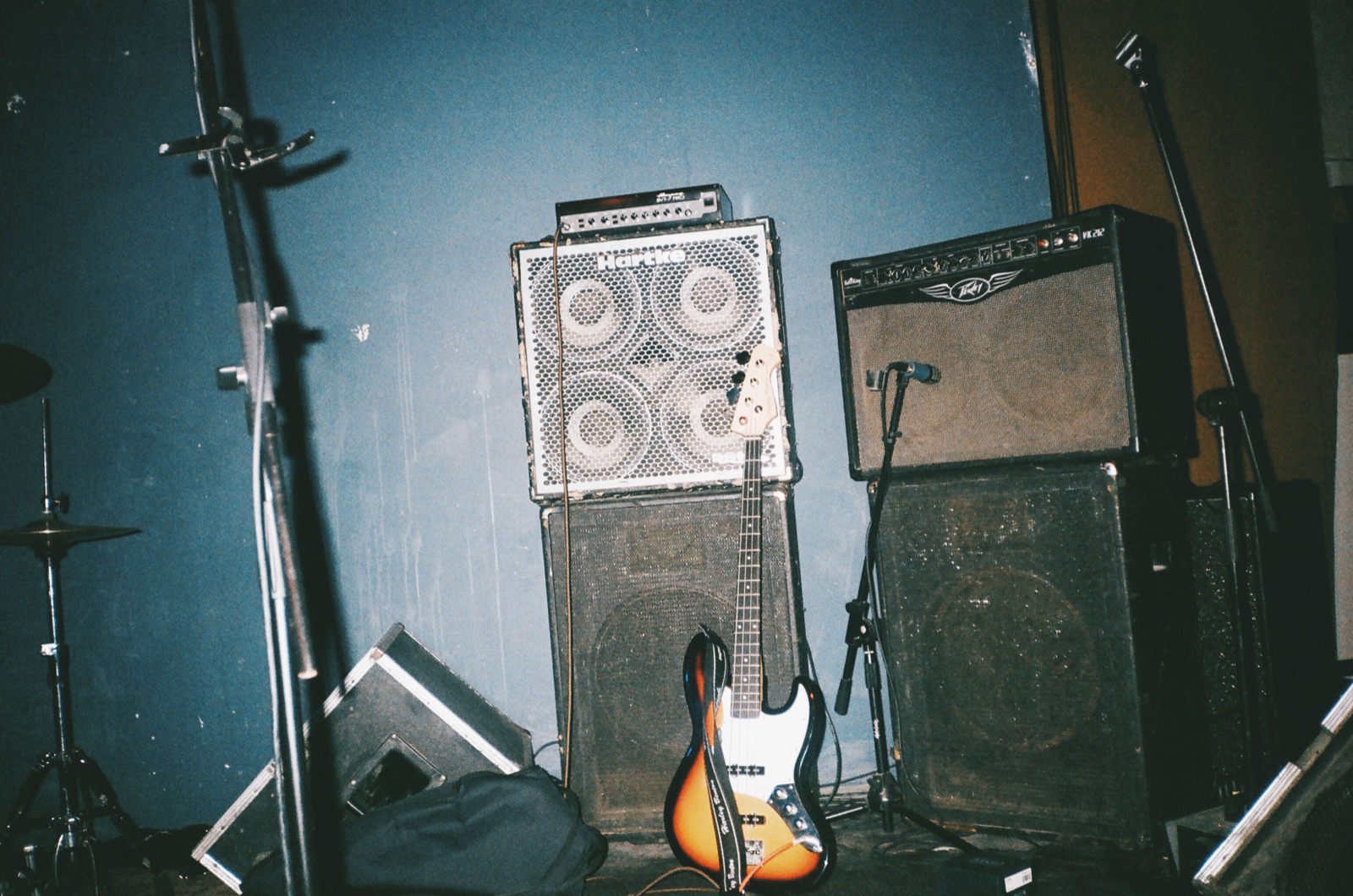
A bass amp head and cabinet split a bass amp into two boxes: the head holds the electronics, the cabinet holds the speakers. It is the setup you see on most stages, and it lets you change speakers, add a second cabinet or carry two lighter loads instead of one heavy combo. By the end of this guide you'll know how a head differs from a combo, what the common cabinet sizes do, and how to check the impedance in ohms so that the head and cabinets are a safe match before you plug anything in.
What you'll need
Essentials
-
Amp head
: the preamp and power amp in one box; its manual states the minimum speaker load in ohms. -
Speaker cabinet
: the impedance and power rating are usually printed next to its input jack. -
Speaker cable
: carries the amp's power to the cabinet; an instrument cable is not built for it. -
Instrument cable
: connects the bass to the head's input.
Optional
-
Second cabinet
: more speakers and volume, as long as the total load stays at or above the head's minimum. -
Earplugs
: band volume adds up fast in a rehearsal room.
Head and cabinet vs combo
Yamaha's guide describes every bass amp as three parts: a preamp, a power amp and a speaker in a cabinet. A head combines the preamp and power amp in one box. A combo puts a head, speaker and cabinet together in a single unit.
| Combo | Head and cabinet | |
|---|---|---|
| Boxes to carry | one | two or more |
| Speaker matching | done by the maker | done by you, in ohms |
| Upgrade path | extension cabinet, if the combo has an output | new or extra cabinets, a new head |
| Typical use | practice, rehearsals, small gigs | rehearsals and stages of every size |
If you are still choosing between them, the guide to the bass combo amp covers the one-box option.
Step 1: Choose the bass amp head
Solid-state, tube and hybrid heads
Yamaha's guide sums up the three kinds:
- Tube heads are valued for a warm, vintage sound and a pleasing overdrive, and are generally louder than solid-state amps with a similar power rating.
- Solid-state heads are lighter, smaller and cheaper than tube heads.
- Hybrid heads pair a tube preamp with a solid-state power amp.
Power and the minimum load
A head's power rating is given at a specific load. Premier Guitar's example: an amp rated at 400 watts at 4 ohms might produce only about 250 watts at 8 ohms. That is why the rating in the manual always comes with a number of ohms, and why the head's minimum impedance is the most important figure on its spec sheet. Yamaha's guide also notes that many heads have a built-in XLR direct output for sending your sound to a PA; see the bass DI box guide for what that output does.
Step 2: Choose the bass cabinet
Common cabinet sizes
Yamaha lists the usual configurations as 1x10, 1x12, 1x15, 2x10, 4x10, 6x10 and 8x10, where the first number is the count of speakers and the second their size in inches. Cabinets usually use speakers from 10 to 18 inches. Its rule of thumb: bigger speakers generally have more bottom, smaller speakers more detail. Many cabinets also include a tweeter, a small speaker for the high frequencies.
1x15
One large speaker in a single box. By Yamaha's rule of thumb, the larger speaker leans toward low end rather than detail.
2x10
Two 10-inch speakers in a compact box. Smaller speakers lean toward detail, and a 2x10 can be paired with a second cabinet later if the total load allows it.
4x10 bass cab
Four 10-inch speakers. More speakers usually means a bigger, heavier box that can move more air than a 2x10 of the same design. Premier Guitar notes that bass players often combine cabinets with 10-inch and 15-inch speakers to fill a room.
Read the cabinet's label
Ampeg's guide notes that a cabinet lists its impedance and power rating near its input jack, and that bass cabinets are almost always 4 or 8 ohms. Write both numbers down before you go further.

Step 3: Match the impedance in ohms
Impedance is the electrical load the speakers present to the head, measured in ohms. The rule is short: the total load of your cabinets must be at or above the minimum impedance listed for the head. Yamaha's guide warns that if you ignore it, you risk damaging your amp; Premier Guitar adds that an amp rated for a 4-ohm minimum would likely shut down if run at 2 ohms.
How cabinets add up
Ampeg wires every cabinet input and output and every head speaker output in parallel, and Premier Guitar notes that almost all bass amps connect speakers in parallel. In parallel, the total impedance goes down as you add cabinets:
- Equal cabinets: divide one cabinet's impedance by the number of cabinets. Two 8-ohm cabinets make 4 ohms.
- Unequal cabinets: multiply the two values and divide by their sum, (A × B) ÷ (A + B). An 8-ohm and a 4-ohm cabinet make (8 × 4) ÷ (8 + 4) ≈ 2.67 ohms.
| Head minimum | One 8-ohm cab | One 4-ohm cab | Two 8-ohm cabs | 8-ohm + 4-ohm | Two 4-ohm cabs |
|---|---|---|---|---|---|
| 4 ohms | safe (less power) | safe | safe (4 ohms) | too low (2.67) | too low (2) |
| 2 ohms | safe (less power) | safe | safe | safe | safe |
On a solid-state head, a load above the minimum is safe; Premier Guitar notes the head simply delivers less power. Tube heads usually have an impedance selector instead, which you set to match the load as the manual says. A load below the minimum is the one to avoid on any head.
When the numbers don't fit
If the total falls below the minimum, use one cabinet or a different combination. Some heads have an impedance selector or special modes such as bridged operation with their own limits; follow the manual for those, and if anything is unclear, ask the maker or a technician. Never open a head or a cabinet to rewire it yourself: amplifiers can hold dangerous voltage even when unplugged.
Step 4: Connect and switch on
- With the head switched off, connect the head's speaker output to the cabinet's input with a speaker cable. Guitar World explains why an instrument cable won't do: speaker cables have much thicker conductors, and an instrument cable can overheat at volume and damage the amp or melt.
- For a second cabinet, connect it from the first cabinet's parallel output or the head's second speaker output, after checking the total load.
- Plug the bass into the head's input with an instrument cable.
- Turn the master volume to zero, switch the head on, then bring the volume up slowly while you play.
Stage volume adds up quickly: long or repeated exposure to sound at or above 85 dBA can cause permanent hearing loss, according to the NIDCD, so wear earplugs at rehearsals and gigs.
Common mistakes
- Adding cabinets without doing the math. Two 4-ohm cabinets on a 4-ohm head is a 2-ohm load.
- Using an instrument cable between head and cabinet. It looks the same but is not built for the current.
- Comparing watts without ohms. A rating at 2 ohms and one at 8 ohms are not the same amp.
- Buying the biggest rig first. A single cabinet you can carry may serve you better than a stack you leave at home.
What to check next
If your head has an XLR out, learn how the bass DI box and that output feed the PA. For a broader view of combos, heads and practice amps side by side, read how to choose a bass amp, and browse Amps & effects for the rest of the rig.
Questions
What is the difference between a bass head and a bass cabinet?
The head holds the electronics: the preamp that shapes the tone and the power amp. The cabinet holds the speakers. Neither makes sound on its own; you connect them with a speaker cable.
Can I connect two 8-ohm bass cabs to a 4-ohm head?
Yes, on most bass amps. Bass heads and cabinets are almost always wired in parallel, so two 8-ohm cabinets make a 4-ohm load, which matches a head rated for a 4-ohm minimum. Confirm the minimum in your head's manual first.
Is a 4x10 or a 1x15 bass cab better?
Neither is better for everyone. Yamaha's guide notes that bigger speakers tend to give more low end and smaller speakers more detail; many bass players use a 4x10, a 1x15 or a combination of 10-inch and 15-inch cabinets.
Is a solid state bass amp head better than a tube head?
They suit different players. Yamaha notes that solid-state amps are lighter, smaller and cheaper, while tube amps are valued for warmth and natural overdrive and tend to be louder at the same power rating.
Can I use a guitar cable to connect a bass head to a cabinet?
No. Speaker cables have much thicker conductors for the amp's power; an instrument cable can overheat and may damage the amp at volume.
Sources
Read next
Buying guide
Bass combo amp: power, speaker sizes and features for home, rehearsal and gigs
Amp and speaker in one box: how to match a bass combo's power and speaker size to where you play, and which jacks and features matter.
Buying guide
Best bass amp for you: the types of bass amp and how to choose one
Headphone amp, combo, head and cabinet or preamp pedal: which type fits your room, your band and your back, and what makes any of them a good bass amp.
Guide
Bass DI box: what it does, passive vs active, and preamp DIs like the SansAmp
How a DI turns your bass signal into one the mixer can use, which kind suits your bass, and where a preamp DI pedal fits.