Buying guide
Bass overdrive pedal: overdrive, distortion and fuzz on bass without losing the low end
Why drive pedals thin out a bass, how bass versions keep the bottom end, and how to set one so the grit sits on top of a solid low end.
Published
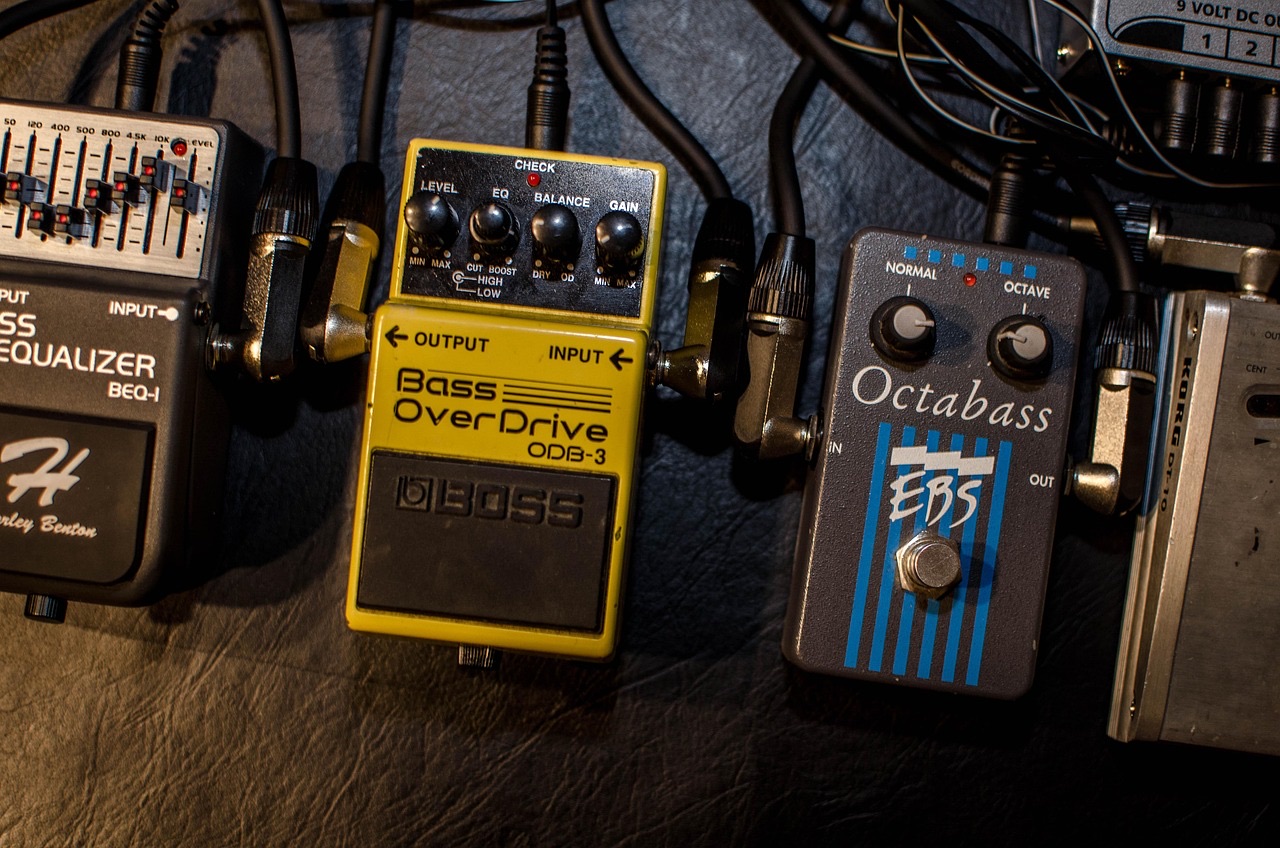
A bass overdrive pedal adds grit to your sound, from a slight edge on hard notes to a full growl. The catch is the low end: most drive circuits thin out a bass, and a bass that loses its bottom stops doing its job in the band. Bass versions of these pedals exist to fix that. This guide explains how overdrive, distortion and fuzz differ, why bass loses low end through them, the controls that keep it, and how to set up a bass OD pedal so the grit sits on top of a solid foundation.
What a bass overdrive pedal does
Every drive pedal works by clipping: it pushes the signal harder than the circuit can pass cleanly, flattening the peaks of the waveform. That adds harmonics, the extra higher tones you hear as grit, and it squeezes the dynamics so notes sustain more.
On bass, clipping has a side effect. Premier Guitar puts it plainly: whenever you play bass through an ordinary fuzz or distortion pedal, the bottom end tends to get lost, and this loss of low frequencies is a natural consequence of any device that clips the signal. Guitar World adds that too much bass going into the clipping makes the sound muddy, which is why designers often add an EQ that cuts some lows before they reach the drive circuit.
Overdrive vs distortion vs fuzz
All three are clipping; they differ in how hard the signal is pushed and how much of the bass's own character survives. The lines between them blur, and many pedals cover more than one.
| Type | Sound on bass | Typical use | Low-end risk |
|---|---|---|---|
| Overdrive | from a light edge to a gritty growl, still recognizably your bass | rock, blues, adding bite to a clean tone | moderate |
| Distortion | more saturated, more sustain, more aggressive | hard rock, metal | high |
| Fuzz | harsh, dense, synth-like at extremes | stoner, psych, special sounds | highest |
Overdrive
Guitar World notes that early overdrives were built for guitarists as boost-style pedals that pushed amp tubes harder, and that modern bass versions are designed to keep the low end intact. BOSS describes its ODB-3 as an overdrive pedal specifically designed for bass, delivering the "chest-resonating distortion" that hard rock, thrash and punk bassists want. Start here if you want grit that still sounds like your bass.
Bass distortion pedals
Guitar World describes distortion designs as more aggressive saturation and sustain, needing careful shaping of the tone. A bass distortion pedal is worth it if you play heavy styles; otherwise an overdrive with plenty of gain covers most needs.
Bass fuzz pedals
Fuzz is the most extreme. Guitar World describes its saturation as harsher, erasing more of the instrument's character than overdrive or distortion. The EHX Bass Big Muff Pi is an example made for bass: Electro-Harmonix lists it as a fuzz, distortion and sustainer with "no low-end loss," and a three-way switch with Bass Boost, Normal and Dry positions. In the Dry position it mixes your original signal with the fuzz.

Controls that keep the low end
Blend, balance or dry
The most important control on a bass drive pedal. Guitar World calls it "the humble Blend control": it mixes your clean signal back in with the driven sound to restore low-end punch. Names vary:
- BOSS ODB-3: a Balance knob that, in BOSS's words, controls the dry and overdriven sound.
- Tech 21 SansAmp Bass Driver DI: a Blend knob that mixes the direct bass signal with the tube-amp emulation.
- EHX Bass Big Muff Pi: a Dry switch position that mixes your original signal with the distortion.
Crossover or "clean low" controls
A crossover splits your signal by frequency: the lows stay clean while only the upper range is driven. Electro-Harmonix's Deluxe Bass Big Muff Pi is one example. With its crossover switched on, the dry signal goes through a low-pass filter and the distorted signal through a high-pass filter, each set with its own knob (LPF and HPF), and a Blend knob mixes the two. The result is a clean, solid low end under a driven top. Other makers label similar controls differently, so read the manual to see what a pedal actually does.
Tone and EQ
The ODB-3 has a two-band EQ (high and low). EQ after the clipping lets you trim fizz or put back low end.
Dry or direct outputs
Some pedals have a separate clean output. On the Bass Big Muff Pi, Electro-Harmonix wires the Dry Out jack directly to the input, so you can send your unprocessed signal to a second amp or a DI while the effect goes to your main amp.
Splitting the signal
Premier Guitar mentions splitting the signal this way, half to dirt and half to clean, as a common workaround when a pedal has no blend.
Drive inside a preamp
Several bass preamp pedals include drive. Ampeg's SCR-DI combines a preamp with a Scrambler bass overdrive that can be on at the same time; the SansAmp Bass Driver DI has a Drive knob. These double as DI boxes; see the bass preamp pedal guide.
What to look for in a bass OD pedal
- A blend or crossover. On bass, this matters more than the drive circuit itself.
- An input pad or level if you play an active bass. The Deluxe Bass Big Muff Pi, for example, has a switch that adds 10 dB of attenuation for active pickups.
- Power. The ODB-3 draws 20 mA and BOSS estimates about 40.5 hours of continuous use on an alkaline 9-volt battery. Check the manual before using a shared supply.
- A noise gate for high-gain fuzz and distortion. The Deluxe Bass Big Muff Pi has a Gate knob; otherwise BOSS's chain guide places a noise suppressor after the drive pedals.
Which type suits whom
- Rock and blues players who want an edge: an overdrive with a blend control, set mostly clean.
- Hard rock and metal: a bass distortion pedal or high-gain overdrive with a blend or crossover.
- Fuzz and experimental sounds: a bass fuzz with a dry blend.
- Players who also need a DI: a preamp DI pedal with drive.
Setting up a bass overdrive pedal
BOSS's guide to the bass signal chain places overdrive, distortion and fuzz after the tuner, compressor, filter and octave pedals, and before EQ, modulation, delay and reverb; see bass pedals for the whole chain.
- Start with gain low and blend fully clean. Set the level so switching the pedal on doesn't change the volume.
- Add gain slowly. Guitar World's advice for overdrive is to try just a light rasp to begin with.
- Bring in the drive with the blend until you hear the grit on top while the low notes stay solid.
- Use the tone or EQ to remove fizz; avoid boosting the treble to make the drive "cut."
- Rematch the output level and check the sound with the band, where grit that sounded thin alone often sits well.
Drive pedals raise your level suddenly when you stomp on them. Long or repeated exposure to sound at or above 85 dBA can cause permanent hearing loss, according to the NIDCD, so keep levels matched and wear earplugs on loud stages.
Common mistakes
- Using the drive with no clean signal. If your bass vanishes in the mix when you switch on, add blend before anything else.
- Too much gain. More gain means more compression and less note definition; most bass parts need less than you expect.
- Judging alone at home. A drive tone that fills the room on its own may be mud in the band, and a tone that sounds thin alone may cut through perfectly.
Questions
What is the difference between overdrive, distortion and fuzz on bass?
They are three degrees of the same thing: clipping the signal. Overdrive is the mildest, from a slight edge to a gritty growl; distortion is more saturated with more sustain; fuzz is the harshest and can bury the character of the bass.
Why does my bass lose low end with a drive pedal?
Premier Guitar notes that losing low frequencies is a natural consequence of any device that clips the signal. Bass drive pedals solve this with a blend control that mixes your clean signal back in, or a crossover that keeps the lows clean.
What does the Balance knob on the BOSS ODB-3 do?
BOSS says the Balance knob controls the mix of dry and overdriven sound. Turning it toward the dry side brings back the clean low end under the overdrive.
Can I use a guitar overdrive pedal on bass?
You can, but many guitar drives cut low end. If yours thins out the bass, try it with a clean signal blended back in, for example from a parallel dry output, or choose a pedal designed for bass.
Where should a bass overdrive pedal go in the chain?
A common order puts it after the tuner, compressor, filter and octave pedals and before EQ, modulation, delay and reverb. BOSS notes there is no single right order, so treat this as a starting point.
Sources
- BOSS — ODB-3 Bass OverDrive
- Electro-Harmonix — Bass Big Muff Pi
- Electro-Harmonix — Deluxe Bass Big Muff Pi
- Tech 21 — SansAmp Bass Driver DI
- Ampeg — SCR-DI bass preamp and DI
- Premier Guitar — Effects pedals for bass
- Guitar World — How to use bass distortion pedals
- BOSS — Order of operation: a guide to bass effects signal chain
- NIDCD — Noise-induced hearing loss
Read next
Guide
Bass pedals: the effects bass players use and the order to put them in
What each common bass effect does, why bass versions of pedals exist, and a signal chain order that keeps your low end intact.
Buying guide
Bass compressor pedal: what compression does, the controls and the types
What compression does to your bass, what each knob changes, the kinds of compressor pedal you'll find and a careful way to set one up.
Guide
Bass preamp pedal: what it does, how it differs from a DI and an amp, and how to set one up
The tone-shaping part of a bass amp in a pedal: what it adds to your rig, which features matter and three ways to connect it.