Buying guide
Bass headphone amp: plug-in units, wireless systems and desktop options for silent practice
Practice at any hour without a speaker: the types of bass headphone amp, what each one gives you, the features to check and how to keep the volume safe.
Published
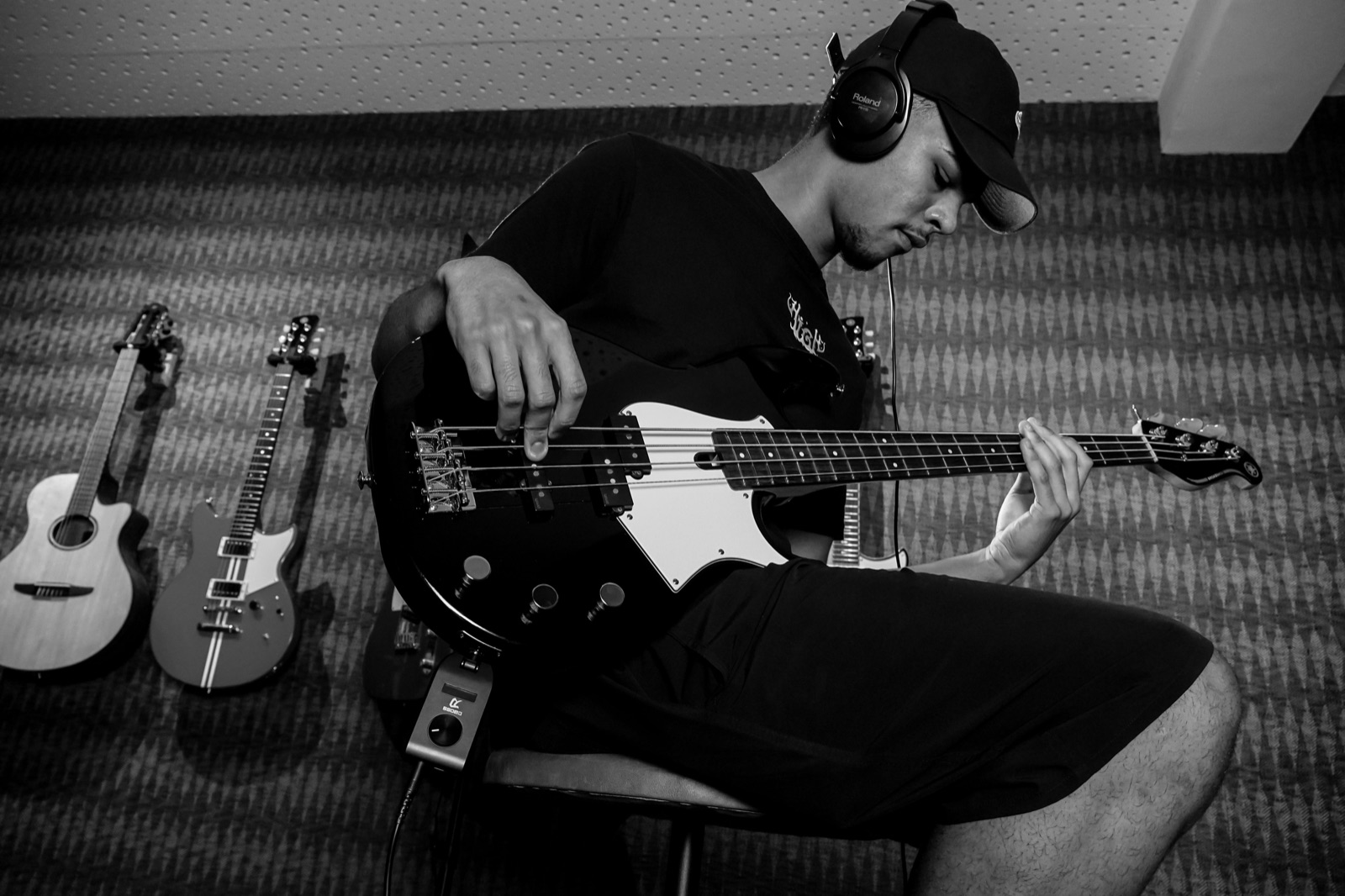
A bass headphone amp lets you hear your bass through headphones instead of a speaker. It shapes your signal so it sounds like an amp, then drives a pair of headphones at a volume no one else in the house can hear. The smallest plug straight into the bass's output jack and run on two AAA batteries; others are wireless headphone systems or desktop boxes that also record into a computer. This guide compares the types, the features worth checking, and how to keep the volume safe for your ears.
What a bass headphone amp does
A bass amp has a preamp that shapes your tone, a power amp and a speaker. A headphone amp keeps the first part, replaces the big power amp with a small one sized for headphones, and leaves out the speaker. Your bass sounds like it is going through an amp, but the sound stays in your ears.
Most add two practice tools:
- An aux input or Bluetooth, so you can play along with songs, a backing track or a drum loop from your phone.
- Built-in effects or rhythms, from a little reverb to drum patterns.
What they can't do is let anyone else hear you. For playing with another musician in the room you need a speaker; see the bass practice amp guide.
Types of bass headphone amp
| Type | How it connects | Example (maker's spec) | Power | Best for |
|---|---|---|---|---|
| Plug-in headphone amp | plugs into the bass's jack | Vox amPlug 2 Bass | two AAA batteries | the simplest silent practice, travel |
| Plug-in with Bluetooth and USB | plugs into the bass's jack | BOSS Katana:GO (bass mode) | rechargeable, about 5 hours | practice, playing along, simple recording |
| Wireless headphone system | transmitter in the bass, amp inside the headphones | BOSS Waza-Air Bass | rechargeable, about 5 hours | practice without a cable |
| Desktop audio interface | cable from the bass to a box on your desk | Focusrite Scarlett Solo | USB bus power | recording, amp software on a computer |
| Amp or effects unit with a headphone jack | cable from the bass | many practice combos and multi-effects | mains or batteries | players who also want a speaker or effects |
Vox amPlug 2 Bass
The amPlug 2 is the classic plug-in design. Vox describes the bass version as designed specifically for low frequencies, with a wide-range response, and says a rhythm function has been added to the bass type. Across the amPlug 2 range, Vox lists volume, gain and tone controls, an aux input and a headphone jack, an auto power-off function and a plug that folds and rotates 180 degrees to fit different jack positions. Vox describes the chorus, delay and reverb effects with the guitar types, so check what the bass model offers before you buy. Vox lists battery life on two AAA batteries as about 11 hours with effects and rhythm on, or 17 hours with them off.
BOSS Katana:GO
BOSS calls the Katana:GO a personal headphone amplifier for guitar or bass. In bass mode it has three amp types (Vintage, Modern and Flat) and over 60 effects. It has a rechargeable battery rated at up to 5 hours of continuous use, Bluetooth for playing along with music and editing sounds from a phone, and a USB-C port that BOSS says works as an audio interface for recording, with the usual caveat that third-party compatibility isn't guaranteed. The headphone jack is rated for a load of 16 ohms or more.
BOSS Waza-Air Bass
This one removes the cable. A small transmitter plugs into the bass and sends the signal to headphones that contain the amp. BOSS lists five amp types, over 30 bass effects, Bluetooth audio from a phone, and a built-in gyro sensor that tracks your head movement for a 3D sound, with three ambience modes. BOSS lists about 5 hours of continuous use for the headphones on a charge and a weight of 320 g (12 oz).

Audio interface and amp software
If you already have a computer, a small audio interface is another way to practice on headphones. The interface has an instrument input for your bass and a headphone output; amp-modeling software on the computer supplies the tone. Focusrite, for example, lists the Scarlett Solo with one high-impedance instrument input (1 MΩ), a headphone output and USB-C bus power. This route gives you the most options for recording, but it needs a computer switched on every time you play. The bass DI box guide explains why an instrument input or DI matters for a bass signal.
Amps and effects with a headphone jack
Many practice combos and multi-effects units have a headphone output too. Zoom, for example, lists a combined line and headphone output on the B1 FOUR bass multi-effects pedal. If you want effects or a speaker as well as silent practice, see bass multi-effects or the bass practice amp guide.
What to look for in a bass headphone amp
A bass voicing
Choose a unit made for bass or with a dedicated bass mode. A guitar headphone amp is voiced for a higher range and may make your low notes sound thin.
Play-along input
An aux jack (amPlug 2) or Bluetooth (Katana:GO, Waza-Air Bass) lets you play along with songs. For learning, this matters as much as the tone; the songs in easy bass songs are a good place to start.
Power
AAA batteries are easy to replace anywhere; a rechargeable battery saves money but needs charging. Compare the maker's runtime figures, and check whether the unit switches itself off when idle.
Recording
If you want to record, look for a unit the maker says works as a USB audio interface, or use a desktop interface.
Headphones
Use closed-back headphones if you want to block room noise and keep the sound from leaking out. Check the unit's output rating against your headphones: BOSS, for example, lists the Katana:GO's headphone jack for loads of 16 ohms or more.
Which type suits whom
- Absolute beginner, small budget, apartment: a plug-in bass headphone amp with an aux input.
- Practice plus playing along from a phone and simple recording: a plug-in unit with Bluetooth and USB.
- You hate cables or move around while practicing: a wireless headphone system.
- You want to record and already have a computer: an audio interface with amp software.
- You also want a speaker or effects: a practice combo or multi-effects unit with a headphone jack.
Setting up and using a headphone amp safely
- Turn the volume all the way down before plugging in or putting the headphones on.
- Check the bass's volume knob is up; with a plug-in unit, also check the plug sits fully in the jack.
- Start with the tone flat and any effects off, then raise the volume slowly while you play.
- Set the aux or Bluetooth level so the backing track and your bass are balanced and you aren't turning everything up to hear yourself.
- Take breaks, and unplug a plug-in unit when you set the bass down so it doesn't take a knock.
Keep the volume as low as you can while still hearing clearly: long or repeated exposure to sound at or above 85 dBA can cause permanent hearing loss, according to the NIDCD, and headphones deliver that sound right at your ears. If you notice ringing or muffled hearing after practice, turn down, and see a doctor if it persists.
When you are ready to practice what you hear, start with how to play bass and how to tune a bass.
Questions
What is a bass headphone amp?
A small amplifier that turns your bass signal into an amp-like sound you hear through headphones instead of a speaker. The simplest kind plugs straight into the bass's output jack and runs on batteries.
Is there a Vox amPlug for bass?
Yes. Vox lists an amPlug 2 Bass, designed specifically for low frequencies, with a rhythm function. The amPlug 2 range has volume, gain and tone controls, an aux input and a headphone jack, and runs on two AAA batteries.
Can I use a guitar headphone amp for bass?
It will make a sound, but a guitar unit is voiced for guitar and may thin out your low notes. Choose a bass model, or a unit with a bass mode, such as the BOSS Katana:GO, which has separate bass amp types.
Can I record with a bass headphone amp?
Some can. BOSS says the Katana:GO works as a USB audio interface for recording, while basic plug-in units such as the amPlug 2 have only a headphone output. A desktop audio interface with an instrument input is the other common route.
How loud is safe on headphones?
Keep it as low as you can while still hearing clearly. The NIDCD notes that long or repeated exposure to sound at or above 85 dBA can cause permanent hearing loss, and headphones put that sound right at your ears.
Sources
Read next
Buying guide
Bass practice amp: small combos, headphone amps and how much power home playing needs
A small combo, a headphone amp or a modeling amp: what each does at home, how much power quiet practice needs, and the jacks that matter.
Buying guide
Bass multi-effects pedal: what one unit can replace and what to check before buying
Amp models, effects, a tuner and a looper in one box: how bass multi-effects units differ, which specs matter and how to set one up.
Guide in Learn bass
How to play bass: your first notes, hands and practice routine
Get the bass in tune, set up both hands, play your first notes in time and learn what to practice each day after that.