Buying guide
Bass multi-effects pedal: what one unit can replace and what to check before buying
Amp models, effects, a tuner and a looper in one box: how bass multi-effects units differ, which specs matter and how to set one up.
Published
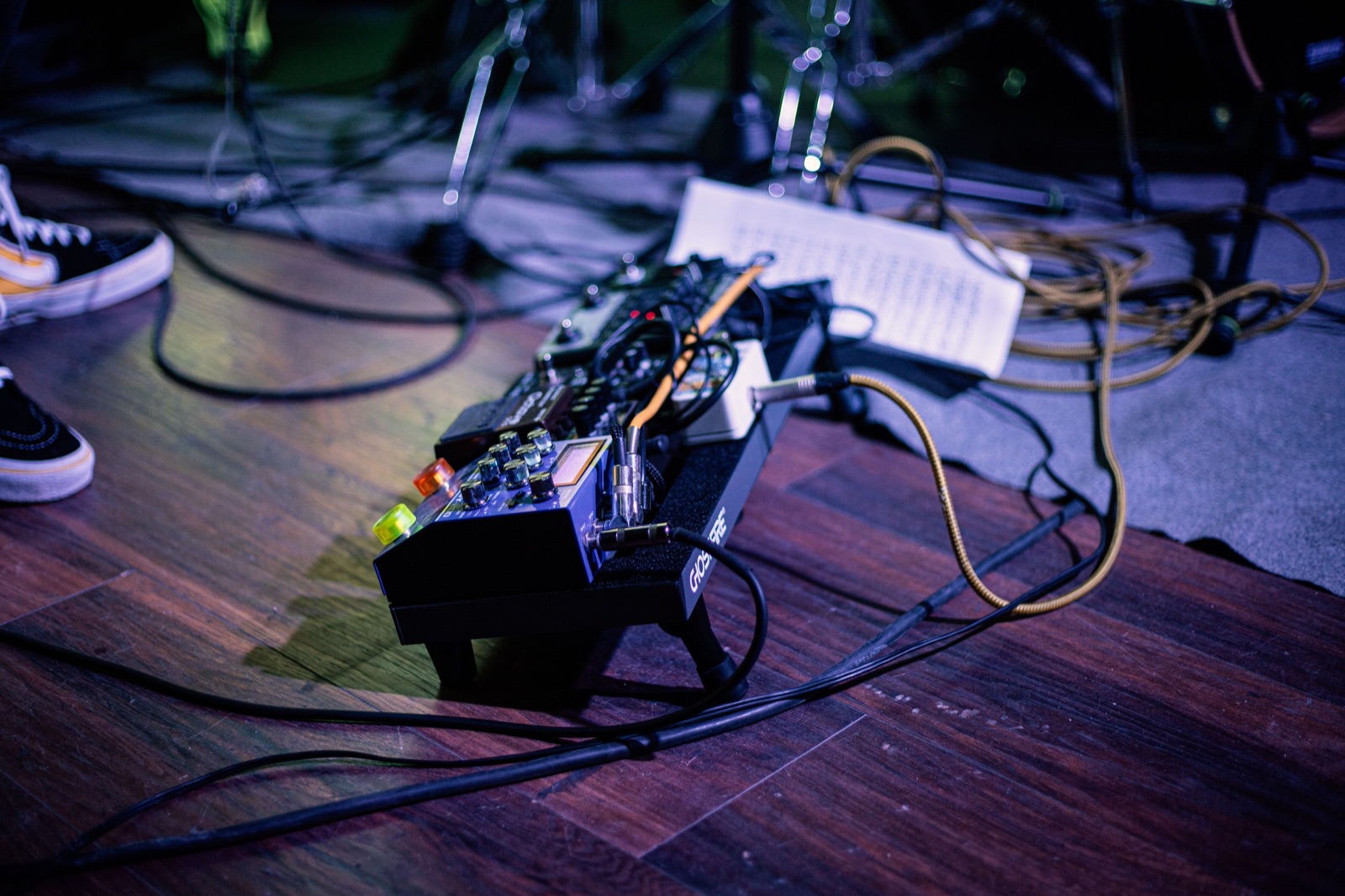
A bass multi effects pedal puts a whole pedalboard in one box: a tuner, amp models, compression, overdrive, octave, filters, chorus and delay, usually with a looper and a headphone output as well. You choose the effects, store them as presets ("patches") and recall a whole sound with one footswitch. This guide explains what these units do, how the common types differ, which specifications matter when you compare them, and how to set one up so it sounds good through an amp, headphones or a PA.
What a bass multi-effects unit does
Inside, a multi-effects unit is a small computer that models amps and effects digitally. Your bass goes into one input; the unit runs the signal through a chain of effects that you arrange in software or on the unit itself, then sends it to its outputs.
Three things make it different from a board of single pedals:
- Patches. A whole chain, with every setting, is saved as one patch. BOSS lists 99 preset and 99 user memories on the GX-1B; Zoom lists 50 user memories on the B1 FOUR.
- Amp models. Most units model the preamp and tone of bass amps, so you get an amp-like sound through headphones or straight into a mixer. BOSS lists 16 amp types on the GX-1B; Zoom lists nine amp models on the B1 FOUR.
- Extras. Tuners, loopers, drum patterns, headphone outputs and USB connections are common. Zoom lists 68 built-in rhythm patterns and a looper of up to 30 seconds on the B1 FOUR; BOSS lists a phrase looper of up to 38 seconds in mono on the GX-1B.
Bass multi-effects exist for the same reason bass pedals do. Premier Guitar notes that many guitar effects just don't sound that good on bass, and that larger companies such as BOSS/Roland have created entire lines of bass effects. A bass unit gives you bass amp models and effects voiced so your low end survives.
Types of bass multi-effects unit
| Type | What it is | Example from the maker | Suits |
|---|---|---|---|
| Compact floor unit | a few footswitches, small display, runs on batteries | Zoom B1 FOUR: over 60 effects, up to 5 at once, four AA batteries | beginners, practice, a small gig board |
| Compact unit with expression pedal | same, plus a rocking pedal for volume, wah or pitch | Zoom B1X FOUR; BOSS GX-1B with a built-in pedal and toe switch | players who want wah or volume swells |
| Larger floor processor | more footswitches, more effects at once, more outputs | various makers | gigging players who want one box to run a whole show |
| Headphone amp with effects | plugs into the bass, headphones only | see bass headphone amps | silent practice, travel |
Compact floor units
The most common bass multi-effects pedal is a small floor box with two or three footswitches. Zoom describes the B1 FOUR with over 60 built-in effects, up to five used at once in any order, and about 18 hours on four alkaline AA batteries with the backlight off. It also runs on an optional 9-volt adapter or on USB bus power. The B1X FOUR adds an expression pedal and, according to Zoom, over 70 effects.
Units with a built-in expression pedal
An expression pedal is a rocking treadle like a wah pedal. It lets you sweep a parameter with your foot: volume, wah or pitch shift are the usual ones. BOSS's GX-1B has one built in, with a toe switch, three assignable footswitches, and a jack for up to two more footswitches or a second expression pedal. BOSS lists the GX-1B at 1.2 kg (2 lbs 11 oz) and about 5 hours on four AA alkaline batteries, so for regular use an adapter or USB power makes sense.
BOSS's earlier compact bass unit, the GT-1B, is marked discontinued on its product page. Used GT-1B units are still common, so check that any editor software you need still supports the model you buy.

Larger floor processors
Bigger units add more footswitches, more effects running at once, more inputs and outputs, and sometimes an effects loop for your own pedals. They suit players who want to change several effects with one press on stage. Read the maker's specifications closely: the number of effects that can run at once and the outputs matter more than the total count of effect types.
What to look for in a bass multi-effects pedal
Effects at once, not effects in total
A unit may list 60 or 130 effect types, but you can only use a handful in one patch. Zoom lists up to five simultaneous effects on the B1 FOUR; BOSS lists eight effect blocks at once on the GX-1B, plus a volume pedal and noise suppressor. A typical bass chain of compressor, drive, octave, chorus and delay already uses five.
Bass amp models
If you will practice on headphones or play straight into a PA, the amp models carry your tone. Listen to them flat, with no effects, before judging the unit.
Outputs
Headphone output
For practice at any hour. Both the B1 FOUR and the GX-1B have a headphone jack; on the B1 FOUR it is shared with the line output.
Line outputs
A 1/4-inch output feeds an amp or a DI box. Stereo outputs (L/MONO and R on the GX-1B) only matter if you use stereo effects and two channels; many bass players run mono.
USB and Bluetooth
USB lets you edit patches on a computer and, on some units, record. BOSS says the GX-1B can record and play tracks in music production software over USB-C and has Bluetooth for playing along with songs from a phone. Zoom lists the B1 FOUR's USB port for power, firmware updates and its Guitar Lab editor software. If recording matters, confirm in the manual that the unit works as an audio interface.
Power
Battery life varies a lot: BOSS estimates about 5 hours for the GX-1B and Zoom about 18 hours for the B1 FOUR, both on alkaline AAs. Check the adapter type and polarity in the manual before using a shared pedal power supply.
Editing
Small displays make deep editing slow. Both makers offer free editor software: BOSS Tone Studio for the GX-1B and Zoom Guitar Lab for the B1 FOUR.
Multi-effects or single pedals
| Multi-effects unit | Single pedals | |
|---|---|---|
| Sounds per dollar | many | one per pedal |
| Changing several effects at once | one footswitch per patch | tap dance across pedals |
| Learning curve | menus and software | a few knobs per box |
| Replacing one part | not possible | swap one pedal |
| Headphone and USB extras | usually built in | need separate gear |
Some players start with a multi-effects unit, learn which effects they actually use, then buy single pedals for those. Others keep the unit and add one favorite pedal, often a tuner or a compressor, in front of it.
Which type suits whom
- Beginner practicing at home: a compact unit with a headphone output, amp models and a tuner.
- Player who wants wah, volume swells or pitch effects: a unit with an expression pedal.
- Recording at home: a unit whose maker confirms USB recording.
- Gigging player with many songs and sounds: a larger floor processor, or a compact unit plus a few single pedals.
Setting up a bass multi-effects unit
- Tell the unit where it's going. Many units have an output setting for an amp, headphones or a line input; check your manual. Using the wrong one can sound boxy or harsh.
- Start from a clean patch. Turn off everything except the tuner and an amp model, set the amp model's EQ flat and listen.
- Build the chain in a sensible order. BOSS's common bass order (compressor, filter, octave, drive, EQ, modulation, delay, reverb) works on a multi-effects unit too; the guide to bass pedals explains why.
- Keep compression gentle. Yamaha says most bassists use a compressor ratio of about 2:1 to 4:1.
- Match patch volumes. Play each patch at band volume and adjust its level so switching does not make you jump out or vanish. Long or repeated exposure to sound at or above 85 dBA can cause permanent hearing loss, according to the NIDCD, so keep headphone levels moderate and wear earplugs at band volume.
- Back up your patches with the editor software before firmware updates.
Common mistakes are easy to avoid: judging presets designed to impress in a shop, stacking too many effects into one patch, and leaving the low end to an amp model that sounds full on headphones but thin through a bass combo amp. Check every patch on the gear you will actually use.
Questions
Is a bass multi-effects pedal good for beginners?
Often, yes. One unit gives you a tuner, amp models, the common bass effects and usually a headphone output for quiet practice, so you can learn what compression, overdrive or chorus do before buying separate pedals.
Can I use a guitar multi-effects unit for bass?
You can, but bass units are voiced for the low end and include bass amp models and bass versions of effects. A guitar unit may thin out your low notes; if you try one, check that it offers bass amp models or a bass mode.
How many effects can a bass multi-effects pedal run at once?
It depends on the model. Zoom lists up to five effects at once on the B1 FOUR, and BOSS lists eight effect blocks at once on the GX-1B, plus a volume pedal and noise suppressor.
Does BOSS make a bass multi-effects pedal?
Yes. The BOSS GX-1B is a compact bass effects processor that BOSS lists with 16 amp types, over 130 effects and a built-in expression pedal. Its earlier GT-1B is listed as discontinued on the BOSS site.
Can a bass multi-effects unit replace an amp?
For practice and recording, often yes: you can play through headphones or into a computer. On stage you still need an amp or a PA to be heard; the unit only shapes your sound.
Sources
- BOSS — GX-1B Bass Effects Processor
- BOSS — GT-1B Bass Effects Processor
- Zoom — B1 FOUR and B1X FOUR bass multi-effects
- BOSS — Order of operation: a guide to bass effects signal chain
- Premier Guitar — Effects pedals for bass
- Yamaha — A bassist's guide to compression
- NIDCD — Noise-induced hearing loss
Read next
Guide
Bass pedals: the effects bass players use and the order to put them in
What each common bass effect does, why bass versions of pedals exist, and a signal chain order that keeps your low end intact.
Buying guide
Bass headphone amp: plug-in units, wireless systems and desktop options for silent practice
Practice at any hour without a speaker: the types of bass headphone amp, what each one gives you, the features to check and how to keep the volume safe.
Buying guide
Bass compressor pedal: what compression does, the controls and the types
What compression does to your bass, what each knob changes, the kinds of compressor pedal you'll find and a careful way to set one up.