Comparison
Flatwound vs roundwound bass strings: sound, feel and which to choose
Flats are smooth and warm, rounds are bright and ridged. Here is how the two compare, where half-rounds and nylon tapewounds fit, and how to choose for your music.
Published
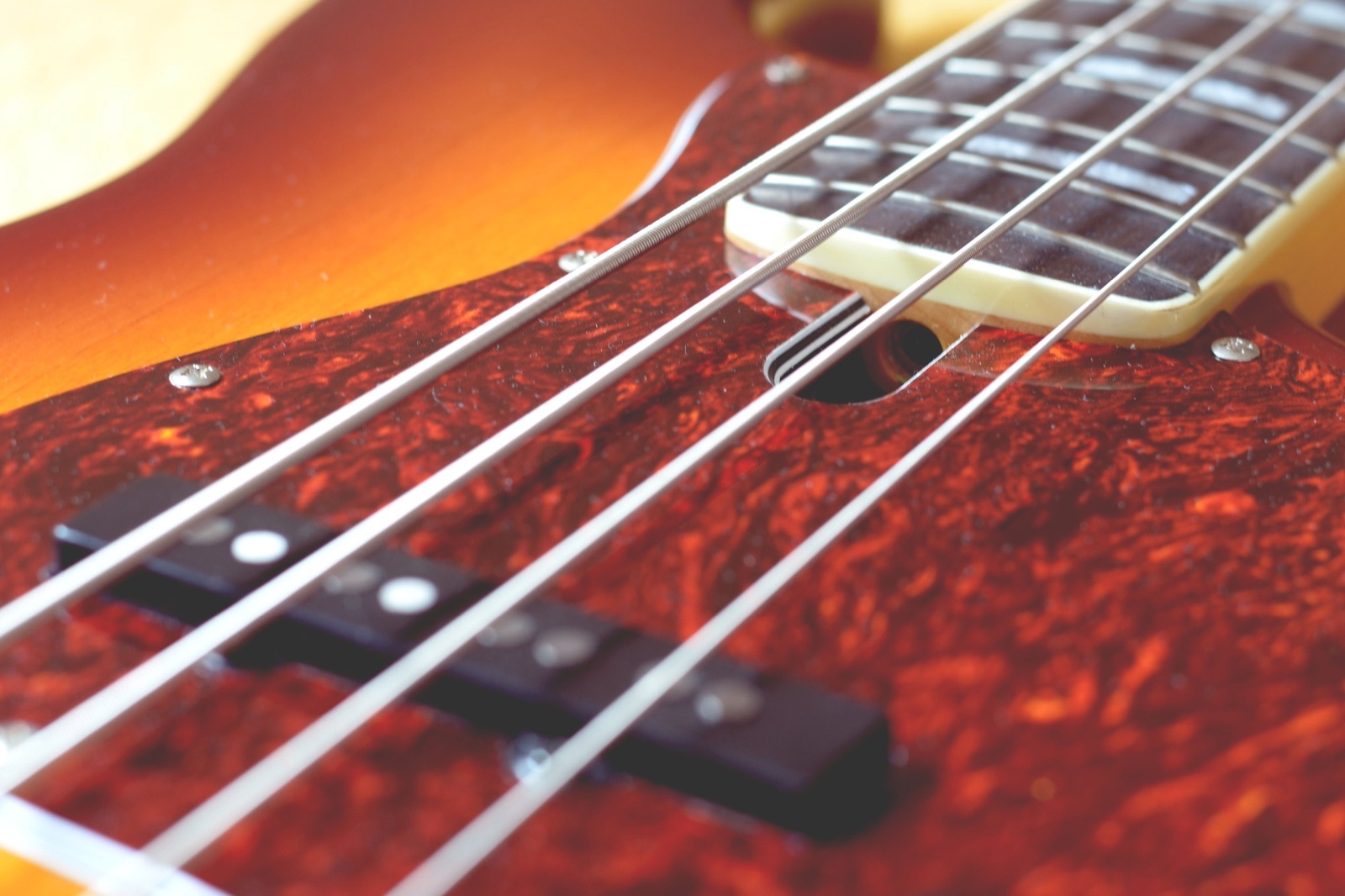
The short answer: flatwound bass strings are smooth, warm and quiet under the fingers and last a very long time; roundwound bass strings are bright, ridged and full of sustain, and they are the sound of most modern recordings. Choose flats for a vintage, thumpy sound or a fretless bass; choose rounds for rock, funk, slap and metal, or if you are not sure yet.
Both types have a steel core. The difference is the outer wrap: round wire on a roundwound, a flat ribbon on a flatwound. Rotosound sums up the construction of a flat as "a flat ribbon of steel wound over a steel core." That one change affects sound, feel, tension and how long the set lasts.
Flatwound vs roundwound at a glance
| Flatwound | Roundwound | |
|---|---|---|
| Outer wrap | Flat ribbon | Round wire |
| Surface | Smooth | Ridged |
| Tone | Darker, warmer, shorter sustain | Brighter, more sustain |
| Finger noise | Little | Audible slides and squeaks |
| Tension | Often higher at the same gauge | Often lower at the same gauge |
| Life of a set | Often years | Brightness fades sooner |
| Price | Usually higher | Usually lower |
The tension row comes from published figures: Rotosound lists the .045 G string of its flatwound Jazz Bass 77 standard set at 57.46 lbs and the .045 G of its stainless roundwound Swing Bass 66 standard set at 48.27 lbs. Other makers' sets differ, so compare their own charts.
Flatwound bass strings
Rotosound says flats are generally regarded as having a mellower, warmer voice than roundwounds. The fundamental of each note comes through with less of the metallic top end, which gives the round, short "thump" heard on many older soul and pop records.
Sound and feel
The smooth surface means fingers slide without the squeak of round wire, which is one reason flats are popular on fretless basses. Feel varies by maker: Rotosound describes older-style flats as taut and darker and newer designs as looser, and says its own Monel flats feel stiff but have a bright top end.
How long flats last
Flats keep their character far longer than rounds. Rotosound notes that "it is not uncommon to leave a set of flats on a bass for years," and that this generally balances out their higher price.
La Bella flatwound bass strings
La Bella's Deep Talkin' Bass flats are one of the long-running flatwound lines. La Bella says they have been used by professional players since the 1950s and 1960s, are made of stainless steel with hand-polished windings, and lists the 760FS standard four-string set at .045–.105. The maker also notes that the standard set is not suitable for bridges that pass the strings through the body; a through-body version is sold separately.

Roundwound bass strings
Roundwounds are the default on most new basses. Rotosound says the crisp attack and sustain of roundwounds made them the new standard for bass tone from the 1970s on, and lists its stainless roundwound set as bright.
Sound and feel
Round wire leaves small ridges along the string. They give the bright attack and long sustain that cut through distorted guitars and make slap and pop sound crisp, and they also produce audible noise when you slide along the string. Material changes the color: Elixir describes nickel-plated steel as rich and rounded with a heavier midrange and stainless steel as bright with growling mids.
How long rounds stay bright
Sweat and dirt settle between the windings, and the bright top end fades. How fast depends on your hands and how much you play; coated roundwounds are made to slow that down.
Half-round bass strings
Half-rounds sit between the two. They start as roundwounds and the outer surface is then flattened. Rotosound's Solo Bass 55 uses a pressure-rolling process, which the maker says keeps the string's mass and therefore its brightness; it describes the set as similar to its roundwounds with a smoother feel. If rounds feel too rough but flats sound too dark, half-rounds are the set to try.
Nylon bass strings
Nylon tapewound strings have a nylon tape wound over the string. La Bella describes its 760N black nylon set as very smooth, with a warm, deep, vintage tone and long sustain, and says it is aimed at fretless bass, works on acoustic basses and is also used on fretted electrics. They are the warmest and smoothest option of all, and the furthest from a modern roundwound sound.
Which to choose
By the music you play and the feel you want
Choose roundwounds if
- you play rock, metal, funk or anything with slap;
- you want your bass to sound like most current records;
- you are a beginner and not sure yet: most teaching material assumes their sound.
Choose flatwounds if
- you want a warm, vintage sound for soul, older pop, country or reggae;
- finger noise bothers you, or you play a fretless bass;
- you would rather change strings rarely.
Choose half-rounds or nylon if
- half-rounds: you want rounds with a smoother surface;
- nylon: you want the softest feel and warmest sound, or you play an acoustic or fretless bass.
Best flatwound bass strings for you
There is no single best set, only the one that suits your bass and taste. Check three things on the pack:
- Length: match the set to your scale length and bridge. Rotosound's chart pairs long-scale sets with 32–34 inch scales and extra-long sets with 33.5–36 inch scales.
- Gauge and tension: flats often feel stiffer than rounds of the same gauge, so a lighter flatwound set can feel closer to the rounds you are used to.
- Material: stainless steel and Monel flats are both common; the maker's tone description is a fair first guide.
Rotosound also advises avoiding cutting flatwound strings where possible, because they can unravel; if you must cut, leave enough turns around the tuning post to keep the string stable. Our guide to how to restring a bass covers that step.
Switching between the two
Moving from rounds to flats, or the other way, changes the tension on the neck. Elixir notes that changing gauges may require adjusting action and intonation, and the same applies when the tension changes with the winding type. After the change, check the neck relief and string height as described in our bass setup guide. For the wider picture of materials, gauges and coatings, see bass strings.
Questions
Are flatwound bass strings good for beginners?
Yes, if you like their warm sound. They are smooth and quiet under the fingers, but most lessons and recordings use the brighter sound of roundwounds, so many beginners start with rounds and try flats later.
How long do flatwound bass strings last?
Much longer than roundwounds. Rotosound notes that it is not uncommon to leave a set of flats on a bass for years, which offsets their higher price.
Can you slap on flatwound strings?
You can, but the sound is warmer and has less of the bright snap that slap is usually associated with. Most slap players use roundwounds.
What are half-round bass strings?
Roundwound strings whose outer surface has been flattened, by grinding or by pressure rolling. They feel smoother than rounds and stay brighter than flats; Rotosound lists its pressure-wound set's tone as bright.
Are nylon bass strings the same as flatwounds?
No. Nylon tapewound strings have a nylon tape wrapped over the string instead of a bare metal wrap. La Bella describes its black nylon set as very smooth with a warm, deep tone and aims it at fretless and acoustic basses.
Sources
- Rotosound — Best flatwound strings: Rotosound Jazz Bass 77
- Rotosound — Jazz Bass 77 Standard RS77LD (Monel flatwound)
- Rotosound — Swing Bass 66 Standard RS66LD (stainless steel roundwound)
- Rotosound — Solo Bass 55 Standard (pressure wound)
- Rotosound — Bass string scale length guide
- La Bella — Deep Talkin' Bass Flats 760FS
- La Bella — 760N Black Nylon Tape
- Elixir Strings — How to choose the best bass guitar strings
Read next
Buying guide
Bass strings: windings, materials, gauges and how to choose a set
What the winding, the metal, the gauge and the length of a string do to the sound and feel of a bass, and how to read a string pack before you buy.
Guide in Basses
Fender Precision Bass: what a P bass is, how it sounds and who it suits
One pickup, two knobs and a 34-inch neck: why the P bass became the default electric bass, and how to choose between the versions sold today.
Guide in Basses
Fretless bass: how it differs, how it sounds and how to start playing one
No frets means your fingertip sets the pitch. Here is what that changes, which fretless basses exist, and how to start playing in tune.