Guide
Fretless bass: how it differs, how it sounds and how to start playing one
No frets means your fingertip sets the pitch. Here is what that changes, which fretless basses exist, and how to start playing in tune.
Published
A fretless bass is a bass guitar with a smooth fingerboard: no metal frets, so the note you hear depends on exactly where your fingertip presses the string. That gives it a singing, vocal sound and the ability to slide smoothly between notes, and it makes playing in tune your job rather than the instrument's. This guide explains how a fretless bass differs from a fretted one, the main types and current models, and how to start practicing so your notes land in tune.
What you'll need
Essentials
-
Electronic tuner
: check your open strings, then check fretted notes while you learn where pitches sit. -
Metronome or drum app
: slow, steady practice is how intonation on a fretless improves.
Optional
-
Flatwound or tapewound strings
: many fretless players use them; they are smoother under the fingers and are thought to wear the fingerboard less than roundwounds. -
Headphones or a practice amp
: you need to hear yourself clearly to judge pitch.
How a fretless bass differs from a fretted bass
On a fretted bass, pressing the string anywhere between two frets gives the same note, because the string stops against the fret. On a fretless bass, the string stops against the wood (or coated wood) under your fingertip, so moving your finger a few millimeters changes the pitch.
What changes in the sound
- Slides and glides. You can move smoothly between pitches, rather than in half-step jumps.
- A softer attack and a "singing" sustain. The string ends on the fingertip, not on a hard metal edge, which rounds off the start of each note.
- Vibrato. Rocking the fingertip along the string bends the pitch slightly up and down, as on an upright bass or a violin.
The fretless sound is strongly linked to jazz and fusion, especially through Jaco Pastorius, who played a fretless Jazz Bass with roundwound strings and an epoxy-coated fingerboard; Fender now makes a fretless signature Jazz Bass in his name. But fretless basses are used in many styles, from pop to metal.
What stays the same
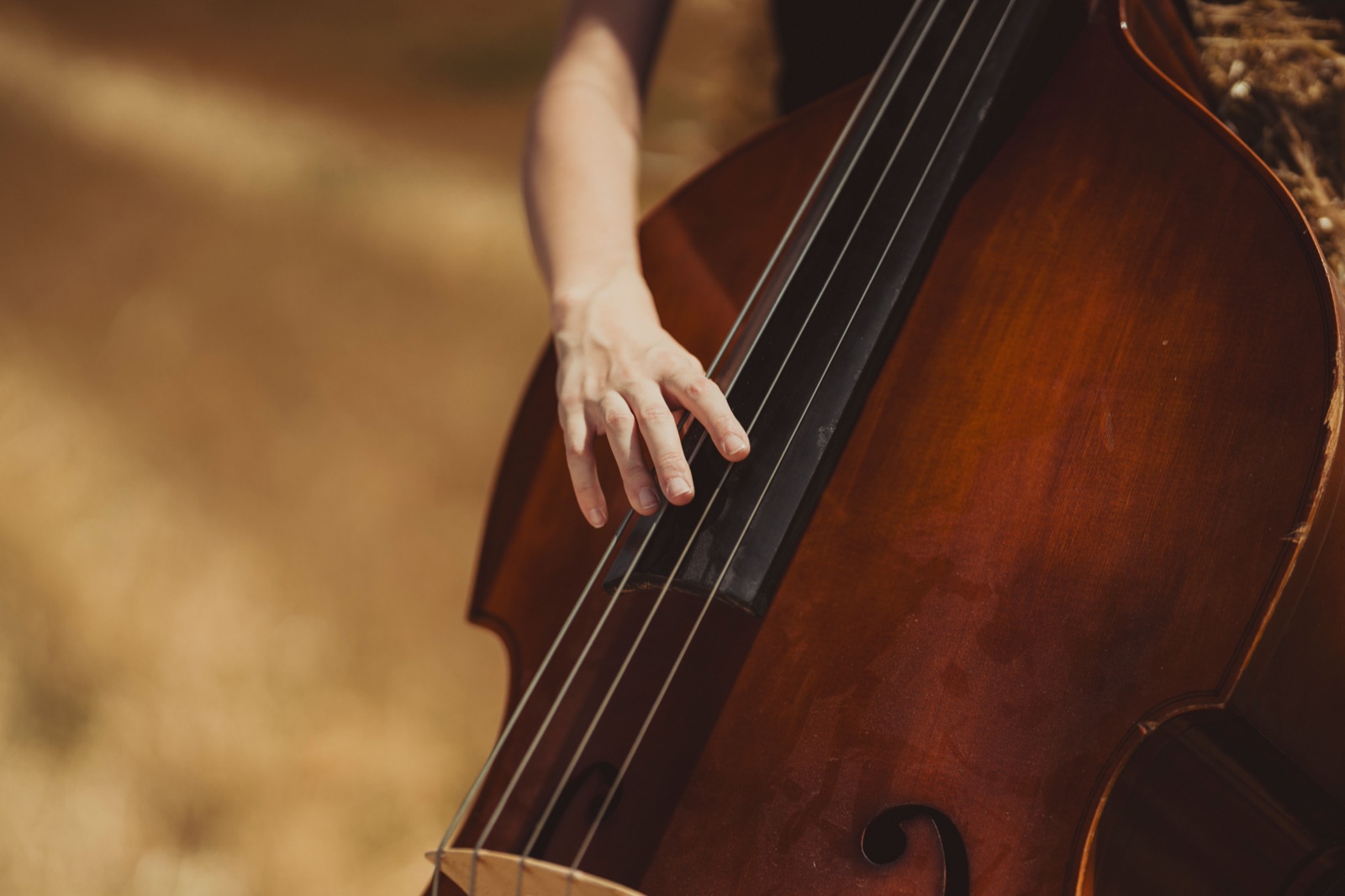
The tuning, the note positions and the scale length are the same as on a fretted bass. A standard fretless still has a 34-inch scale and is tuned E A D G (low to high). Every note you know on a fretted bass is in the same place on a fretless, just without the fret to mark it. Bowed string instruments, from the violin to the double bass, have always worked this way; the photo below shows a violin-family fingerboard, not a bass guitar, but the smooth, unmarked wood is the same idea.

Types of fretless bass
Lined and unlined fingerboards
Some fretless basses have painted or inlaid lines where the frets would be; others have only position dots, or nothing at all.
- Lined: easiest to learn on. The Squier Classic Vibe '60s Jazz Bass Fretless is described as having fret lines "for accurate finger placement".
- Unlined with side dots: the top face looks clean, but the dots on the edge of the neck, which you see while playing, still mark the positions.
- Fully unlined: relies on your ear and muscle memory.
One important detail for lined boards: on a fretted bass you press just behind the fret, but on a fretless you place your fingertip directly on the line, because the line marks where the fret itself would stand.
Fingerboard materials and coatings
Fretless fingerboards use hard woods. The current models below list ebony (Tony Franklin Fretless Precision Bass), Indian laurel (Squier Classic Vibe '60s Jazz Bass Fretless) and panga panga (Ibanez SRF700). Some players and makers coat the fingerboard with epoxy to protect the wood from wear, especially when using roundwound strings.
Converted basses
Early fretless electric basses were often fretted basses with the frets taken out by their owners. Bill Wyman of the Rolling Stones, for example, set out to replace the buzzing frets on an inexpensive bass in 1961 and never put new ones in. Converting a fretted bass usually means filling the fret slots and leveling the board; it is a job for a technician, not a quick home project.
A short history
Vintage Guitar dates the Ampeg AUB-1, a fretless version of the AEB-1 bass, to the July 1966 NAMM show, four years before Fender offered a fretless option on its Precision Bass, in 1970. Other sources give 1965 for the AUB-1, so treat the exact year as approximate. Fretless electric basses have been made by many companies since.
Current fretless bass models
Some examples from makers' own pages:
| Model | Maker | Fingerboard | Notes from the maker |
|---|---|---|---|
| Classic Vibe '60s Jazz Bass Fretless | Squier | Indian laurel, fret lines | Poplar body, 34 in scale, 1.5 in nut, two Fender-designed alnico single-coils |
| Jaco Pastorius Jazz Bass | Fender | Pau ferro, fret lines | Signature model: alder body, no pickguard, two single-coils, flatwound strings from the factory |
| Tony Franklin Fretless Precision Bass | Fender | Ebony, unlined, side dots only | Split-coil P pickup, DiMarzio Model J bridge pickup, drop-D tuner on the E string |
| SRF700 | Ibanez | Panga panga, fretless | Neck-through, 34 in scale, 38 mm nut, Bartolini pickups plus a piezo system, ships with flatwound strings |
Fender fretless Jazz Bass and Precision options
If you want a fretless J bass, the Squier Classic Vibe model is the lower-priced option; the Jaco Pastorius Jazz Bass is a signature model that costs considerably more. Both have fret lines. On the Precision side, the Tony Franklin model pairs a P pickup with a J pickup at the bridge and has an unlined board, which takes more ear training. For how the Jazz and Precision layouts sound, see the Jazz Bass guide and the Precision Bass guide.
Ibanez fretless bass
Ibanez lists the SRF700 as a fretless four-string with a piezo system alongside its magnetic pickups, controlled separately. A piezo pickup senses vibration at the bridge and gives a more acoustic-like sound, which some players blend with the magnetic pickups.
How to start playing a fretless bass
These steps assume you already play a fretted bass; if not, start on one first and come back.
- Tune carefully. Use an electronic tuner on the open strings before every session.
- Find the reference notes. Play the open string, then the octave on the 12th position line or dot. Adjust your fingertip until the two match; let your ear decide, not the line.
- Play slowly with a drone. Hold an open string ringing and play notes on the next string against it. Out-of-tune notes "beat" (a wobble in the sound) against the open string; in-tune notes sit still.
- Use one finger per position at first, then shift. Keep your hand shape steady so each finger lands near the right spot, then make small corrections.
- Practice slides. Slide slowly from one note to another and stop exactly on the target pitch. Check it with a tuner.
- Add vibrato last. Once notes land in tune, roll the fingertip gently to add vibrato on longer notes.
Common mistakes
- Pressing behind the line, as on a fretted bass. This makes notes flat. Press on the line.
- Watching the fingerboard instead of listening. Lines get you close; your ear finishes the job.
- Pressing too hard. Firm, but not crushing, pressure gives a clearer note and less hand strain. If your hand or wrist hurts, stop and see a doctor if it persists.
- Practicing only fast. Speed hides intonation problems. Slow, steady practice with a metronome shows them.
Strings and care
Many fretless players use flatwound or tapewound strings, which are believed to wear the fingerboard less than roundwounds; the Ibanez SRF700, for example, ships with flatwounds. Roundwounds give a brighter, more aggressive fretless sound but wear grooves into an uncoated board over time. Wipe the strings and fingerboard after playing. For more on string types, see the bass strings guide.
What to practice and check next
Spend a few minutes of every session on intonation against a drone before moving to songs. When you are choosing a fretless, compare the lined Squier with unlined models in person if you can. For more on the instruments these fretless versions are based on, read the Jazz Bass guide, and for the lower-priced Squier range, the Squier basses guide.
Questions
Is a fretless bass hard to play?
It is harder to play in tune than a fretted bass, because your fingertip, not a fret, sets the pitch. The techniques are otherwise the same, and fret lines or side dots help a lot while you learn.
Should a beginner start on a fretless bass?
Most players start on a fretted bass and add a fretless later, since a fretted bass lets you learn rhythm and the fretboard without also fighting intonation. Starting on fretless is possible, but it is slower.
Can you use roundwound strings on a fretless bass?
Yes, and some players do for a brighter sound, but roundwounds wear the fingerboard faster. Some fretless fingerboards are coated with epoxy to protect the wood for this reason.
Does Fender make a fretless Jazz Bass?
Yes. Fender sells the Jaco Pastorius Jazz Bass, a fretless signature model with a lined pau ferro fingerboard, and Squier sells the lower-priced Classic Vibe '60s Jazz Bass Fretless, which also has fret lines.
Is there a fretless acoustic bass?
Yes, fretless acoustic bass guitars exist. The playing advice is the same as for a fretless electric: press on the fret position, not behind it, and check your notes by ear.
Sources
Read next
Guide
Fender Jazz Bass: two pickups, a slim neck and a growling tone
Two single-coil pickups and a slim neck: what sets the J bass apart from the Precision, how to dial in its sound, and what changes on a five-string Jazz.
Guide
Fender Precision Bass: what a P bass is, how it sounds and who it suits
One pickup, two knobs and a 34-inch neck: why the P bass became the default electric bass, and how to choose between the versions sold today.
Buying guide
Squier basses: the series, the models and what changes between them
Squier makes Fender's classic bass designs at lower prices. Here is how its series differ, from the Sonic and Affinity to the Classic Vibe, and which suits whom.