Buying guide
Bass strings: windings, materials, gauges and how to choose a set
What the winding, the metal, the gauge and the length of a string do to the sound and feel of a bass, and how to read a string pack before you buy.
Published
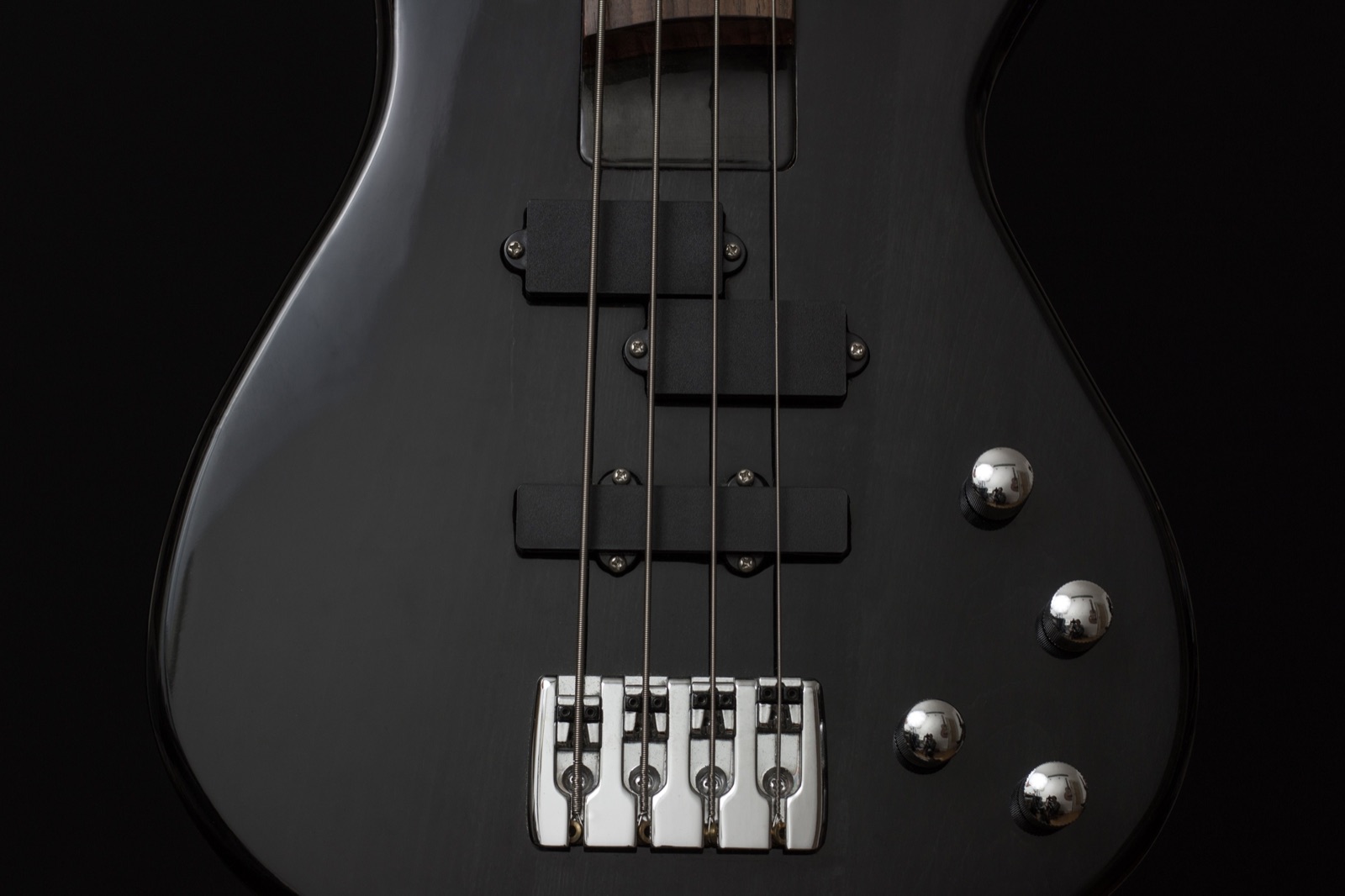
Bass strings change the sound of a bass more than most other parts you can swap in an afternoon. Four things decide what a set does: how the outer wire is wound, what metal it is made of, how thick each string is (the gauge), and how long the string is. This guide explains each one, how it changes tone and feel, and how to read a pack so the set you buy fits your bass and your music.
There is no single best set. The good bass strings for a funk player slapping a five-string are not the ones a player wants for a warm, thumpy sound on a vintage-style four-string, so the sections below are organized by what you want, not by brand.
What a bass string is made of
A wound bass string usually has a steel core, often hexagonal in cross-section, wrapped with one or more layers of wire. The outer wrap is what your fingers touch and what gives the string most of its character. One end has a ball that anchors at the bridge; the other end is tapered and wrapped in colored silk so it bends neatly around the tuning post.
Windings: roundwound, flatwound, half-round and tapewound
- Roundwound: round wire over the core. The surface is ridged, the tone bright with plenty of sustain. Rotosound describes its stainless steel Swing Bass 66 set as bright and ties it to the roundwound sound of early rock bass. Roundwounds are the most common type on new basses.
- Flatwound: a flat ribbon instead of round wire, so the surface is smooth. Rotosound says flats are generally regarded as mellower and warmer than roundwounds, and that it is not uncommon to leave a set on a bass for years.
- Half-round or pressure wound: a roundwound string whose outer surface is flattened. Rotosound describes its Solo Bass 55 as similar to its roundwound set but with a smoother feel, and still lists the tone as bright.
- Tapewound: a nylon tape wound over the string. La Bella describes its black nylon tape set as having a very smooth outer wrap and a warm, deep, vintage tone, and says it is aimed at fretless bass and also used by fretted players.
The full comparison of the two main types is in flatwound vs roundwound.
| Winding | Feel | Tone | Typical use |
|---|---|---|---|
| Roundwound | Ridged | Bright, long sustain | Rock, funk, slap, metal, most modern styles |
| Half-round | Smoother than round | Bright to mid-bright | Players who want less finger noise but keep some bite |
| Flatwound | Smooth | Warm, dark, short "thump" | Vintage soul, pop and country sounds |
| Tapewound (nylon) | Very smooth | Warm, deep | Fretless, acoustic bass, upright-like sounds |
Materials: nickel, stainless steel and others
The wrap metal shapes brightness and feel:
- Nickel-plated steel is the middle ground. Elixir describes its nickel-plated bass strings as having a rich, rounded tone with a heavier midrange, and Rotosound lists its nickel roundwound set's tone simply as "all round."
- Stainless steel is brighter. Elixir calls its stainless set bright with growling mids and a punchy, articulate attack, and Rotosound lists its stainless roundwound set as bright.
- Monel and other alloys turn up mainly in flatwounds. Rotosound's Jazz Bass 77 flats are wound with Monel, a nickel and copper alloy, and the maker lists their tone as warm.
If you are unsure, nickel-plated steel is the neutral starting point, and stainless steel is the step to take when you want more top end.

Gauges and tension
Gauge is the string's diameter in thousandths of an inch, and packs are named by the thinnest and thickest string: a ".045–.105" set has a .045 G string and a .105 E string. Several makers use .045–.105 as their standard four-string set: Rotosound's Swing Bass 66, Roto Bass and Jazz Bass 77 standard sets and La Bella's 760FS flats are all listed at 45–105.
Elixir's guide sums up the trade-off: heavy-gauge strings, around .050–.105, have a richer bottom end, while lighter sets, typically .040–.095, are generally favored for slap and pop playing.
Why tension differs between sets of the same gauge
Two sets with the same numbers can feel very different, because winding and core change the tension. Rotosound publishes tensions for its sets: on its flatwound Jazz Bass 77 standard set the .045 G string is listed at 57.46 lbs, while the .045 G of its stainless roundwound Swing Bass 66 set is listed at 48.27 lbs. If a maker publishes a tension chart, compare those numbers rather than gauges alone.
Five- and six-string sets
Five-string sets add a low B string, usually around .125–.135; Elixir sells single B strings in .125, .130 and .135. Six-string sets add a high C string as well; Elixir lists a .032 single for it.
Scale length: making sure the set fits
Scale length is the vibrating length of the string, from the nut to the bridge saddle. Many electric basses are 34 inches; Elixir's guide gives that figure for Fender's Precision and Jazz models, 30 inches for short-scale basses such as Gibson's SG models, and 35 inches for extra-long six-string basses.
String makers sell each set in lengths to match. Rotosound's chart shows how its sets line up:
| Rotosound length | Fits scale lengths of | String length |
|---|---|---|
| Short | 30 in | 32.25 in |
| Medium | 30.5–32 in | 35.25 in |
| Long | 32–34 in | 37 in |
| Extra long | 33.5–36 in | 39.25 in |
Other makers' ranges are close but not identical, so check the length on the pack. Rotosound's advice for measuring: measure from where the ball end anchors to the nut, and from the ball end to the tuning post, then pick the string length that falls between the two. A string-through-body bridge adds length without changing the scale, which is why some sets are sold in a separate through-body version; La Bella, for example, says its standard 760FS flats are not suitable for bridges that pass strings through the body.
The silk end matters too. La Bella says only the silk portion of its strings should wrap around the tuning post, and Rotosound warns that winding the speaking part of the string more than half a turn around the post may cause it to break. A set that is too long for your bass is the usual cause.
Coated strings
Coated strings have a thin polymer layer over the wrap. Elixir says its coating covers not only the outer surface but also the gaps between the windings, keeping out the dirt and corrosion that dull uncoated strings. Elixir bases its claim of longer tone life on what players tell it, so treat it as the maker's claim. Coated sets cost more per pack; whether they pay off depends on how often you would otherwise change strings and how quickly strings go dull under your hands.

How bass strings change the tone of your bass
Putting it together:
- Brighter: roundwound, stainless steel, lighter gauge, new strings.
- Warmer: flatwound or tapewound, nickel or Monel, heavier gauge, older strings.
- Smoother under the fingers: flatwound, half-round, tapewound, coated.
Changing strings changes the pull on the neck. Elixir notes that a change of gauge may require adjusting the bass's action and intonation, which is covered in our bass setup guide.
Which strings suit whom
Best bass strings for beginners
A standard-gauge (.045–.105) set of nickel-plated steel roundwounds, in the right length for your bass, is the most common combination and the easiest to replace anywhere. Stick with that gauge until you know what you want to change.
Best bass strings for slap
Bright roundwounds, often stainless steel, in a light gauge. Elixir notes that lighter sets are generally favored for slap and pop, and stainless steel gives the most top end.
Best bass strings for metal
Most metal players want a bright, clear attack and a tight low end: roundwounds, often stainless steel. Players who tune lower often go up in gauge or move to a five-string set so the low strings do not flop; check the maker's tension chart for the tuning you use.
For a vintage or fretless sound
Flatwounds give the warm, short thump of older soul and pop records. Nylon tapewounds are made for fretless and acoustic basses, and pressure-wound strings are a middle ground when roundwounds feel too rough.
Looking after a set
Wash and dry your hands before playing, wipe the strings with a dry cloth after, and keep the bass in its case or a stand away from heat and damp. When the sound turns dull or the strings feel gritty, it is time for a new set: our guide to how to restring a bass walks through the change.
Questions
What are the best bass strings for a beginner?
A standard-gauge set of nickel-plated or stainless steel roundwounds, sized for your bass's scale length, is the usual start. Roundwounds are the most common type, and .045–.105 is the standard four-string gauge for several makers.
What gauge are standard bass strings?
Most four-string sets sold as standard or regular run from about .045 on the G string to .105 on the E string. Lighter sets start around .040 and heavier ones around .050.
Do bass strings fit any bass?
No. The string must be long enough for your bass's scale length and bridge, and the silk-wrapped end should land on the tuning post. Measure your bass and match it to the length on the pack: short, medium, long or extra long.
Are coated bass strings worth it?
Coated strings cost more but are made to resist corrosion and dirt between the windings, so they keep their tone longer. They tend to pay off most for players who change strings rarely or whose strings dull quickly.
Which bass strings are best for slap?
Slap players usually prefer bright roundwounds, often stainless steel, in a lighter gauge. Elixir notes that lighter sets, typically .040–.095, are generally favored for slap and pop playing.
Sources
- Elixir Strings — How to choose the best bass guitar strings
- Rotosound — Bass string scale length guide
- Rotosound — Best flatwound strings: Rotosound Jazz Bass 77
- Rotosound — Swing Bass 66 Standard RS66LD (stainless steel roundwound)
- Rotosound — Roto Bass Nickel Standard RB45 (nickel-plated roundwound)
- Rotosound — Jazz Bass 77 Standard RS77LD (Monel flatwound)
- Rotosound — Solo Bass 55 Standard (pressure wound)
- La Bella — Deep Talkin' Bass Flats 760FS
- La Bella — 760N Black Nylon Tape
Read next
Comparison
Flatwound vs roundwound bass strings: sound, feel and which to choose
Flats are smooth and warm, rounds are bright and ridged. Here is how the two compare, where half-rounds and nylon tapewounds fit, and how to choose for your music.
Guide
How to restring a bass: change your bass strings step by step
Remove the old set, thread each new string through the bridge, cut it to length, wind it neatly down the post and tune up, with the tools for each step.
Guide
Bass guitar setup: neck relief, action, intonation and pickup height
Four adjustments, always in the same order: neck relief, string height, intonation and pickup height, with the checks for each and the signs that a job belongs to a technician.