Comparison
Online bass courses, apps, books or a teacher: ways to learn bass compared
What video courses, apps, method books, private teachers and free lessons each give you, what they leave out, and how to combine them.
Published
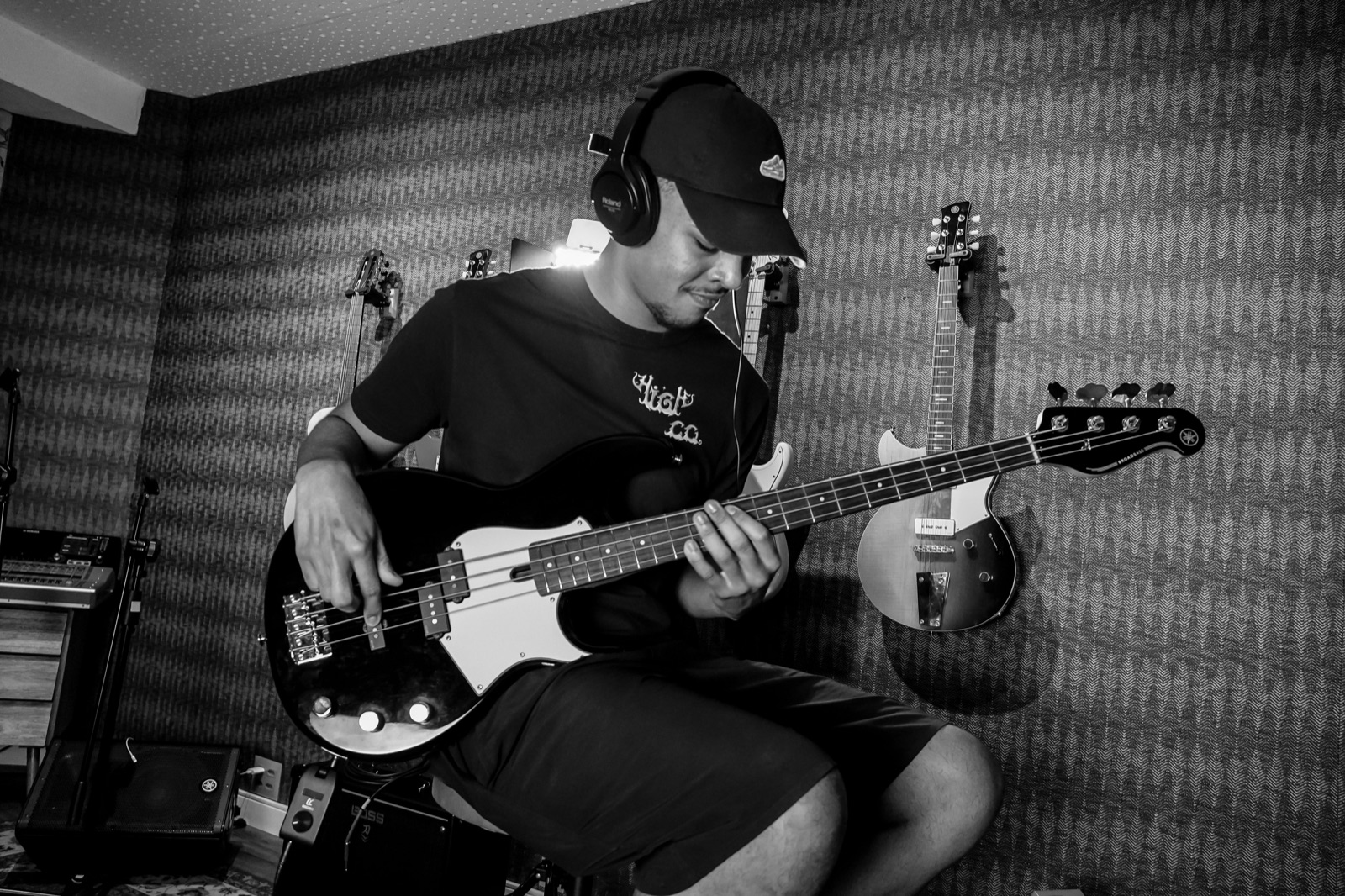
Online bass courses are one of five common ways to learn the bass, next to apps, method books, a private teacher (in person or by video) and free lessons. The short answer: a structured course, app or book gives you a path to follow, and a teacher gives you feedback on how you actually play. Many players combine one of the first with some of the second. This comparison shows what each way offers, what it leaves out and who it suits, without ranking services; the right choice depends on your budget, schedule and how you like to learn.
Ways to learn bass at a glance
| Way to learn | What you get | Feedback on your playing | Pace | Suits |
|---|---|---|---|---|
| Online video course or lesson site | Recorded lessons in a set order, often with tab and play-alongs | Usually none, sometimes by forum or video submission | Your own | Self-starters who want structure |
| Online college course | Instructor-led course over several weeks, with assignments | Yes, graded | Fixed schedule | Players with some experience who want depth |
| Bass guitar app | Short lessons, exercises and songs on a phone or tablet | Often automatic, by listening through the microphone | Your own, in short sessions | Busy beginners, daily habit |
| Method book | A graded course on paper, often with audio tracks | None | Your own | Readers, players who like a fixed curriculum |
| Private teacher, in person | Lessons built around you, usually weekly | Yes, immediate | Weekly | Anyone who can find and afford one |
| Private teacher, by live video | The same, through a webcam | Yes, immediate but camera-limited | Weekly | Players without a good teacher nearby |
| Free online lessons | Single lessons and articles on every topic | None | Your own | Everyone, as a supplement |
Online bass courses and lesson sites
A video course or subscription lesson site gives you recorded lessons in order: how to hold the bass, then root notes, then rhythm, scales and songs. The main strength is structure. You always know what to practice next, you can repeat a lesson as often as you like, and you can learn at 6 a.m. or midnight.
What you don't get is someone watching you. A video can show a relaxed plucking hand, but it can't tell you that yours is tense. Some services add feedback through forums or by reviewing videos you send in; check the service's own page for what it includes before you pay, and look for a free trial or sample lessons.
Online college courses
Some music colleges run bass courses online with an instructor, a schedule and assignments. Berklee Online, for example, lists 4-week and 12-week bass courses, from a level 1 Bass Performance 101 to rock, jazz and R&B bass at higher levels, which can be taken for credit or not; non-credit students get satisfactory or unsatisfactory grades instead of letter grades. Courses like these are a serious commitment of time and tuition, and they suit players who already have the basics.
Bass guitar apps
An app splits learning into short daily sessions on your phone or tablet. Many listen through the microphone and tell you whether you played the right note at the right time, which is a kind of feedback a book or video can't give. Apps suit beginners who want to build a daily habit in 10 to 20 minutes.
The limits: a phone screen is small for watching hands, a microphone hears pitch and timing but not tension or posture, and song libraries vary by service and region. Check which bass topics and songs an app actually covers, and whether it works for bass at all rather than only guitar, before you subscribe.
Bass guitar books
A method book is a full course on paper, graded from the first notes upward. Many teach both standard notation and tab, and many come with audio tracks to play along with. The Hal Leonard Bass Method, Complete Edition, for example, bundles the series' Books 1, 2 and 3 in one 144-page volume, with online full-band audio tracks; its publisher's page says the included player can slow the audio down without changing the pitch and set loop points.
Books usually cost less than lessons, they don't need a screen, and a method book that uses standard notation is a direct way to learn to read music. They suit people who like to work through material in order. A book can't hear you, so use a metronome and record yourself now and then.

A private bass teacher, in person or online
Private lessons are one-to-one sessions, usually 30 minutes to an hour long, and Wikipedia's article on music lessons notes they can also take place by live video chat. Yamaha's tips for beginning bassists put a teacher first: there is no better way to start, it says, than under the wing of someone who knows more than you do, and a good teacher can assess your strengths and weaknesses.
In person
A teacher in the room sees your hands, posture and bass from every side, can play along with you and can check your instrument. Ask about lesson length, what styles they teach and whether a trial lesson is possible.
Online by live video
Live lessons by video give you the same one-to-one feedback without the commute, and open up teachers anywhere in the world. You need a stable connection and a camera angle that shows both hands; audio delay makes playing together in real time difficult, so most online lessons alternate between the teacher playing and you playing.
What a teacher adds that other methods don't
- Spotting habits you can't see: a bent wrist, a tense thumb, uneven plucking.
- Choosing what you learn next based on how you actually play.
- Keeping you practicing between lessons.
The cost is the highest of any option and repeats every week, which is why many players take lessons for a few months, then continue alone and book occasional lessons when they get stuck.
Free online bass lessons
Free lessons on video sites and learning sites (including the guides on this site) cover nearly every topic: tuning, tab, technique, scales, songs. For a beginner, free material is enough to get started and to keep going for a long time.
The risk is order. Free lessons are separate pieces, and it's easy to jump from slap videos to music theory without ever building steady timing. Pick one beginner path, such as how to play bass followed by how to read bass tabs and bass exercises, and work through it before branching out.
Which way to learn bass suits you
- You're starting from zero on a tight budget: free lessons plus a method book, with a metronome.
- You want a clear path and practice at odd hours: an online bass course or an app.
- You keep stalling or something hurts: a few lessons with a teacher, in person or by video.
- You want to read music and play jazz or in an ensemble: a teacher and a method book that teaches notation.
- You already play and want depth in a style: a focused course, including instructor-led ones from music colleges.
Whatever you choose, the same habits matter. Yamaha's tips recommend practicing grooves and patterns to a metronome and playing along with recordings of bassists you admire, and add that there's no substitute for regular, consistent practice, alone and with others. A practice amp with a headphone output makes daily practice easier at home, whichever way you learn.
Questions
Can you learn bass online?
Yes. Video courses, live lessons by video and free lessons cover everything a beginner needs. What online learning can't easily do is watch your hands from every angle, so a few lessons with a teacher, in person or by video, help catch habits you can't see yourself.
Are online bass lessons as good as a private teacher?
They do different jobs. A pre-recorded course gives you a structured path at your own pace; a teacher gives feedback on your playing. Live lessons by video combine the two, with a teacher who watches and answers you in real time.
Can I learn bass from a book?
Yes. Method books take you through technique, reading and styles in a set order, and many come with audio tracks to play along with. A book can't hear you, so pair it with a metronome and recordings of yourself.
Which free online bass lessons should I use?
There is no single right answer. Free lessons on video sites and on learning sites like this one are enough for the basics; the risk is jumping between topics without an order, so follow one beginner path through before branching out.
Is a bass guitar app worth it?
An app suits short daily practice: it tells you what to play next and often listens to whether you played it. Check what it covers before paying, and use a separate metronome and tuner if the app has none.
Sources
Read next
Guide
How to play bass: your first notes, hands and practice routine
Get the bass in tune, set up both hands, play your first notes in time and learn what to practice each day after that.
Guide
Bass exercises: warm-ups, finger exercises and a daily practice routine
Six exercises in tab for the plucking hand, the fretting hand and your timing, and a routine that fits them into half an hour.
Guide
How to read bass tabs: strings, frets, symbols and rhythm
Which line is which string, what the numbers and symbols mean, and how to get the rhythm that tablature leaves out.