Checklist
Buying a used bass guitar: what to check, in order
Go through a second-hand bass in the order a repair shop would: neck first, then frets, body, electronics and hardware, and only then decide whether you like how it plays.
Published
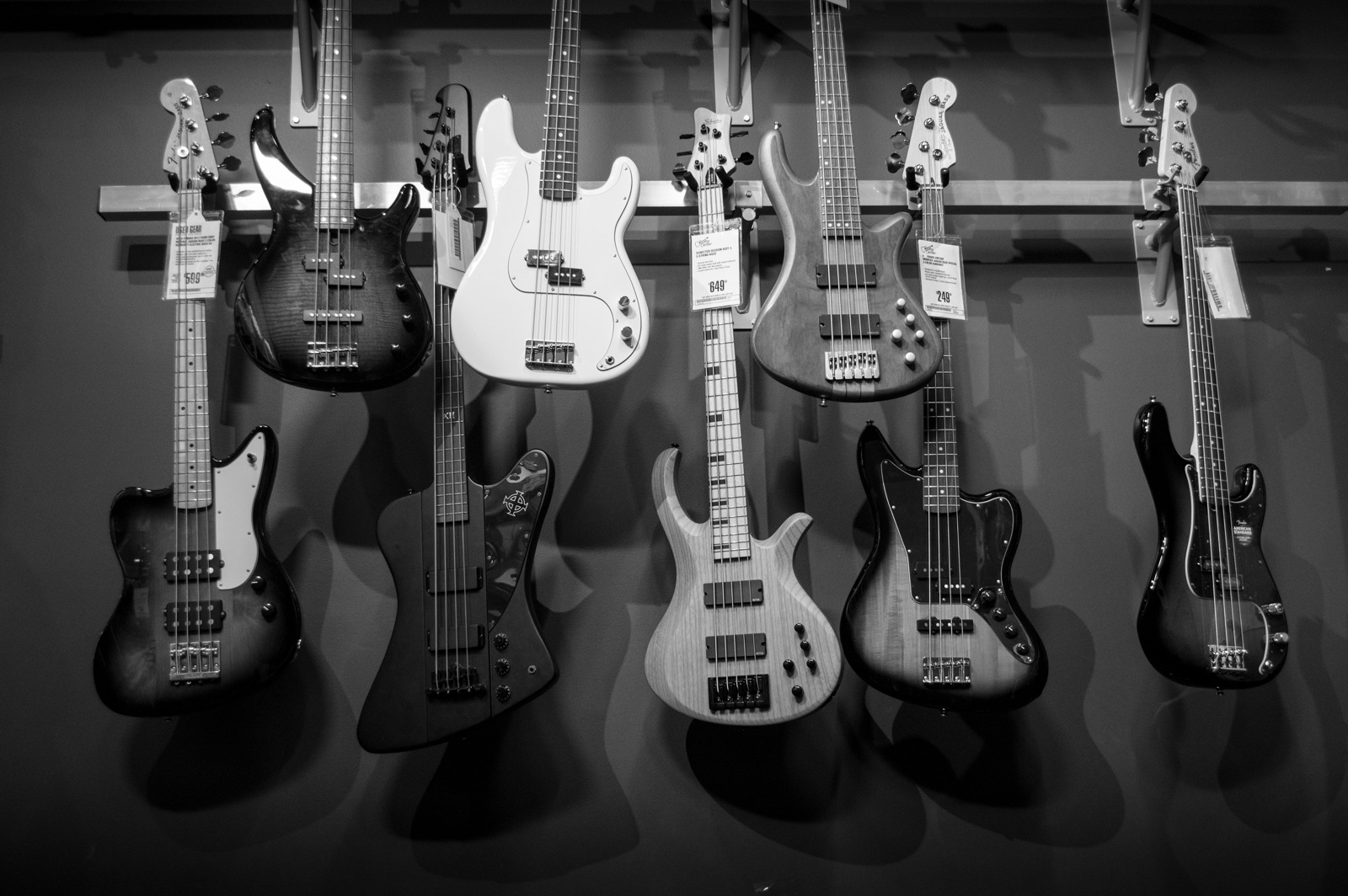
A used bass guitar can be the most instrument you get for the money, but you take on the job of checking it. Most problems on a second-hand bass are cheap to fix; a few are not. Go through the bass in the order below: the expensive parts first, so you can stop early if the neck is wrong, then the details, then how it plays.
What you'll need
Essentials
-
Tuner
: tune the bass before judging buzz, intonation or how the neck sits under string tension. -
Instrument cable
: test the output jack and every knob, and wiggle the plug to listen for crackle. -
Small bass amp or headphone amp
: a shop has one; at a private sale, bring your own so you can hear the electronics.
Optional
-
A fresh 9-volt battery
: for an active bass, so a dead battery isn't mistaken for a wiring fault. -
Small flashlight
: look into the neck pocket, the control cavity and along the frets.
Before you go: the listing and the seller
Read the whole description and look at every photo. MusicRadar warns how easy it is to miss a major repair or damaged parts in a listing, even when the seller mentions them in the fine print. Ask the seller directly whether anything has been repaired, replaced or modified, and look up what the same model normally sells for.
Tune the bass to pitch before judging the neck: without string tension a neck can look straight and still bow once tuned.
Neck and truss rod

The neck is the most expensive part to put right, so check it first.
Sight down the neck
Hold the bass by the body and look along the edge of the fingerboard from the headstock end, like sighting along a ruler. Premier Guitar's test is simple: a neck that looks even from end to end, with a truss rod that still allows adjustment, is a good sign. A slight forward bow, called relief, is normal. A neck that dips and rises like a rollercoaster track needs substantial correction, and so does one twisted so one edge sits differently from the other; a technician quoted by MusicRadar says the cost of correcting a bad neck can be more than the instrument is worth.
Does the truss rod still turn?
Excessive bow in either direction can mean the truss rod is simply out of adjustment, or that it is stripped or broken, and replacing a broken rod is a major job. Ask the seller whether the rod has been adjusted recently. Only if they agree, try a very small turn, no more than a fraction of a turn, and return it to where it was. Our truss rod adjustment guide explains which way is which. A rod that won't move, or that turns with no effect, is a technician's job.
Neck joint and action
Check for gaps or cracked finish where the neck meets the body. Premier Guitar's test: if the saddles are as low as they go and the strings are still high, the neck angle is off, which it calls not an expensive repair on a bolt-on neck but a very expensive one on a glued (set) neck.
Frets and fingerboard
Look at the top of each fret, under the strings, for dents worn by the strings. Light wear is normal; deep dents can cause buzz and dead notes, and Premier Guitar warns that fixing fret wear can be costly. Premier Guitar also warns about a "ramp", a rise over the last five to eight frets, which usually needs a partial or full refret.
Run a hand along both edges of the neck for sharp fret ends. Filing them is usually a small job for a technician.
Second-hand fretless bass
A fretless bass has no frets to wear, but the strings wear the fingerboard itself. Look along the board for grooves under the strings, especially the lower ones, then play slowly up every string and listen for buzz or notes that die quickly. Light marks are normal; deep grooves usually mean the board needs resurfacing. Our fretless bass guide covers what to expect from one.
Body, headstock and finish

Check the area where the neck meets the headstock: Premier Guitar says wrinkles or ridges in the finish there are a sign of a break that has been repaired, and a repaired headstock lowers the value a lot. A crack that goes through the finish into the wood can mean a body seam separating, which is expensive to fix. Fine lines in an old finish, called checking, are normal, and Premier Guitar says they don't lower the value.
Ask whether the bass has been refinished: not a playing problem, but Premier Guitar puts a refinished instrument at about half the value of one with its original finish.
Electronics
Plug in and turn the volume up. Then:
- Turn every knob slowly through its whole range and listen for crackle or sudden drops: Premier Guitar's check for scratchy pots.
- Try every switch and pickup selector position.
- Wiggle the cable at the output jack. Noise or cutting out means a loose or worn jack.
- If the bass has two pickups, play them together. Premier Guitar says a thin, bright sound with both on can mean they are wired out of phase.
Minor crackle often clears with contact cleaner; Premier Guitar says serious corrosion means new pots and switches. Leave any repair to a technician.
If the bass is active
An active bass has a battery-powered preamp, usually 9 volts and sometimes 18 volts, according to Yamaha. If it is silent, try a fresh battery before assuming a fault. If it has an active/passive switch, test both modes. Our active vs passive bass comparison explains the difference.
Hardware
Turn every tuner: it should move smoothly without slack. Check the saddle screws, strap buttons and neck screws for stripped threads, missing screws or rust; Premier Guitar warns that rust can leave bridge screws seized.
Second-hand left-handed bass
Check that it was built left-handed and not converted: the nut slots should be cut for the strings in left-handed order, the strap buttons and controls in the normal positions for a lefty, and the bridge saddles set to match. A right-handed bass restrung upside down plays, but the nut, intonation and controls will all be wrong.
The playing test
Only now, play it: every note on every string, on a strap and sitting down. Listen for buzz through the amp, dead spots and tuning drift. Compare the twelfth-fret note on each string with the open string's harmonic at the same fret: if they differ a lot, the intonation needs setting, which a bass setup covers. Notice the weight and whether the headstock dips.
MusicRadar's advice is to give a used instrument time, especially before you spend money on new pickups. Fresh strings and a setup are cheaper things to try first.
Where to buy a used bass guitar
- Music shops with used stock: usually more expensive, but Premier Guitar notes that reputable shops often have their own repair staff who check instruments, and you may get a return period.
- Private sellers: often the best price, no warranty. Meet where you can plug in.
- Online listings and auctions: the widest choice, including Fender, Ibanez and left-handed models that are hard to find locally. Insist on clear photos of the fret tops, the back of the neck and the headstock, and use a payment method with buyer protection. Premier Guitar notes that instruments from online auctions, pawnshops and flea markets aren't always good deals.
A cheap used bass guitar gets the same checks; our cheap bass guide covers where budget basses cut corners. Budget for fresh strings and a setup either way.
Questions
Is it worth buying a used bass guitar?
Often, yes: for the same money a used bass can be a better instrument than a new budget one. You give up the warranty, so check the neck, frets and electronics yourself or buy from a shop that inspects its used stock.
What is the most important thing to check on a used bass?
The neck. A neck that looks even from the first to the last fret and a truss rod that still adjusts are good signs; a badly bowed or S-shaped neck, or a truss rod that won't turn, can cost more to fix than the bass is worth.
What faults on a used bass are cheap to fix?
Old strings, a high action, scratchy controls and loose tuners are usually small jobs. Worn frets, a broken truss rod, a cracked headstock or a refinished body cost much more or lower the bass's value.
Should I buy a used bass online?
It can work if the listing has clear photos and a full description, the seller answers questions, and you pay with a method that offers buyer protection. Read the whole description: a major repair or damaged part can be mentioned only in the small print.
What should I check on a second-hand fretless bass?
Look along the fingerboard for grooves worn by the strings, especially under the lowest strings, and play slowly up the neck listening for buzz. Light wear is normal; deep grooves usually mean the board needs resurfacing by a technician.
Sources
Read next
Buying guide
Cheap bass guitar: what you get, what to check, where to save
Where budget basses save money, which savings matter to a player and which don't, and a checklist for buying new, discounted or second-hand.
Guide in Strings & setup
Bass truss rod adjustment: direction, small turns and when to stop
Check the neck relief, find the adjustment nut, turn it a quarter at a time in the right direction, let the neck settle and recheck, and stop at the first sign of trouble.
Guide in Strings & setup
Bass guitar setup: neck relief, action, intonation and pickup height
Four adjustments, always in the same order: neck relief, string height, intonation and pickup height, with the checks for each and the signs that a job belongs to a technician.