Buying guide
Short scale bass: who it suits and what to look for
A shorter neck, closer frets and a lighter instrument: what changes when you leave the 34-inch standard, and what to check before you buy.
Published
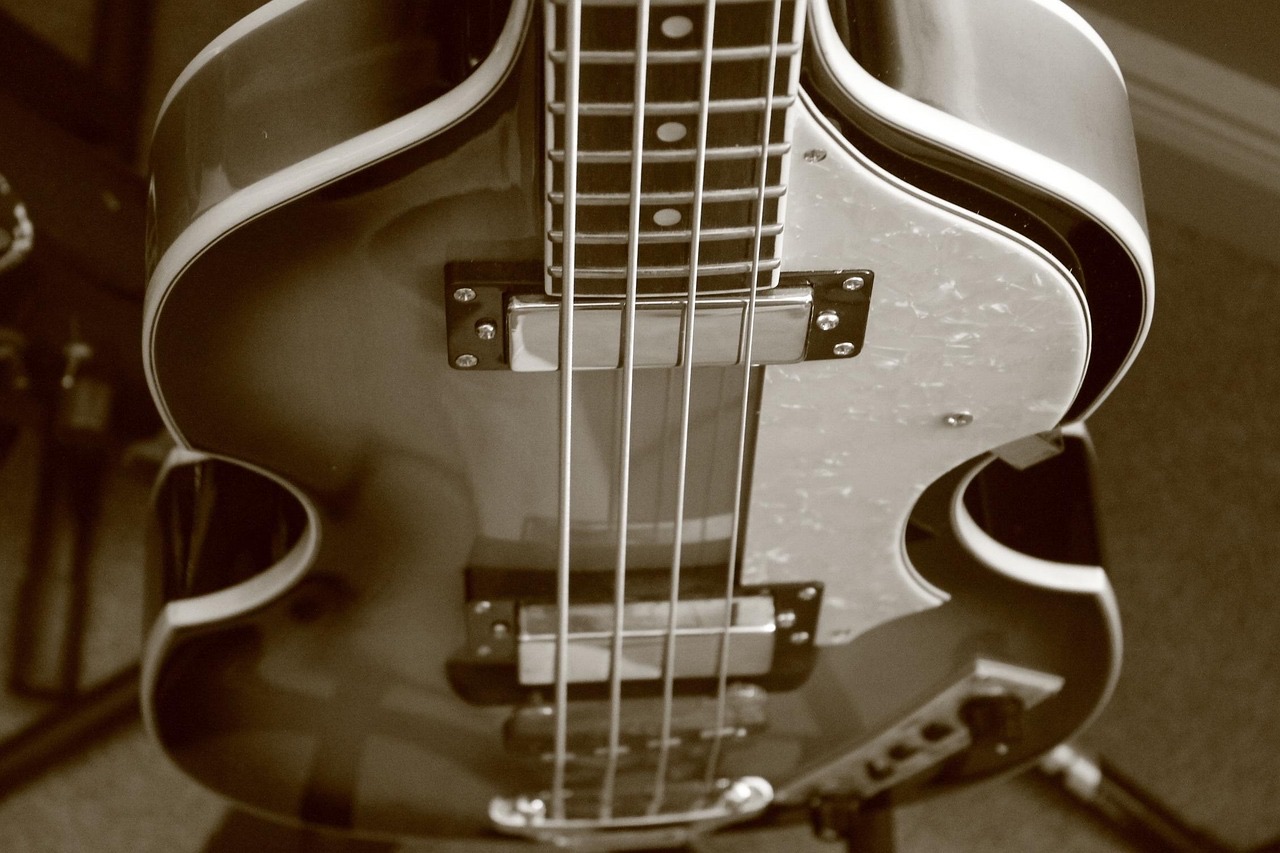
A short scale bass is an electric or acoustic bass with a scale length of about 30 inches or less, against the 34 inches of a standard bass. The difference sounds small, but it moves every fret closer to the next, shortens the neck and usually makes the whole instrument lighter. This guide explains what changes, the main types of short-scale bass, and who should choose one.
What scale length means
Scale length is the vibrating length of the string, from the nut at the headstock end to the saddle on the bridge. Electric basses fall into rough bands:
- Short scale: 30 inches or less.
- Medium scale: about 32 inches.
- Standard scale: 34 inches, set by the Fender Precision Bass in 1951.
- Long scale: about 35 inches, more common on five- and six-string basses to help the low B.
Short-scale basses are not a recent idea. Gibson's violin-shaped EB-1 of 1953 was an early one, and Fender introduced the 30-inch Mustang Bass in 1966, originally marketed as a student bass.
What changes on a shorter neck
Fret spacing and reach
Every fret is closer to its neighbors, so stretches like one finger per fret in the first position are easier. The first fret is also closer to your body, which means less reach for the fretting arm and a more relaxed shoulder. For players with small hands or short arms this is the main reason to choose one.
String tension and feel
At the same pitch, a shorter string needs less tension. Short-scale basses feel looser under the fingers, which many players find comfortable but some find floppy, especially on the low E. Heavier gauge strings and a good setup restore some of the firmness.
Sound
Lower tension and a shorter string usually give a rounder, slightly thicker sound with less of the bright snap of a 34-inch bass. The pickups, strings, amp and how you pluck matter more than scale length, so try a few before deciding the sound is wrong for you.
Size and weight
A shorter neck and usually a smaller body make a short-scale bass easier to carry and to fit into a car, a small room or a child's arms. Some hollow-body short-scale basses are very light, which can lead to neck dive, where the headstock pulls toward the floor.
Types of short-scale bass
Solid-body short-scale electric
Fender's Mustang Bass has a 30-inch scale and, on recent PJ versions, a split-coil pickup at the neck and a single-coil at the bridge. Its Squier relative, the Bronco Bass, uses the Mustang body with a single pickup. Together they cover the Fender short scale bass at full price and in Fender's lower-priced Squier line.
Extra-short "mini" basses
Some basses go below 30 inches. The Ibanez miKro series is built for small hands; the GSRM20 miKro, according to Ibanez, has a 28.6-inch scale, 22 frets, a 38 mm nut width, a poplar body, a maple neck, and passive Dynamix P (neck) and J (bridge) pickups, with .045–.105 strings from the factory.
Hollow and semi-hollow short-scale basses
Violin-shaped and thinline basses such as the Höfner 500/1 combine a 30-inch scale with a hollow body. The light body can tip them toward neck dive, and like other hollow instruments they can feed back when played loud.
Short-scale acoustic basses
A few acoustic basses use very short scales to stay portable. Taylor lists the GS Mini-e Bass with a 23.5-inch scale and its own specific string sets. See acoustic bass guitars for the type as a whole.
Comparison of short-scale bass types
| Type | Typical scale | Weight and size | Sound | Watch for |
|---|---|---|---|---|
| Solid-body short scale | About 30 in | Compact, moderate weight | Round, punchy | Fewer string options than 34 in |
| Mini bass (for example miKro) | Under 30 in (28.6 in on the GSRM20) | Very small and light | Round, less low-end weight | Can feel cramped for adult hands |
| Hollow or semi-hollow | About 30 in | Very light | Airier, depends on pickups | Feedback at volume, neck dive |
| Short-scale acoustic | Varies, down to 23.5 in | Portable | Quiet unplugged | Needs its own specific strings |
| Medium scale (for comparison) | About 32 in | Between the two | Between the two | Fewer models |
What to look for in a good short scale bass
Scale length, stated in the specs
"Short scale" is a loose label. Check the actual figure on the maker's spec page: 30 inches and 28.6 inches feel noticeably different, and a medium-scale 32-inch bass might suit you better than either.
Strings for your scale

Short-scale basses need short-scale strings. Full-length strings can be too long, putting the thick or tapered part of the string over the nut or wrapped on the tuner post. Rotosound, for example, sizes its short sets for a 30-inch scale and advises measuring from where the ball end anchors to the nut and to the tuning post. Very short basses may need sets made specifically for them.
Neck width and string spacing
A short scale does not always mean a narrow neck. Compare the nut width on the spec sheet with a bass you have played, and look at string spacing at the bridge if you play with your fingers.
Balance on a strap
Balance varies from one short-scale bass to the next, because the neck is shorter and the body often smaller or lighter. Try it standing up with a strap and let go of the neck. If it dips, a wide, grippy bass strap helps.
Pickups and controls
The same choices as on any bass: a split-coil P-style pickup for a solid, simple sound; J-style single-coils for more range; a combination for both. Passive electronics need no battery.
Case fit
A short-scale bass may rattle around in a standard bass gig bag. Makers often name a matching bag; Ibanez lists one for the miKro. More in bass cases and gig bags.
Who should choose a short scale bass
- Children and teenagers: a 30-inch bass, or a mini bass for younger players.
- Adults with small hands or a short reach: start with a 30-inch scale; try a 32-inch medium scale too.
- Players with shoulder or wrist discomfort on a full-size bass: a shorter reach may help, but if you have pain, see a doctor before changing instruments.
- Guitarists who play some bass: the shorter neck feels closer to what they know.
- Travelers and home recorders: a small bass is easier to keep on a stand by the desk.
If none of those apply and you want the widest choice of instruments and strings, a 34-inch bass is still the default; our beginner bass guitar guide compares both.
Setting up and looking after a short scale bass
Have the setup checked when you buy: relief, string height and intonation matter as much on a short bass as on a long one. The basics are in the bass setup guide; make small truss rod adjustments and check after each one, and take the bass to a technician if anything feels stuck. Store it in a bag that fits, away from heaters and damp, and change strings when they lose their clarity.
Questions
What is a short scale bass?
A bass with a scale length of about 30 inches or less, measured from the nut to the bridge saddle. The standard electric bass is 34 inches, so the frets on a short scale bass sit closer together and the neck is shorter.
Is a short scale bass good for beginners?
Yes, particularly for children, smaller players and anyone who finds the reach to the first fret of a full-size bass uncomfortable. Everything you learn on it carries over to a 34-inch bass.
Does a short scale bass sound different?
At the same tuning a shorter string has less tension, so it feels slacker and often sounds rounder, with a little less snap and sustain. Pickups, strings and setup still shape the sound far more than a few inches of scale.
Do short scale basses need special strings?
Yes. Buy sets labeled for short scale, or measure your bass and compare with the maker's chart, because full-length strings may be too long to wind on properly and the wrong part of the string can end up on the tuner post.
What is the Ibanez miKro bass?
The miKro is Ibanez's series of compact instruments. The GSRM20 miKro bass has a 28.6-inch scale, 22 frets, a 38 mm nut and a P-style neck pickup with a J-style bridge pickup, according to Ibanez.
Sources
Read next
Buying guide
Beginner bass guitar: how to choose your first bass
The types of first bass, the few specifications that change how one feels in your hands, and how to match them to your body, your music and your budget.
Buying guide in Strings & setup
Bass strings: windings, materials, gauges and how to choose a set
What the winding, the metal, the gauge and the length of a string do to the sound and feel of a bass, and how to read a string pack before you buy.
Buying guide
Cheap bass guitar: what you get, what to check, where to save
Where budget basses save money, which savings matter to a player and which don't, and a checklist for buying new, discounted or second-hand.