Buying guide
Best bass amp for you: the types of bass amp and how to choose one
Headphone amp, combo, head and cabinet or preamp pedal: which type fits your room, your band and your back, and what makes any of them a good bass amp.
Published
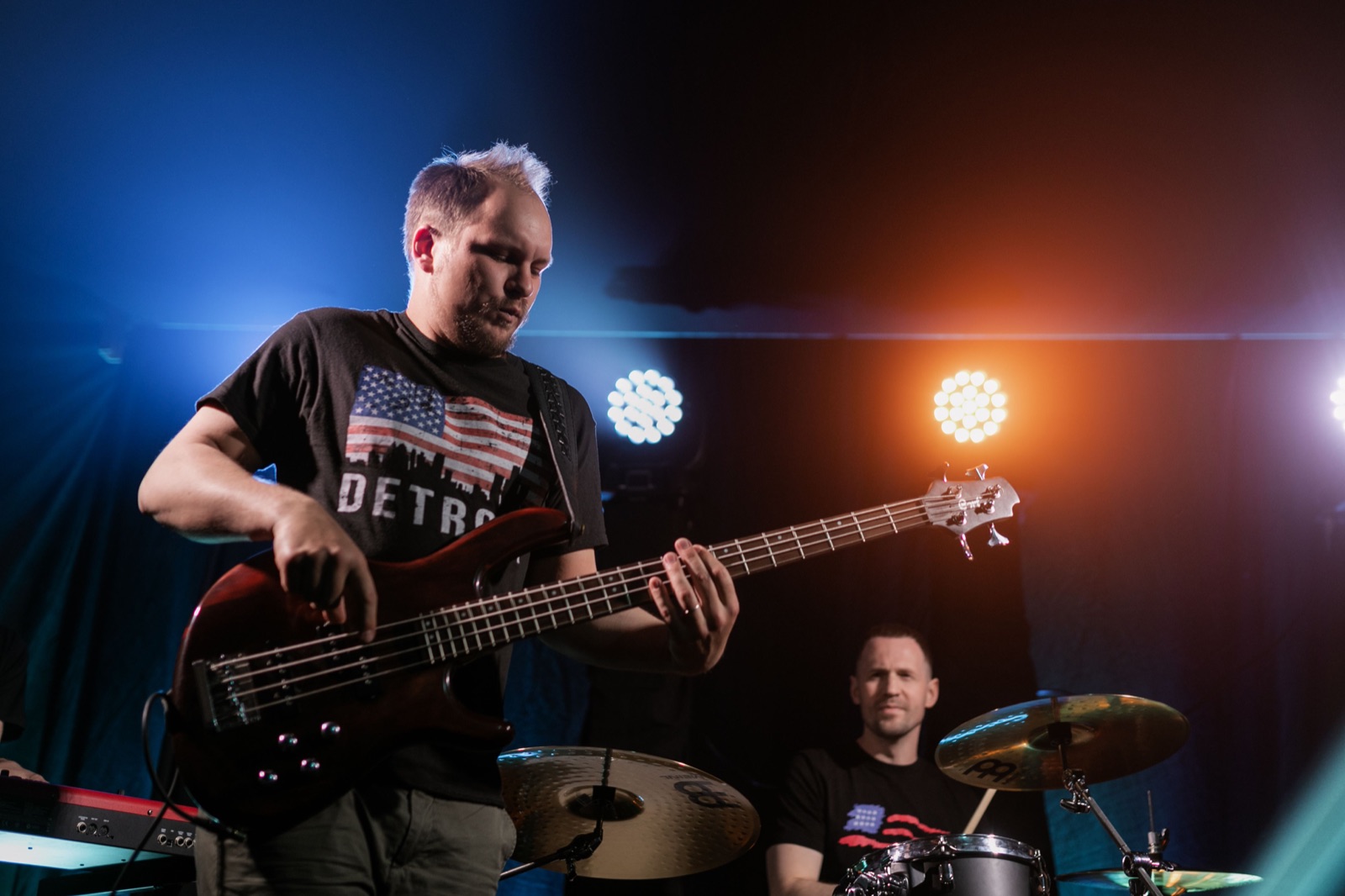
The best bass amp is the one that fits where you play: your bedroom, a rehearsal room, a club stage or a studio. A 500-watt rig is the wrong amp for an apartment, and a 30-watt practice combo is the wrong amp against a rock drummer. So this guide doesn't rank models. It explains the types of bass amp, what separates a good bass amplifier from a poor fit, and which type suits which player, with makers' own specifications as examples.
What a bass amp does
Yamaha's guide describes a bass amp as three parts: a preamp that shapes your tone, a power amp that makes it loud, and a speaker in a cabinet. The types below are different ways of packaging those parts. Low notes usually need more power and speaker area to sound full, and Yamaha notes that bass amps generally weigh more than guitar or keyboard amps.
Types of bass amp compared
| Type | What it is | Example (maker's spec) | Best for |
|---|---|---|---|
| Headphone amp | plugs into the bass, no speaker | Vox amPlug 2 Bass: two AAA batteries, headphone and aux jacks | silent practice, travel |
| Practice combo | small amp and speaker in one box | Ampeg Rocket Bass RB-108: 30 watts, one 8-inch | home practice |
| Modeling combo | combo with digital amp voices and effects | BOSS Katana-110 Bass: 60 watts RMS, 10-inch plus tweeter | home, recording, effects |
| Stage combo | larger amp and speaker in one box | Ampeg Rocket Bass RB-210: 500 watts, two 10-inch | rehearsals and gigs |
| Head and cabinet | electronics and speakers in separate boxes | any head plus 1x15, 2x10, 4x10 cabs | gigs, flexible rigs |
| Preamp/DI pedal | tone shaping and a DI output, no power amp | Tech 21 SansAmp Bass Driver DI | playing straight into a PA |
Headphone amps
The smallest option. Vox's amPlug 2 Bass plugs into the output jack of the bass and lists about 11 to 17 hours on two AAA batteries. Nobody hears you but you, which is the point. More in the guide to the bass practice amp.
Combo amps
Amp and speaker in one box, matched by the maker. Ampeg's Rocket Bass line alone spans 30 watts with an 8-inch speaker to 500 watts with two 10-inch speakers, which shows how wide the category is. Combos are the usual choice from first amp to small gigs; see bass combo amps.
Head and cabinet
The head holds the preamp and power amp; cabinets hold the speakers. You choose the cabinet sizes and can add a second cab, but you must match the impedance in ohms. The bass amp head and cabinet guide walks through it.
Preamp and DI pedals
A preamp pedal shapes the tone like an amp's preamp and sends a balanced signal to the PA, with no power amp or speaker. Tech 21 describes the SansAmp Bass Driver DI as a tube-amp emulation with an effected XLR output, an effected 1/4-inch output and a parallel uneffected 1/4-inch output, powered by a 9-volt battery, an adapter or phantom power from the mixer. Tech 21 presents it as a way to enhance an existing rig, and its XLR output can also feed a mixer directly; see the bass DI box guide.

What makes a good bass amp
Enough power for where you play
Yamaha's guide gives a useful scale for rehearsals and gigs: a 50-watt amp is underpowered, a 300-watt amp gets the job done, and a 1,000-watt amp is overkill. At home, the 30- to 60-watt combos sold as practice amps are plenty. Two more points from the sources:
- Tube amps are generally louder than solid-state amps with similar power ratings (Yamaha).
- A rating means little without its load: Premier Guitar's example is an amp rated 400 watts at 4 ohms that may give only about 250 watts at 8 ohms.
Speakers that suit your sound
Bass cabinets usually use speakers from 10 to 18 inches. Yamaha's rule of thumb is that bigger speakers give more bottom and smaller speakers more detail, and a tweeter adds the high frequencies that make slap and finger noise audible.
Weight you can carry
Bass amps generally weigh more than guitar amps. For comparison, Ampeg lists the 30-watt RB-108 at 23 lbs and BOSS lists the Katana-110 Bass at 37 lbs. A rig you can carry alone to the car is worth more than a bigger one you leave at home.
The right jacks
Headphone output and aux input
For practice at any hour and for playing along with recordings.
XLR direct output
For sending your sound to a PA or a recording interface. Yamaha notes that many bass amps have one built in, and Ampeg includes one on every Rocket Bass combo except the RB-108.
Effects loop
For placing time-based pedals after the preamp; useful if you build a board of bass pedals.
Controls you will actually use
A three-band EQ (bass, middle, treble) covers most needs; a mid-frequency switch or a graphic EQ gives finer control once you know what you're listening for. Two inputs at different levels, as on Ampeg's RB-108 (0 dB and -15 dB), help with basses whose output is hot enough to distort the input. A gain or drive control lets you add some grit without a pedal. More knobs are not a sign of a better amp; controls you understand are.
Tube, solid state or hybrid
Yamaha's summary: tube amps are valued for warmth and a pleasing overdrive; solid-state amps are lighter, smaller and cheaper; hybrids pair a tube preamp with a solid-state power amp. None is "best"; they are different priorities of tone, weight and cost.
The best bass amp type for each player
- You practice alone at home: a headphone amp or a small combo with a headphone jack.
- You're a beginner who'll join a band within a year: a combo of a couple of hundred watts with a 15-inch or two 10-inch speakers, so you don't buy twice.
- You play rehearsals and gigs every week: a stage combo, or a head with one cabinet you can carry and a second for bigger rooms.
- You play venues with a good PA: a light head or a preamp/DI pedal, with the PA doing the heavy lifting.
- You record at home: a modeling combo or any amp with a DI or USB output.
Looking after any bass amp
- Volume to zero before switching on, plugging in or unplugging.
- Check the minimum load in ohms before adding a cabinet.
- Use speaker cable, never an instrument cable, between a head and a cabinet.
- Keep the amp dry and ventilated; don't stack things on top of a hot head.
- Leave repairs to a technician. Never open an amplifier yourself: it can hold dangerous voltage even when unplugged.
Whichever amp you choose, protect your ears: long or repeated exposure to sound at or above 85 dBA can cause permanent hearing loss, according to the NIDCD, so wear earplugs on loud stages and in rehearsal rooms.
For everything else in the signal chain, browse Amps & effects; for your first notes through the new amp, start with learn bass.
Questions
What is the best bass amp for a beginner?
Usually a small bass combo with a headphone output and an aux input, or a headphone amp if you only practice at home. Move to a bigger combo or a head and cabinet once you play with a drummer.
How many watts should a good bass amp have?
It depends on where you play. Small practice combos are often 30 to 60 watts; for most rehearsals and gigs Yamaha's guide calls 50 watts underpowered and about 300 watts enough, with 1,000 watts overkill.
Are top rated bass amps always the most powerful?
No. Reviews and ratings reflect what suited other players; a high-powered amp is wasted, and heavy to carry, if you only practice at home. Choose the type and power for where you play first.
Can a preamp pedal replace a bass amp?
Where a PA carries the bass, it can: a preamp and DI pedal such as the SansAmp Bass Driver DI has an XLR output that feeds the mixer directly. You then hear yourself through stage monitors or headphones instead of an amp.
Sources
Read next
Buying guide
Bass practice amp: small combos, headphone amps and how much power home playing needs
A small combo, a headphone amp or a modeling amp: what each does at home, how much power quiet practice needs, and the jacks that matter.
Buying guide
Bass combo amp: power, speaker sizes and features for home, rehearsal and gigs
Amp and speaker in one box: how to match a bass combo's power and speaker size to where you play, and which jacks and features matter.
Guide
Bass amp head and cabinet: how heads, cabs and ohms fit together
What a head and a cabinet each do, how cabinet sizes differ, and the one calculation in ohms that keeps your amp safe.