Buying guide
Acoustic bass amp: how to amplify an acoustic bass guitar without feedback
Bass combo, acoustic instrument amp or a preamp straight into the PA: what each does for an acoustic bass guitar and how to keep feedback away.
Published
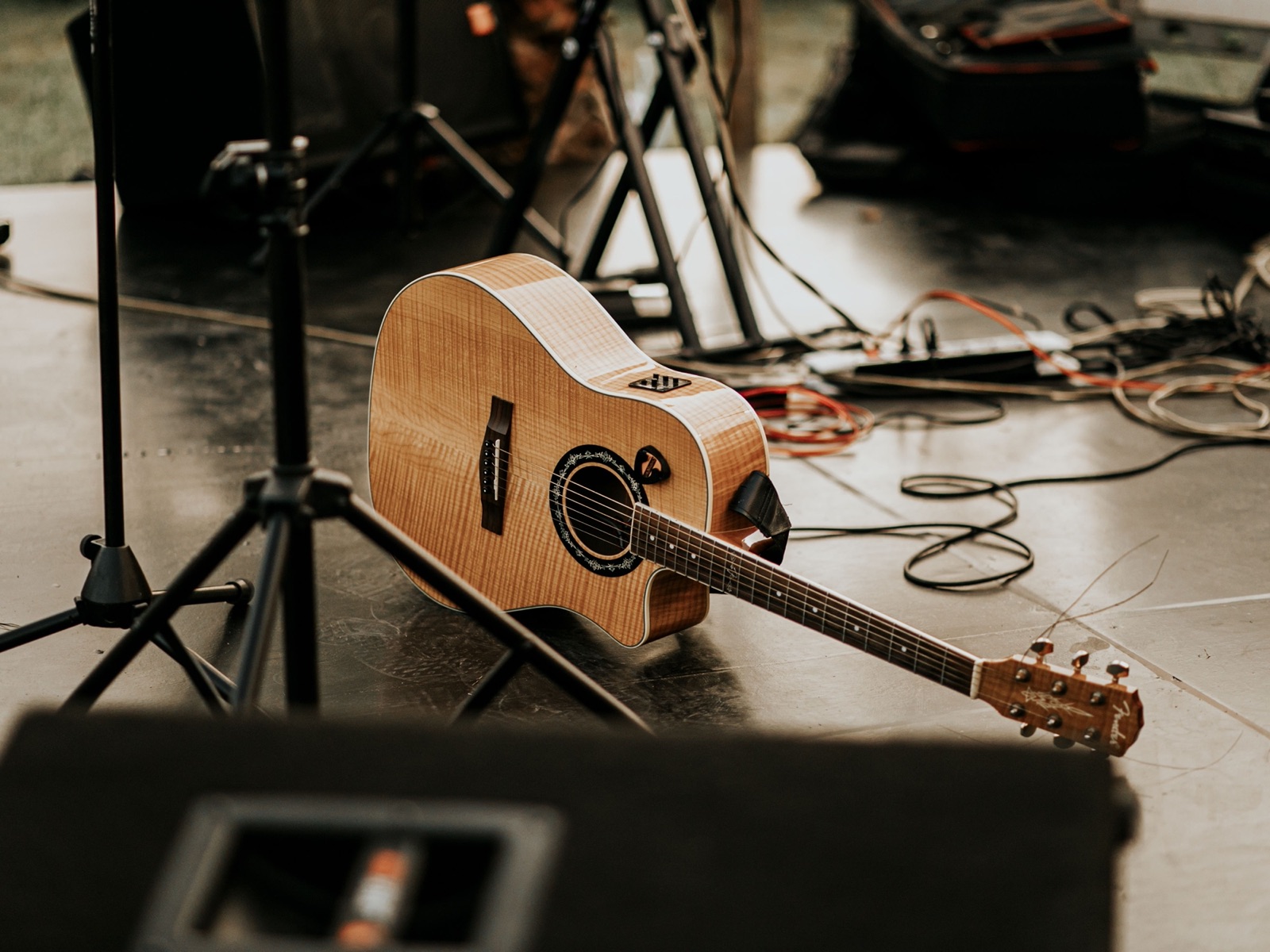
An acoustic bass amp setup is whatever gets the pickup signal from a hollow-bodied bass to the room cleanly and without howling. That can be an ordinary bass combo, an amp built for acoustic instruments, or no amp at all: a preamp pedal with a DI output straight into the PA. This guide explains how the pickups in an acoustic bass guitar work, which of those three routes suits you, what the notch and phase controls on acoustic gear are for, and how to set everything up so the bass stays full and feedback stays away.
What you'll need
Essentials
-
Acoustic bass with a pickup and preamp
: most acoustic-electric basses have a piezo pickup and a battery-powered preamp built in. -
Amplifier or a way into the PA
: a bass combo, an acoustic instrument amp, or a DI or preamp with an XLR output. -
Instrument cable
: from the bass's output jack to the amp, preamp or DI.
Optional
-
Acoustic preamp pedal with notch and phase controls
: adds EQ, feedback control and a DI output in front of any amp. -
Spare 9-volt battery
: many onboard and pedal preamps run on one.
What acoustic bass amplification has to solve
An acoustic bass is quiet unplugged, which is why most are sold as acoustic-electric models with a pickup and a small preamp. Getting that pickup signal through a speaker brings two problems an electric bass doesn't have.
Piezo pickups need a preamp
Most acoustic basses use a piezo element, usually under the saddle. Premier Guitar's Bass Bench column notes that a piezo pickup's high-impedance output requires an active buffer or preamp. The input it feeds has to have a very high impedance: as Elliott Sound Products' notes on piezo preamps show, the lower the input impedance, the higher the frequency below which the bass rolls off. Plugged straight into an ordinary amp input, a piezo usually sounds thin and brittle, with little low end. That is the job of the onboard preamp in the bass, or of an acoustic preamp pedal if the bass has a passive pickup or you want more control.
The same column points out that a piezo under the saddle is very sensitive to pressure: under high pressure it can sound harsh and overly percussive, and uneven volume from string to string is a common drawback that can take a long time to correct. A piezo mounted on the soundboard inside the body can give a more even balance between strings, but soundboard pickups usually put out less level. If one string is much louder than the others through any amp, that is a pickup or saddle issue for a technician, not something to fix with EQ.
Hollow bodies feed back
Feedback is a loop: the speaker's sound makes the body vibrate, the pickup picks that up, and the amp makes it louder again until it howls at one pitch. A big hollow body tuned low is especially prone to it in the low range. Premier Guitar adds that microphones, inside or outside the body, are often plagued by feedback, while contact pickups such as piezos produce little of it. That is why the pickup, not a microphone, is the usual choice on stage.
Types of acoustic bass amplifier setups
| Setup | What it is | Strengths | Watch out for |
|---|---|---|---|
| Bass combo amp | an ordinary bass combo | built for low notes, often has an XLR direct out | often no notch or phase control; voiced for electric bass |
| Acoustic instrument amp | a combo made for acoustic guitar and vocals | notch and phase controls, mic input, clean voicing | designed mainly for guitar; check how much low end the speaker handles |
| Preamp/DI into the PA | a pedal with EQ and an XLR output, no amp | small, feeds the PA directly, controls at your feet | you rely on the PA and a monitor to hear yourself |
| Bass head and cabinet | a stage bass rig | most volume and low-end headroom | heavy; more volume means more feedback risk |
Bass combo
A regular bass combo is the simplest acoustic bass amp. It is made to reproduce low notes at volume, so it handles the bottom string comfortably. What it may lack is feedback control: check whether its panel has a notch filter or phase switch, because many bass amps have neither. Pair it with an acoustic preamp pedal and you get both. If the combo has an XLR direct output, the engineer can take your sound from it as well.
Acoustic instrument amp
Amps built for acoustic guitar are designed around a clean, full-range sound and feedback control. Fishman's Loudbox Artist is one example of what the type offers. Fishman lists:
- 120 watts, bi-amplified, into an 8-inch woofer and a 1-inch tweeter;
- two channels, each with a combination 1/4-inch and XLR input, so a pickup and a microphone can run side by side;
- a notch filter and a phase switch on each channel for feedback control;
- balanced XLR outputs per channel and for the main mix.
Fishman presents it as an acoustic guitar amp and doesn't mention bass instruments on that page. That is typical of the category, so if you plan to use one with an acoustic bass, check the specifications or ask the maker about bass instruments, keep the bass control and volume modest, and listen for the speaker straining on low notes.
Preamp/DI straight into the PA
For many acoustic gigs you don't need your own amp. An acoustic preamp pedal with a DI output takes the pickup signal, shapes it and sends a balanced signal to the mixer. Fishman's Platinum Pro EQ/DI is one example; Fishman lists a 5-band EQ with two selectable modes, one for full-range instruments and one for bass instruments, a sweepable notch filter and a phase invert switch for feedback control, a one-knob compressor, a tuner, and a balanced XLR DI output with a pre/post-EQ switch. It runs on a 9-volt battery or Fishman's optional adapter.
Radial, which makes DI boxes, notes that active DIs are the more popular choice for acoustic instruments. A plain bass DI box works too if your bass's onboard preamp already sounds good; a bass preamp pedal gives you more tone shaping before the DI stage.

Acoustic bass amp head
An acoustic bass amp head usually means a normal bass head and speaker cabinet with an acoustic preamp in front of it. It gives you the most volume and low-end headroom, which matters on loud stages, but an acoustic bass rarely needs that much power, and the louder the rig, the harder feedback is to control. Read bass amp heads and cabinets if you already own one; otherwise a combo or a preamp into the PA is usually the lighter answer.
What to look at when choosing
Low-end handling
The open low E on a four-string bass sits an octave below the low E of a guitar, so an acoustic bass asks more of a speaker than an acoustic guitar does. A bass combo is built for that; an acoustic guitar amp may or may not be. When you compare amps, look for the speaker size and the maker's notes on bass instruments, and play your lowest notes at the volume you'll actually use.
Feedback controls
A notch filter and a phase switch are the two controls that matter most:
- Notch filter. A very narrow cut that you sweep to the frequency that is howling. Thomann's guide describes it as a narrow, high-rejection EQ band and notes that some amps have a manual notch often set around 120 Hz to tame the instrument's main resonance. A good notch removes feedback with little change to the rest of the sound.
- Phase switch. It inverts the polarity of the amplified signal, so the speaker's output works against the body's vibration instead of reinforcing it, as Thomann's guide explains phase reversal. Which position works better usually depends on where you stand relative to the speaker, so try both whenever you change rooms.
How to use them together
- Set the amp's volume where you want it, with the notch switched off.
- If the bass starts to howl or a low note booms, flip the phase switch and listen.
- If feedback remains, engage the notch and slowly sweep it until the howl stops.
- Use only as much cut as you need, then check your lowest notes still sound full.
Inputs and outputs
A mic/instrument combo input lets you blend a microphone with the pickup at home or in quiet rooms, but microphones feed back much more easily on stage. An XLR direct output lets the PA take your sound without a separate DI. An effects loop or tuner output is a bonus.
Size and power
An acoustic bass rarely needs a big rig. In an acoustic duo or folk group, a small combo or a preamp into the PA is usually enough. Read how many watts a bass amp needs for a sense of power by setting, and remember that wattage you never use adds weight and feedback risk.
Which setup suits whom
- Practice at home: any small bass combo or a practice bass amp; feedback is rarely a problem at low volume.
- Acoustic duos and open mics: a preamp/DI pedal into the house PA, with a monitor so you hear yourself.
- Your own sound in small rooms: a bass combo plus an acoustic preamp pedal, or an acoustic instrument amp checked for bass.
- Loud stages: a bass rig with a preamp in front and the PA carrying most of the bass, so stage volume stays lower.
How to set it up
- Fresh battery. A weak battery in the onboard preamp usually shows up as a distorted or fading sound. Change it before a gig.
- Start flat. Set the amp's and preamp's EQ to the middle and the bass's onboard volume near the top.
- Gain first. Set the input gain so your hardest notes don't light the clip indicator, then bring up the master volume.
- Place the amp beside you. Stand to the side of the speaker rather than in front of it, and keep the bass's body away from the speaker's path.
- Cut before you boost. Low notes that boom are better tamed with the notch or a little less bass than with more treble.
- Check with the band. Feedback often appears only at full band volume, so check the phase switch and notch during soundcheck.
Keep stage volume sensible. Long or repeated exposure to sound at or above 85 dBA can cause hearing loss, according to the NIDCD, so wear earplugs on loud stages. Never open an amplifier to fix it yourself; parts inside can hold dangerous voltage, so take it to a technician.
What to check next
If you're still choosing the instrument, start with the acoustic bass guitar buying guide. For the gear between the bass and the PA, read about the bass DI box and the bass preamp pedal, and browse Amps & effects for amps of every size.
Questions
Can I play an acoustic bass through a regular bass amp?
Yes. A bass combo is built to reproduce low notes, so it is a common choice for an acoustic bass with a pickup and preamp. Keep the volume moderate and the amp beside you rather than pointed at the body, because hollow basses can feed back.
Is an acoustic guitar amp good for an acoustic bass?
It can work at low and moderate volume, and these amps usually have the notch and phase controls that help with feedback. They are designed mainly for guitar, though, so check the maker's specifications and keep the bass control and volume sensible to protect the speaker.
Why does my acoustic bass sound thin and harsh plugged in?
A piezo pickup needs an active buffer or preamp; plugged straight into an ordinary amp input it usually loses low end and sounds thin or brittle. Make sure the onboard preamp is switched on and its battery is fresh, or put an acoustic preamp pedal in front of the amp.
What do the notch filter and phase switch do?
A notch filter cuts a narrow band at the frequency that is howling, so you can remove feedback without changing the rest of the sound. A phase switch inverts the signal's polarity, and one of its two positions usually resists low-frequency feedback better than the other.
Do I need an acoustic bass amp head?
Usually not. Most acoustic bass players use a combo or a preamp pedal with a DI output into the PA; a head and cabinet is mainly worth it if you already own one or play loud stages with a bass rig.
Sources
- Premier Guitar — Bass Bench: amplifying an acoustic bass guitar
- Premier Guitar — Bass Bench: positioning piezo pickups on an acoustic bass guitar
- Elliott Sound Products — Piezo pickup preamplifiers (Project 202)
- Fishman — Platinum Pro EQ/DI analog preamp pedal
- Fishman — Loudbox Artist acoustic amplifier
- Thomann — Acoustic guitar amps: feedback elimination
- Radial Engineering — Direct boxes: a brief overview
- NIDCD — Noise-induced hearing loss
Read next
Buying guide in Basses
Acoustic bass guitar: what it is good at and how to choose one
A hollow-bodied bass shaped like a big acoustic guitar: where it shines, why it almost always needs a pickup, and what to compare between models.
Guide
Bass preamp pedal: what it does, how it differs from a DI and an amp, and how to set one up
The tone-shaping part of a bass amp in a pedal: what it adds to your rig, which features matter and three ways to connect it.
Guide
Bass DI box: what it does, passive vs active, and preamp DIs like the SansAmp
How a DI turns your bass signal into one the mixer can use, which kind suits your bass, and where a preamp DI pedal fits.