Buying guide
Bass tuners: clip-on, pedal, app or built-in, and what to check for low notes
Clip-on, pedal, app or built into your amp: how each kind of tuner hears a bass, and the specs that matter for low strings.
Published
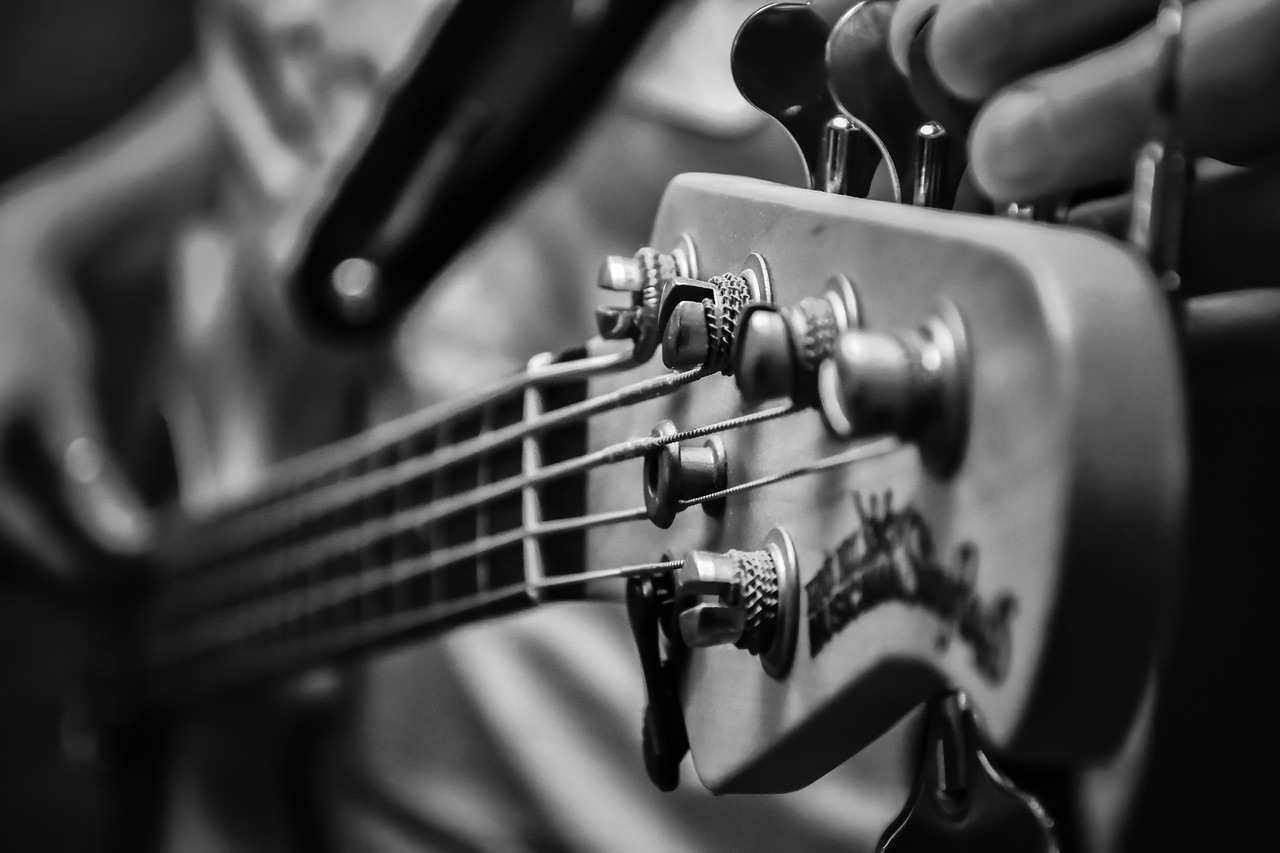
A clip tuner on the headstock is the simplest way to keep a bass in tune, and for many players it is the only tuner they ever need. Pedal tuners, phone apps and tuners built into amps and effects do the same job in different ways. This guide explains how each one hears a bass, the specs that matter for low notes, and which suits home practice, rehearsals and the stage. For the tuning itself, string by string, see how to tune a bass guitar.
What a tuner does
A tuner measures the pitch of the note you play, names the nearest note and shows how far you are from it, in cents. A cent is a hundredth of a half step, so a tuner rated at ±1 cent is finer than most people can hear. The display points left when the string is flat (too low) and right when it is sharp (too high).
Bass notes are low, and that makes a tuner's job harder. Standard tuning starts at E1, about 41.2 Hz, and the low B of a five-string is B0, about 30.9 Hz. A tuner has to read a slow wave and ignore the brighter overtones a fresh string produces, so on a cheap or old tuner the low strings can make the reading jump around for a moment.
Types of bass tuner
Clip-on tuners
A clip-on tuner clamps to the headstock and reads the vibration through the wood, not through a microphone, so other instruments and talking in the room barely affect it. It works on an acoustic bass with no pickup, needs no cable and costs little. The display is small and sits behind you on stage, which is its main drawback.

Some clip-ons can switch between the vibration sensor and a built-in microphone; Snark, for example, describes its ST-2 as "Choose Mic or Vibration Sensor". The vibration sensor is the one to use on a bass.
Pedal tuners
A tuner pedal sits on the floor in the signal chain, between the bass and the amp or the rest of your pedals. It reads the electrical signal from the cable, so it is very stable, and its display is larger and easier to read under stage lights. Many mute the output while tuning, so the audience doesn't hear you. A pedal needs power, usually a 9-volt battery or an adapter, and two cables. Our bass pedals guide covers where a tuner goes in a pedalboard.
Tuner apps
A phone app listens through the microphone. It costs little or nothing and is always in your pocket, but it hears everything in the room and a phone microphone often struggles with very low notes. Fine at home in a quiet room; not reliable at a rehearsal.
Built-in tuners
Some bass amps and many multi-effects units, recording programs and acoustic-electric preamps include a tuner. If yours has one, you may not need anything else, as long as you can see it from where you play.

Bass tuner types compared
| Type | Hears the bass through | Noise in the room | Display | Mutes output | Best for |
|---|---|---|---|---|---|
| Clip-on | Headstock vibration | Barely affected | Small, on the headstock | No | Home, lessons, rehearsals, acoustic bass |
| Pedal | Cable signal | Not affected | Large, on the floor | Usually | Stage, any electric bass |
| App | Phone microphone | Affected | Phone screen | No | A quiet room, a backup |
| Built-in | Cable signal (amp, effects, preamp) | Not affected | Varies | Varies | When you already own the gear |
What to look for in a bass tuner
Chromatic or bass mode
A chromatic tuner names whichever of the 12 notes is closest, so it works in any tuning: standard, drop D, B E A D or anything else. A tuner in a bass mode expects the open-string notes and may show string numbers instead. The BOSS TU-3 pedal has both: a chromatic mode "for tuning to any pitch" and guitar and bass modes "for tuning by string number". Fender lists guitar, bass, ukulele, violin and chromatic modes for its FT-1 Pro clip-on. Chromatic mode is the safe default.
Range and the low B
Check the bottom of the tuner's range against your lowest string:
| Bass | Lowest open string | Approximate frequency |
|---|---|---|
| Four-string, standard | E1 | 41.2 Hz |
| Four-string, drop D | D1 | 36.7 Hz |
| Five- or six-string | B0 | 30.9 Hz |
The BOSS TU-3 and the BOSS TU-10 clip-on are both specified from C0 (16.35 Hz) to C8, and Fender lists a range of B0 to B7 for the FT-1 Pro. If you play a five-string bass, a range that starts at B0 or lower is the figure to look for.
Accuracy
BOSS rates the TU-3 and TU-10 at ±1 cent. TC Electronic rates the PolyTune 3's chromatic mode at 0.5 cent and its strobe mode at a small fraction of a cent. Any of these is more precise than your ears need; what matters more on bass is how quickly and steadily the reading settles on a low string.
Display
Needle, LED bar or strobe, the display has to be readable in bright daylight and on a dark stage. The TU-3 uses a 21-segment LED meter with brightness control and two display modes. A strobe display, as on the PolyTune 3, shows a moving pattern that stops when the note is exactly in tune.
Polyphonic tuning
The PolyTune 3 is polyphonic: strum all the open strings and it shows which ones are out, then you fix only those. It is a quick check between songs; you still tune each string on its own for precision.
Flat tuning and reference pitch
If you tune the whole bass down, a flat mode saves reading off the wrong note. The TU-3's bass mode goes three half steps below standard; the TU-10 offers up to five. Both let you set the reference pitch of A4 between 436 and 445 Hz, for playing with a piano or a recording that isn't at A440.
Bypass and power
A pedal's bypass affects your tone when the tuner is off. The TU-3 has buffered bypass and an output that mutes automatically when the tuner is on; the PolyTune 3 can switch between true bypass and a buffer. The TU-3 also has a DC output jack that can power other pedals, with BOSS's optional adapter and cable.
Clip-on tuner batteries
Clip-ons run on a coin cell: BOSS gives about 12 hours of use for the TU-10 in color display mode and about 24 hours in monochrome.
Which tuner suits whom
- Beginners and home practice: a chromatic clip-on tuner.
- Five-string players: any chromatic tuner whose range reaches B0, clip-on or pedal.
- Gigging bassists: a tuner pedal that mutes the output, at the front of the pedalboard, plus a clip-on as backup.
- Acoustic bass without a pickup: a clip-on.
- Players with an amp or multi-effects tuner: use it, and keep a clip-on in the gig bag.
Using a clip tuner or pedal tuner on bass
Clip a clip-on tuner to the headstock so it touches wood, not just a tuning key, and angle the display toward you. With a pedal tuner, turn the bass's volume up, since the tuner reads the signal. Pluck each string firmly once and read the note as it rings; the first moment of a hard pluck is slightly sharp. Bring each string up to the note from below, then go round all the strings again.
If the open strings are in tune but fretted notes higher up sound out, the problem is intonation, a setup job; see the bass setup guide. Remove a clip-on's battery if it will sit unused for months, and take the clip-on off the headstock when you store the bass, so the clamp doesn't mark the finish.
Questions
Can a clip-on tuner tune a bass?
Yes. A clip-on tuner reads the vibration of the headstock, so it works on electric and acoustic basses. Choose one with a chromatic or bass mode and a range that reaches B0 if you play a five-string.
Is a clip-on or pedal tuner better for bass?
A clip-on is the easy choice for home and rehearsals: small, cheap and barely affected by room noise. A tuner pedal is better on stage, because it reads the cable signal, can usually mute your output while you tune and has a larger display.
What is a chromatic tuner?
A chromatic tuner shows the nearest of all 12 notes, so it works for any tuning. A tuner set to a guitar or bass mode expects the open-string notes, which can confuse it in drop D or other tunings unless it has a setting for them.
Will a tuner read the low B string of a five-string bass?
Many chromatic tuners will, but check the specified range: the low B is about 30.9 Hz, and the BOSS TU-3 pedal and TU-10 clip-on, for example, are both specified down to C0 (16.35 Hz). Pluck firmly and give the display a moment to settle.
Do I need a tuner pedal if my amp has a tuner?
Not necessarily. A tuner built into an amp or multi-effects unit works the same way, as long as you can see it from where you stand and it mutes or you turn down while tuning.
Sources
Read next
Guide in Learn bass
How to tune a bass guitar: standard, five-string and drop D
Standard E A D G with a tuner or by ear, the low B of a five-string, six-string tuning and drop D, with the checks that keep it in tune.
Guide in Amps & effects
Bass pedals: the effects bass players use and the order to put them in
What each common bass effect does, why bass versions of pedals exist, and a signal chain order that keeps your low end intact.
Buying guide in Basses
5 string bass: what the low B adds and how to choose one
A fifth string extends the bass downward to a low B. Here is what that changes in the neck, the sound and your playing, and how to compare five-string basses.