Buying guide
Bass picks and thumb rests: thickness, materials and where to rest your thumb
What pick thickness and material do to a bass note, and how a thumb rest or ramp gives your plucking hand somewhere steady to sit.
Published
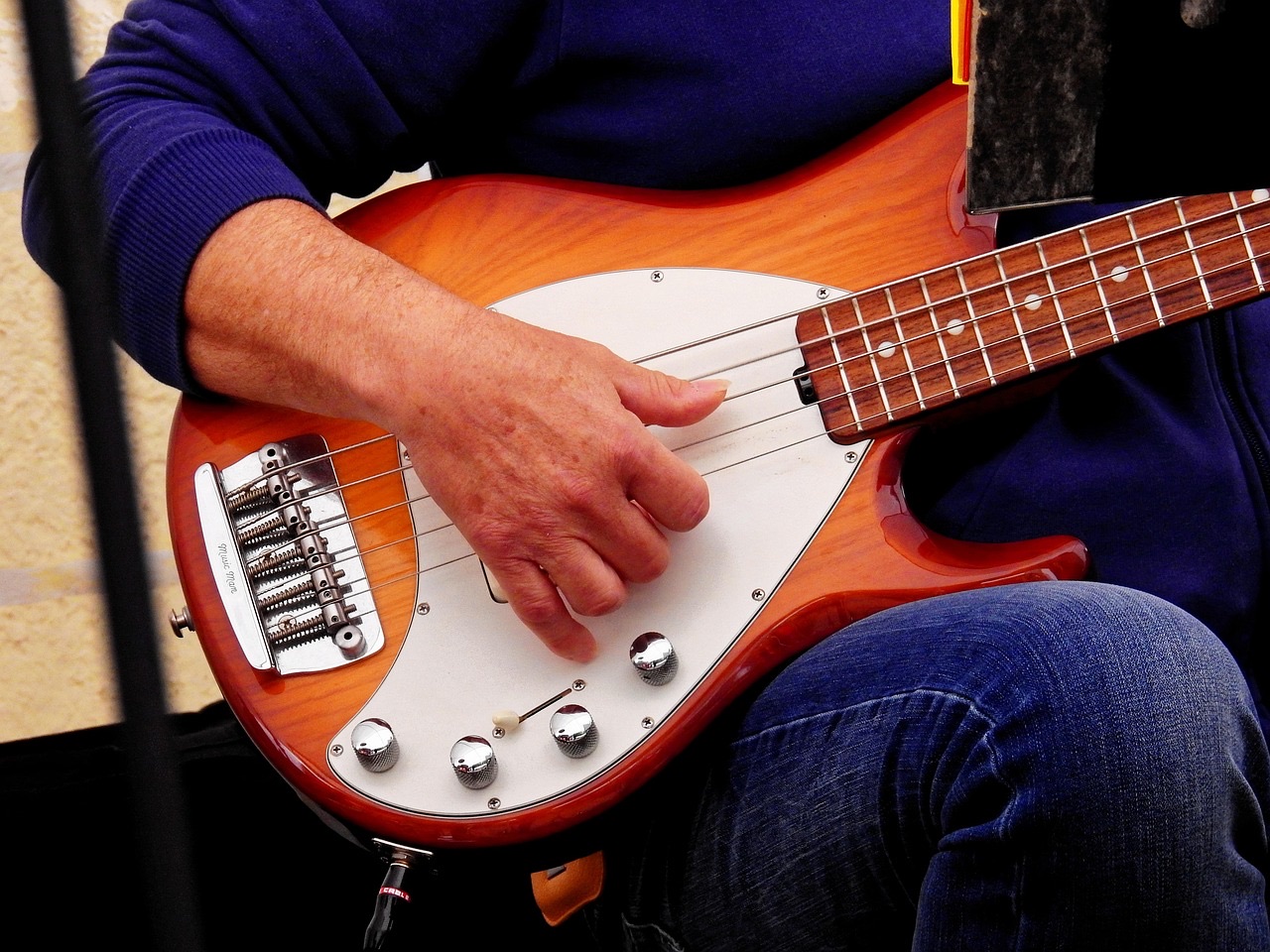
A bass pick and a thumb rest solve the same problem from two directions: how your plucking hand meets heavy strings. The pick changes the attack of every note, and a thumb rest or ramp gives your hand a fixed place to anchor while you play with your fingers. This guide covers pick thickness and materials for bass, thumb rests on Precision and Jazz basses, ramps, and how to fit and look after each.
What a pick changes on bass
Playing with a pick or with your fingers are both correct; plenty of records use each. A pick gives a sharper, more defined attack and a very even sound from note to note, which is why it is common in rock and punk. Fingers give a rounder, softer start to the note. If you are just starting out, our how to play bass guide covers both techniques.
Bass strings are much thicker and under more tension than guitar strings, so a pick has more work to do. That is why the thickness and material of a bass pick matter more than they do on a guitar.
Bass pick thickness
Pick thickness, or gauge, is printed on most picks in millimeters. As a rough guide:
- Thin (under about .60 mm): flexes a lot against bass strings, so the attack is soft and a little clicky. Rare on bass.
- Medium (about .60 to .90 mm): some give; workable on lighter strings or for strumming chords high on the neck.
- Heavy (about 1 mm and up): barely flexes, so more of your stroke goes into the string. Many bass players start here.
- Extra heavy (2 to 3 mm): rigid, with a firm, fast attack. Dunlop's nylon Big Stubby, for example, comes in 1.0, 2.0 and 3.0 mm.
Thicker is not automatically better. A very thick pick can feel clumsy when you move quickly between strings. Buy a few gauges and keep the one that feels controlled at the tempo you play.

How to hold a bass pick
Hold the pick between the pad of your thumb and the side of your index finger, with only the tip showing. Too much tip and the pick catches on the string; too little and you miss. Pick from the wrist and keep the stroke small. Down-strokes only give a driving, even sound; alternating down and up is faster.
Bass pick materials
| Material | Examples from makers' pages | Feel and sound | Best for |
|---|---|---|---|
| Nylon | Dunlop Nylon Standard (.38 to 1.25 mm on Dunlop's pages), Big Stubby Nylon (1, 2, 3 mm) | Warm, slightly flexible, textured grip | A first pick; warmer pick tone |
| Delrin (Tortex) | Dunlop Tortex | Matte surface that grips, crisp attack | General use, rock |
| Ultex | Dunlop Ultex Triangle (.73, .88, 1.0, 1.14 mm) | Bright, clear attack, hard wearing | Clear, punchy attack |
| Felt | On-Stage felt picks (3.5 mm) | Very soft, rounded attack | Quiet styles, a finger-like sound |
| Metal | Dunlop Teckpick (anodized aluminum) | Bright and sharp | Special effects; use with care |
Nylon
Dunlop describes its Nylon Standard picks as offering "warmth, flexibility, and resilience", and lists the line by thickness, from .38 mm on its own pages. Nylon picks usually have a raised, textured grip area, which helps on a heavy stroke. A nylon pick of about 1 mm is a sensible first bass pick.

Delrin and Tortex
Tortex picks are made from Delrin, which Dunlop treats to give a matte surface that grips and, in Dunlop's words, an "aggressive attack". They come in many gauges, each in its own color.
Ultex
Dunlop calls Ultex an "aeronautical-grade material" and describes it as bright and durable. Its Ultex Triangle, a three-cornered shape with more to hold, is marketed by Dunlop as "the new standard for bass playing" and comes in .73, .88, 1.0 and 1.14 mm. Take the slogan as marketing; what the triangle does give you is more surface to hold on a heavy stroke, and three usable tips.
Felt and rubber bass picks
Felt picks are made for ukulele and bass: On-Stage lists its felt picks for "ukulele, bass, and other stringed instruments" at 3.5 mm thick. They give a soft, rounded attack, somewhere between a pick and fingers, and suit quiet sessions and vintage sounds. Felt wears down and sheds with use. Rubber picks aim at a similar soft attack; check each maker's description of hardness before buying.
Metal bass picks
Metal picks give the brightest, hardest attack. Dunlop's Teckpick is anodized aluminum and, according to Dunlop, has smooth playing edges meant to preserve string life. Even so, metal is far harder than plastic: a hard stroke can scuff the pickguard and wear the string windings, so most players keep a metal pick for particular sounds rather than every day.
Fender bass picks and other brands
Fender, Dunlop, D'Addario and many others sell picks in the same common shapes and materials. The brand matters less than the gauge, the material and the shape: compare those numbers between packs.
Bass thumb rests
A thumb rest is a small bar, usually plastic or wood, screwed to the body or pickguard so your thumb has somewhere to sit while your fingers pluck. Anchoring the thumb keeps your hand in the same place and helps you mute the lower strings.
Where the thumb rest came from
Leo Fender expected players of the first Precision Bass to pluck with the thumb, like an upright player, so, according to Premier Guitar's history, he mounted a finger rest below the strings on the pickguard to give the fingers something to hold. When the Precision's pickguard was redesigned later in the 1950s, the finger rest (also called a "tugbar") stayed, below the G string. Most players today use the rest the other way round, fitted above the E string as an anchor for the thumb.
P bass thumb rest
On a Precision Bass, many players simply rest the thumb on the pickup cover or on the E string. A thumb rest above the E string gives a fixed anchor further toward the neck, where the sound is rounder. Fender sells a vintage-style thumb rest for Precision Bass and Jazz Bass models, with mounting hardware and a template included for placement. See our Precision Bass guide for the rest of the instrument.
Jazz bass thumb rest
The Jazz Bass has two pickups, so most players anchor the thumb on one of them, or on the E string when playing the A, D and G strings. The same Fender thumb rest fits Jazz Bass models, mounted above the strings. Read more about the instrument in the Jazz Bass guide.
Fitting a thumb rest
- Hold the rest in place with low-tack tape and play for a few days before drilling, to find the height and position you like.
- Use the maker's template to mark the screw holes.
- Drill small pilot holes with a depth stop, through the pickguard or into the body as the template shows.
- Screw the rest down by hand, snug but not forced.
If you are not comfortable drilling your bass, or it is valuable or vintage, have a technician fit the rest.
Ramps
A ramp is, in Premier Guitar's description, "a block of wood shaped to fit between your pickups". It fills the space under the strings so your fingers can't dig in too deep, and gives them the same surface wherever you pluck between the pickups. The ideal ramp sits level with the pickups and follows the fretboard radius, so the distance to every string is the same. Ramps are usually fixed with double-sided tape, so fitting one is reversible, and they are most common on fretless basses (see the fretless bass guide).
Premier Guitar notes that a ramp encourages a light, fast touch. It also limits how hard you can dig in, so it does not suit every style.
Which suits whom
- Beginners who want a pick: a 1 mm nylon or Delrin pick. Try a heavier one after a few weeks.
- Rock and punk players: 1 mm and up in Delrin or Ultex, or a triangular shape for grip.
- Quiet, vintage or soft styles: felt, or flatwound strings with fingers; our flatwound vs roundwound comparison explains the string side.
- Finger players who float the thumb: a thumb rest above the E string, or a ramp between the pickups.
- Players who change between basses: anchor on the pickup or the E string; it works on any bass with no hardware.
Looking after picks and thumb rests
Keep picks in a small tin or a pick holder so they don't end up in the bottom of the gig bag. Replace a pick when its tip is worn into a flat edge or has a burr, which catches on the string. Check thumb-rest screws occasionally; if a screw no longer bites, have the hole repaired rather than fitting a bigger screw.
Questions
What thickness of pick is best for bass?
Many bass players start with a pick of about 1 mm or thicker, because thin picks bend against heavy bass strings and lose attack. Very thick picks of 2 to 3 mm give the firmest attack; try a few gauges and keep the one that feels controlled.
What is a thumb rest on a bass?
A small bar screwed to the body or pickguard that gives your plucking-hand thumb somewhere to rest. On early Fender Precision Basses it sat below the strings as a finger rest; today it is usually fitted above the E string as a thumb rest.
Can I add a thumb rest to a Precision or Jazz Bass?
Yes. Fender sells a vintage-style thumb rest for Precision Bass and Jazz Bass models with mounting hardware and a template. It needs small screw holes, so if you are not comfortable drilling your instrument, ask a technician.
Are felt or rubber picks good for bass?
They give a softer, rounder attack than plastic, closer to the sound of fingers, which suits quiet or vintage styles. Felt picks are thick (one maker lists 3.5 mm) and usually wear faster than plastic ones.
Does a metal pick damage bass strings?
Metal picks are much harder than plastic and give a bright, sharp attack. Some makers round and polish the edges to reduce string wear, but expect more wear on strings and on the finish if you strike hard.
Sources
- Dunlop — Nylon Standard pick 1.25 mm
- Dunlop — Tortex TIII pick .73 mm
- Dunlop — Ultex Triangle pick 1.0 mm
- Dunlop — Big Stubby Nylon pick 3.0 mm
- Dunlop — Teckpick Standard Brass
- On-Stage — Felt ukulele picks
- Fender — Thumb rest for Precision Bass and Jazz Bass
- Premier Guitar — Escape from the dog house: Fender's bass revolution
- Premier Guitar — Bass bench: bass ramps, right for you?
- Wikipedia — Fender Precision Bass
Read next
Guide in Learn bass
How to play bass: your first notes, hands and practice routine
Get the bass in tune, set up both hands, play your first notes in time and learn what to practice each day after that.
Guide in Basses
Fender Precision Bass: what a P bass is, how it sounds and who it suits
One pickup, two knobs and a 34-inch neck: why the P bass became the default electric bass, and how to choose between the versions sold today.
Guide in Basses
Fender Jazz Bass: two pickups, a slim neck and a growling tone
Two single-coil pickups and a slim neck: what sets the J bass apart from the Precision, how to dial in its sound, and what changes on a five-string Jazz.