Guide
Bass backing tracks: how to practice with drum and no-bass jam tracks
Find or build a track with no bass on it, work out its key and tempo, loop the hard part and play roots, fifths, walking lines and funk sixteenths over it.
Published
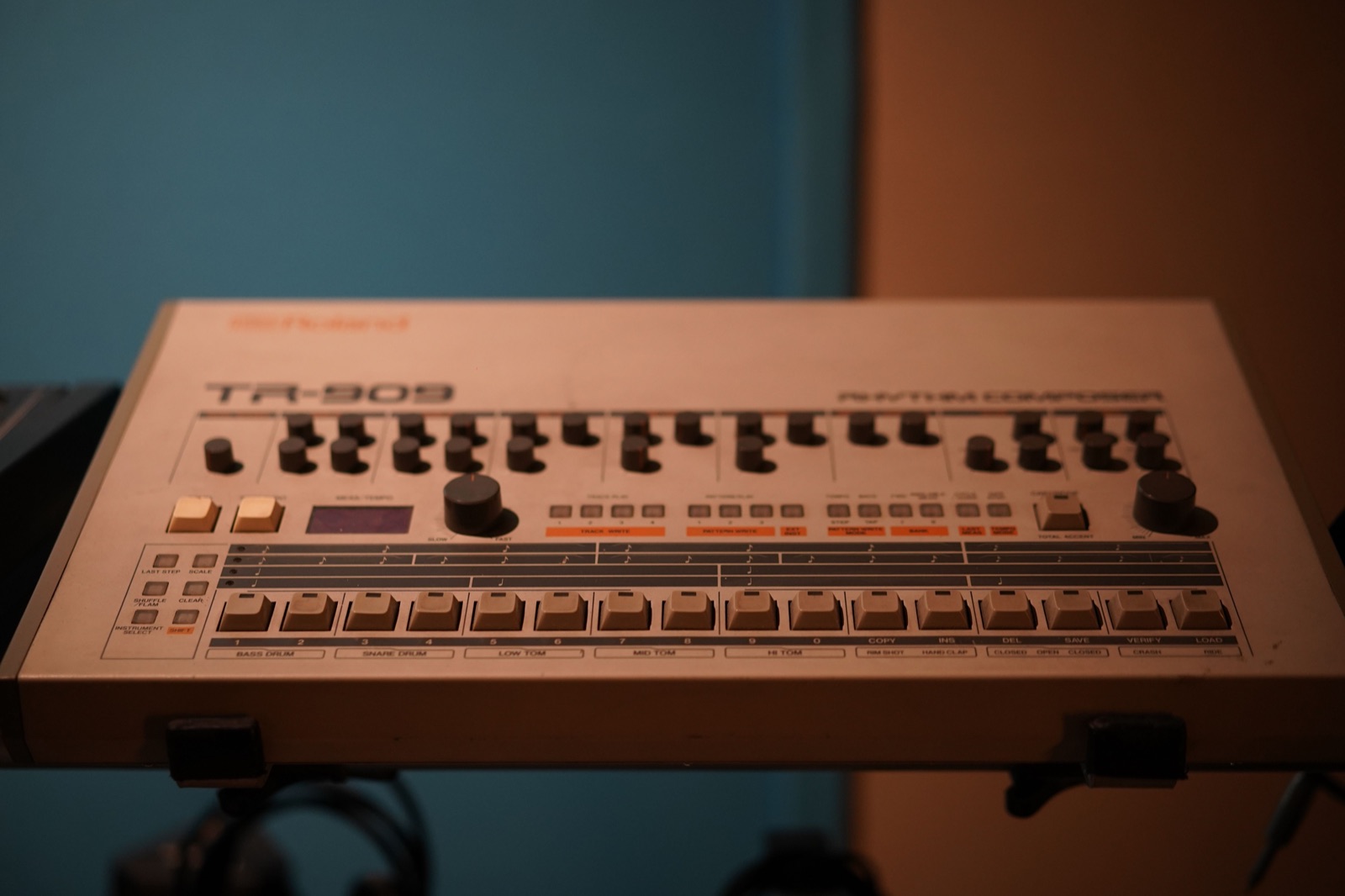
Bass backing tracks give you a drummer and a band that never get tired of playing the same four bars. This guide shows where to find tracks with no bass on them, how to work out their key and tempo, how to loop the part you are learning, and what to play over rock, jazz and funk jam tracks, with short exercises in tab. All you need is your bass and a way to hear the track and yourself at the same time.
What you'll need
Essentials
-
A source of backing tracks
: a drum machine, a drum app, a DAW with a virtual drummer, or recorded jam tracks with no bass on them. -
A way to hear the track and your bass together
: an amp with an aux input, a headphone amp with a play-along input, or an audio interface and headphones.
Optional
-
Software that loops and slows down audio
: lets you repeat one section and practice it below full speed. -
Metronome
: for working on a part alone before you put it back in the track.
What bass backing tracks are
A backing track is a recording of everything except your part. For bass practice there are a few kinds:
| Kind | What you hear | Good for |
|---|---|---|
| Drum-only track | A drummer or a drum machine | Timing, groove, your own lines in any key |
| No-bass jam track | Drums plus guitar or keys playing chords | Following chord changes, choosing notes |
| Song play-along with the bass removed | A whole arrangement | Learning a specific song's part |
| Your own loop | Whatever you program or record | Practicing exactly the bars you need |
Drum-only tracks are the place to start: nothing tells you which notes to play, so you can work on time and feel with any exercise.
Where to find backing tracks for bass practice
Make your own with a drum machine or a DAW
A drum machine or a drum app gives you a groove at any tempo. A DAW can do the same: in GarageBand for Mac, a Drummer track adds a virtual drummer to your project. Apple's guide says you choose a genre, then a drummer, each with their own kit and playing style, which you can adjust in the Drummer Editor. A new Drummer track starts as one 8-bar region you can extend.
To add chords, record a simple progression on a keyboard or guitar over the drums, or program it with a software instrument. A track you made yourself has no copyright questions attached.
Practice apps and play-along books
Many bass method books and practice apps include play-along audio recorded for practice, and some offer each track with and without the bass part. They are the cleanest way to get backing tracks for bass practice of specific styles.
Online jam tracks
Video and streaming sites carry many bass guitar jam tracks with no bass, labeled by style, key and tempo. Use tracks that the people who made them have published for playing along, and don't re-upload or share them. YouTube's player can slow a video down, which helps with a fast track.
Songs, tabs and play-along versions
For a song you want to learn, use a licensed tab book or a licensed tab site and the original recording. Play along bass tabs and play-along versions of commercial songs are copyrighted, so we don't reproduce them here; the exercises below are our own.

How to practice with a backing track
- Listen once without playing. Count the beats in a bar and notice where the chords change.
- Find the key and tempo. Use the title or description if it states them. Otherwise, find the note that sounds like home at the end of a phrase by trying notes on the E and A strings; that is usually the root.
- Play roots only on every beat or every eighth note until you never miss a change.
- Add notes one layer at a time: fifths, then octaves, then chord tones, then approach notes.
- Loop the hard part and slow it down if you need to.
- Record yourself now and then and listen back; the home recording guide shows how.
Loop one section
Most DAWs can repeat a range. In GarageBand for Mac, Apple's cycle area repeatedly plays the part of the project you mark in the ruler; turn it on with the Cycle button or the C key. Loop two or four bars around the change you keep missing until it feels easy, then widen the loop.
Choose a sensible tempo
Start where you can play every note cleanly and in time. If the track is too fast, slow it down or build a drum loop at a lower tempo, and raise it a few beats per minute at a time. Our bass exercises include a routine for raising the tempo.
What to play over bass jam tracks
The four exercises below go from simplest to busiest. Each fits a style of track.
Rock or pop: roots in eighth notes
Over a rock track in A, play the root of each chord in steady eighth notes. Keep every note the same length and volume, locked to the drummer's hi-hat.
   A                D                E                A
G|----------------|----------------|----------------|----------------|
D|----------------|----------------|----------------|----------------|
A|0-0-0-0-0-0-0-0-|5-5-5-5-5-5-5-5-|----------------|0-0-0-0-0-0-0-0-|
E|----------------|----------------|0-0-0-0-0-0-0-0-|----------------|
Country, folk and ballads: root and fifth
On slower tracks, alternate the root and the fifth on the beat. Over C, the G below it is on the E string; over G, the D above it is on the A string.
   C                G
G|----------------|----------------|
D|----------------|----------------|
A|3-------3-------|----5-------5---|
E|----3-------3---|3-------3-------|
See bass chords and arpeggios for where the fifth and the other chord tones sit on every string.
Jazz backing tracks for bass: walking a blues in F
A jazz blues is a 12-bar blues, built on the I, IV and V chords of the key, usually with dominant seventh chords throughout. A walking line plays one note per beat: the root on beat 1, chord tones in the middle, and on beat 4 a note a half step or a whole step from the next root. Here are the first four bars over F7, B♭7 (the "quick change" to the IV chord in bar 2), F7, F7:
   F7               B♭7              F7               F7
G|----------------|----------------|----------------|----------------|
D|----------------|----0---3---2---|3---1-----------|----------------|
A|----0---3---0---|1---------------|--------3-------|--------0---2---|
E|1---------------|----------------|------------3---|1---3-----------|
Bar 1 ends on A, a half step below the B♭ that starts bar 2; bar 2 ends on E, a half step below F; bar 4 ends on B, a half step above the B♭ of bar 5. The walking bass lines lesson builds a whole 12-bar line step by step.
Backing track bass funk: sixteenths on one chord
Funk tracks often sit on one chord for a long time. Count sixteenth notes ("1 e & a") and place notes on some of them; an "x" is a ghost note, a muted string plucked for rhythm with no pitch. This groove fits an E minor or E7 vamp:
  1 e & a 2 e & a 3 e & a 4 e & a
G|--------------------------------|
D|------------2-------------------|
A|--------------------------------|
E|0---x-0---------0---x-0-3---5---|
Mute the strings you aren't playing with your fretting hand so the ghost notes stay percussive. Play it at a slow tempo first; funk only works when the sixteenths are even.
Common mistakes
- Playing too much too soon. Roots that lock with the kick drum sound better than busy lines that drift.
- Practicing only at full speed. Slow the track or loop and build up.
- Track too loud or too quiet. You need to hear both the drums and every note you play.
- Never changing key. Move each exercise to new keys so you learn the shapes, not one set of frets.
- Ignoring where you are in the form. Count bars on a 12-bar blues until you always know which bar you're in.
What to practice next
Once the roots are solid, learn the bass scales that fit each style and work through the walking bass lines lesson over a jazz track. When a groove feels good, record it over the same backing track and listen back with the home recording guide. More guides are under Home recording.
Questions
What are bass backing tracks?
They are recordings or loops of a band or a drummer with no bass part, so you can play the bass part yourself. Drum-only tracks give you the most freedom; full-band tracks with the bass removed give you chords to follow.
What should I play over a bass jam track?
Start with the root of each chord in steady eighth notes, then add the fifth, then chord tones and approach notes. Over a jazz blues, walk one note per beat; over funk, try sixteenth-note grooves on one chord.
How do I find the key of a backing track?
Use the title or description if it gives one. Otherwise, play notes along the E and A strings until one sounds like home at the end of a phrase; that is usually the root of the key.
Can I make my own bass backing tracks?
Yes. A drum machine, a drum app or a DAW virtual drummer such as GarageBand's Drummer track gives you a groove at any tempo, and you can add a simple chord loop on a keyboard.
Are backing tracks good for bass practice?
They are one of the best ways to practice timing and feel, because you have to lock in with a drummer rather than a click. Keep some metronome practice for exercises you want to measure precisely.
Sources
Read next
Guide in Learn bass
Walking bass lines: chord tones, approach notes and a 12-bar blues
Build a walking line in four steps, from roots on every beat to approach notes, then play a full 12-bar blues and a ii–V–I.
Guide in Learn bass
Bass exercises: warm-ups, finger exercises and a daily practice routine
Six exercises in tab for the plucking hand, the fretting hand and your timing, and a routine that fits them into half an hour.
Guide in Learn bass
Bass guitar chords and arpeggios: chord tones, shapes and a chart
Which notes make up each chord, how to play them as arpeggios on a four-string bass, the two-note chords that sound good low down, and a chart to keep.