Buying guide
Bass guitar cables: instrument vs speaker cable, length, plugs and noise
The cable from your bass to the amp is not the cable from the amp to the speaker. What each one does, and what to check when you buy.
Published
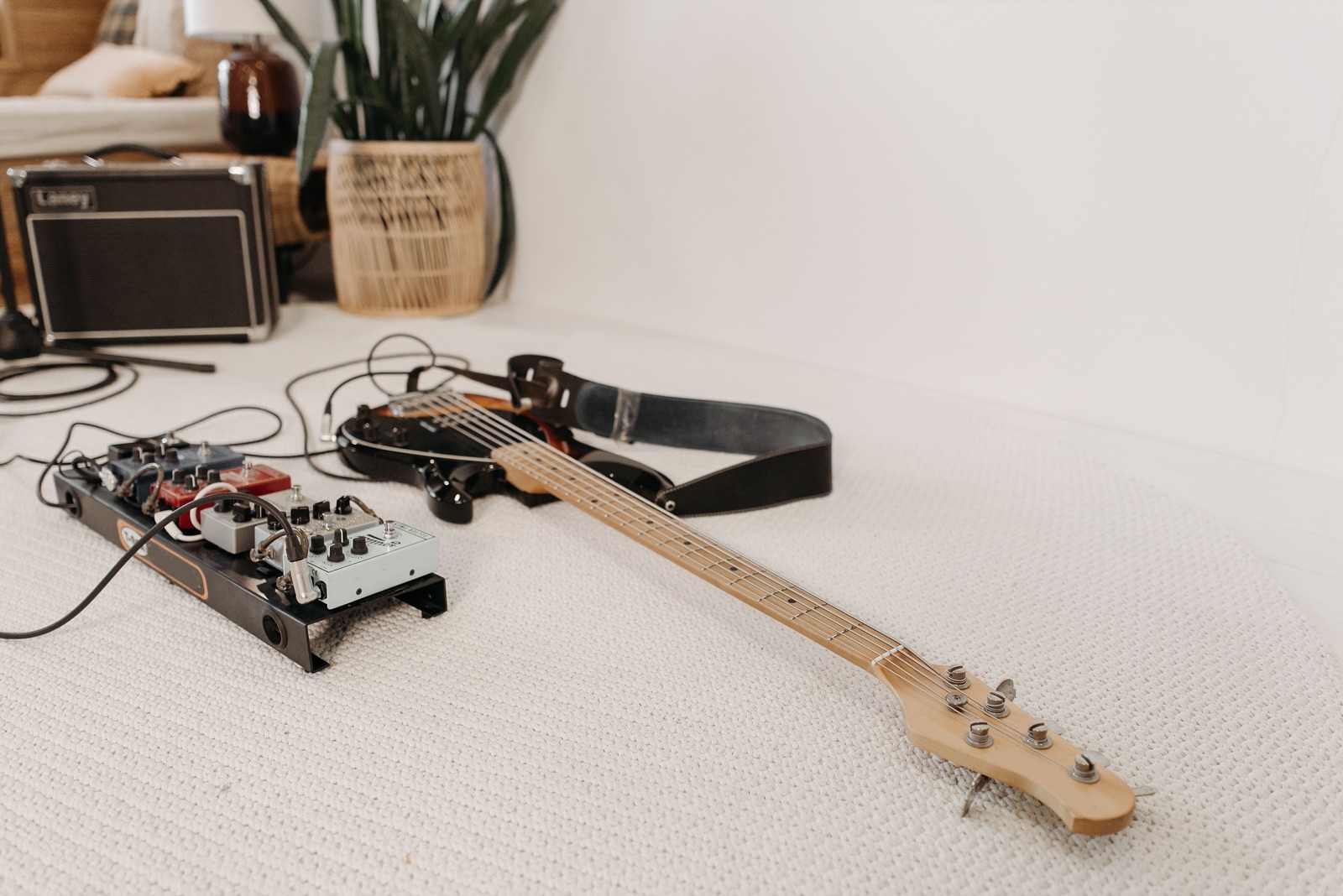
A bass guitar cable looks like the simplest thing in your rig, but there are two very different cables that plug into a bass amp, and mixing them up can damage gear. This guide explains instrument and speaker cables, what length and capacitance do to a bass signal, the plugs and builds on offer, and how to make a cable last.
What a bass guitar cable does
The pickups in a bass produce a small electrical signal. The instrument cable carries it to the amp, a pedal or an audio interface without picking up hum and noise along the way. The amp makes that signal powerful enough to drive a speaker, and a different cable, the speaker cable, carries that power from an amp head to the cabinet. A combo amp has the speaker cable built in, so with a combo you only need an instrument cable.
Instrument cable vs speaker cable
Instrument cable
An instrument cable has a thin center conductor surrounded by a shield. The shield keeps outside interference away from the weak signal and also carries the return path, which is called an unbalanced connection. That is all the bass needs, but the conductor is thin: Cordial, a cable maker, notes that instrument cable is "simply not large enough to take high current loads".
Speaker cable
A speaker cable has two heavy conductors and, in most designs, no shield. No Treble explains why: the amp's output is so strong that outside interference is not a problem. Cordial describes the conductors as "almost always many times thicker than the wires in a guitar cable".
Never use an instrument cable between amp and cabinet
This is the rule to remember. Between a head and a cabinet, an instrument cable's thin conductor has to carry the amplifier's full power. Cordial warns that it can overheat, that the power amp can be damaged, and that a short circuit can destroy the speakers or the amp. No Treble gives the same advice: buy a speaker cable for the connection from amp to speaker.
The two cables can look alike when both have 1/4-inch plugs, so label them, or use different colors. The reverse mistake, a speaker cable from bass to amp, is not the dangerous one, but with no shield to keep out interference, No Treble warns you will probably hear squealing and static. For how heads and cabinets connect, see bass amp head and cabinet.
Bass amp cables compared
| Cable | Connects | Plugs | Shielded | Notes |
|---|---|---|---|---|
| Instrument cable | Bass to amp, pedals or interface | 1/4-inch (6.35 mm) mono plugs | Yes | The everyday bass cable |
| Patch cable | Pedal to pedal | 1/4-inch, often right-angle | Yes | A short instrument cable |
| Speaker cable | Amp head to cabinet | 1/4-inch or Speakon | Usually no | Heavy conductors; never swap with an instrument cable |
| XLR cable | Amp DI out or DI box to PA or interface | XLR | Yes, balanced | Used for long runs to a mixing desk |
What to look for in a bass guitar instrument cable
Length and capacitance
Any cable acts a little like a capacitor, because its inner conductor and shield run side by side. Sound On Sound explains that with passive pickups, that capacitance combines with the pickups to form a tuned circuit; the more capacitance, the lower its resonant peak falls, and you hear a loss of treble. A typical guitar cable has around 100 picofarads per meter, and a longer cable has proportionally more.
What that means for a bass:
- Keep the cable as short as is comfortable. About 10 feet is a common length for home practice, and a little longer suits most stages.
- Low-capacitance cable keeps more top end on a long run. Mogami, for example, describes its Platinum Guitar/Instrument R cable as using a foamed dielectric "for incredibly low capacitance".
- A buffer or an active bass reduces the effect. Sound On Sound notes that a buffer with a low output impedance stops long cables causing much treble loss. An active bass has its own preamp, which usually does the same job; a tuner pedal or other pedal with a buffered bypass at the start of the chain also helps.

Straight or right-angle plugs
Instrument cables come with straight plugs, right-angle plugs or one of each. A right-angle plug sits flatter in a side-mounted jack and is less likely to be levered out; a straight plug fits any jack, including recessed ones. On a bass with a jack on the front of the body or in a cup, check which fits better. Mogami, for example, sells its Gold Instrument cable with straight plugs, and a Gold Instrument R version with one 90-degree end.
Patch cables for pedals
Between pedals, short patch cables with right-angle plugs at both ends keep a pedalboard tidy and let pedals sit close together; Mogami sells a version of its Gold Instrument cable this way, for closely spaced pedals.
Silent plugs
Unplugging a bass from a live amp makes a loud pop. Some cables have a switching plug that mutes the cable when you pull it out: Mogami's Gold Instrument Silent cables use a Neutrik Silent Plug and are sold for swapping instruments "without that earsplitting pop". Without one, turn the amp down or mute your tuner before unplugging.
Shielding and handling noise
A bass amp reproduces low frequencies, including mains hum. Mogami says of its Gold Instrument cable that "bass rigs often amplify 60-cycle hum that a lesser cable could let in", and describes a carbon-impregnated layer meant to cut handling noise, the crackle a cable makes when it moves. A dense shield and a well-soldered plug are what keep a cable quiet.
Build quality
The part that fails first is where the cable enters the plug. Look for a firm strain relief (a sleeve or spring at that point), a plug body you can unscrew to resolder, and a flexible jacket that lies flat without kinking. Many brands sell instrument cables at a wide range of prices; compare the build, the plugs and the length, not a "bass" label.

Speaker cables for bass rigs
If you use a separate head and cabinet, you need a speaker cable of the right length, with the right plugs at each end. Many bass heads and cabinets use Speakon connectors, which lock in place; others use 1/4-inch jacks. Mogami's Gold Speaker SO, for example, uses Mogami 2921 quad speaker cable with Speakon connectors and comes in 3-foot and 6-foot lengths. Keep speaker cables short: the cabinet usually sits right next to the head.
Which cable suits whom
- Beginners with a combo amp: one well-made instrument cable, about 10 feet, plus a spare.
- Gigging bassists: two instrument cables (one spare), short patch cables for the pedalboard, and, with a head and cabinet, a proper speaker cable; our bass pedals guide covers pedalboard order.
- Players who go direct to a PA or interface: an XLR cable from the amp's DI output or a DI box.
- Long runs with a passive bass: low-capacitance cable, or a buffered pedal early in the chain.
Looking after cables
Coil a cable over-under, alternating the direction of each loop, rather than wrapping it round your elbow; it lies flat and lasts longer. Don't pull it out by the cable; grip the plug. Run the cable through your strap behind the bass so a tug pulls on the strap, not on the jack. Wipe the plugs clean, and if one starts to crackle, check the solder joints inside the plug before you replace the cable. Keep a spare in your gig bag: a cable is the cheapest thing in the rig and the most common thing to fail.
Questions
Is a bass cable different from a guitar cable?
No. Both use the same shielded instrument cable with 1/4-inch plugs, so any good instrument cable works with a bass. What matters is the build quality, the length and the plugs, not a bass label.
Can I use an instrument cable between my bass amp head and cabinet?
No. An instrument cable has thin conductors made for a weak signal; between an amp and a speaker it can overheat and damage the amplifier or the speaker. Use a proper speaker cable.
How long should a bass guitar cable be?
As short as lets you move comfortably. Longer cables have more capacitance, which takes off treble from a passive bass, so 10 feet or so for home and a little more for the stage is typical.
Do expensive cables sound better on bass?
A well-made cable is quieter and lasts longer, and a low-capacitance cable keeps a little more treble on a long run with a passive bass. Beyond that, differences are small; length and the condition of the plugs matter more than the price.
What cable do I need to connect a bass amp to a PA?
Usually an XLR microphone cable from the amp's DI output, or from a separate DI box, to the mixing desk. That is a balanced line, a different cable from both the instrument and the speaker cable.
Sources
Read next
Guide in Amps & effects
Bass amp head and cabinet: how heads, cabs and ohms fit together
What a head and a cabinet each do, how cabinet sizes differ, and the one calculation in ohms that keeps your amp safe.
Guide in Amps & effects
Bass DI box: what it does, passive vs active, and preamp DIs like the SansAmp
How a DI turns your bass signal into one the mixer can use, which kind suits your bass, and where a preamp DI pedal fits.
Guide in Amps & effects
Bass pedals: the effects bass players use and the order to put them in
What each common bass effect does, why bass versions of pedals exist, and a signal chain order that keeps your low end intact.