Buying guide
Bass guitar stands and wall hangers: types, fit and finish safety
A bass left out on a stand gets played more. Which kind of stand or hanger holds a long, heavy bass safely, and what to check before you buy.
Published
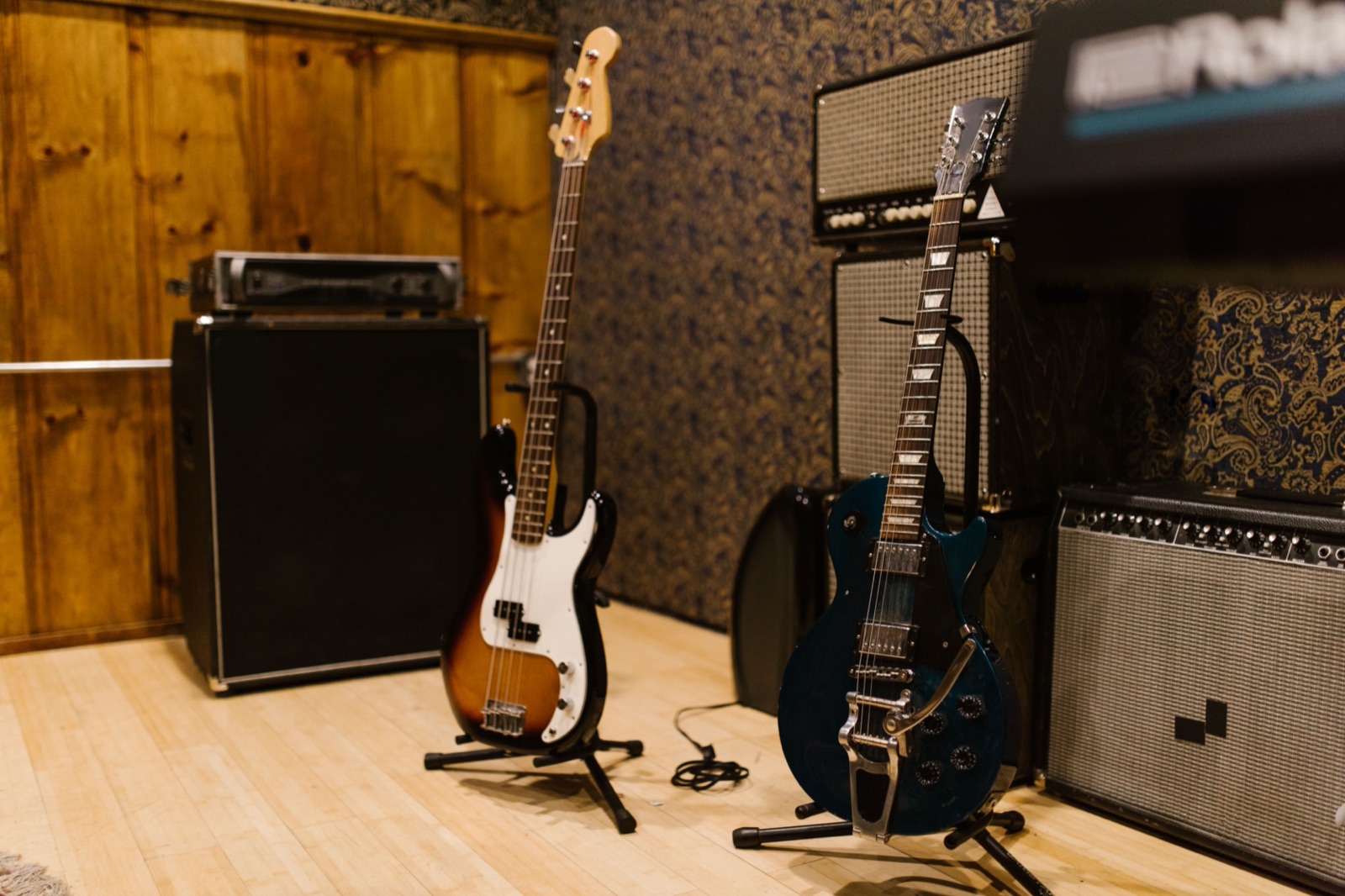
A bass guitar stand keeps the instrument out of its case and within reach, which is the simplest way to practice more. It also has to hold a longer, heavier instrument than most guitars without tipping, and without marking the finish. This guide covers the types of stand and wall hanger, how to check one fits a bass, the finish question, and where each type makes sense.
What a bass guitar stand has to do
A bass is long: most full-size basses have a 34-inch scale, and the headstock sits far from the body. That puts a lot of leverage on a stand, so a bass needs a stand that is stable, holds the body securely at the bottom, and ideally supports the neck so the bass can't slide sideways. The padding has to protect the finish, and the whole thing has to be easy to use, or the bass goes back in the case and stays there.
Types of bass guitar stand
A-frame stands
Two legs fold out into an A shape, the body sits in a padded cradle at the bottom, and the back of the bass leans against a padded rest. A-frames are light, fold flat for the gig bag, and set up in seconds. Gravity's SOLO-G Electric, for example, is made for electric guitars and bass guitars, folds flat, weighs 1.3 kg and uses a soft rubber backrest with TPU padding on the support arm.
The weak point is the neck: nothing holds it, so a knock can tip the bass out sideways. Place an A-frame where nobody walks past.
Tripod stands with neck support
A tripod base carries a tall upright with a yoke at the top that holds the neck just below the headstock. The bass is held at two points, which is more secure for a long, heavy instrument. Some yokes close around the neck automatically: Gravity's GS 01 NHB, listed for guitar or bass, has a "Neck Hug" fork that holds the neck and releases it when the instrument is lifted off. It adjusts in height from 680 to 1,080 mm, folds up and weighs 1.64 kg.

Multi stands and racks
Racks hold several instruments side by side, each with its own neck support. Gravity's VARI-G range, for instance, holds three, five, seven or nine guitars or basses; on the three-instrument model the neck yokes are rubber-padded and detachable, and the rails under the bodies are covered in foam. Check the spacing between slots: bass bodies can be larger than guitar bodies, and two basses side by side need room so they don't touch.
Wall hangers and wall mounts
A hanger screws to the wall and holds the bass by the headstock, off the floor and out of the way. It is the most space-saving option and keeps the instrument away from feet, pets and children. Gravity's GS 01 WMB, listed for acoustic and electric basses as well as guitars, has locking wings that close around the neck when the bass is hung and open when it is lifted.
Fixing a wall hanger safely
- Find a stud, or use anchors rated for the weight in masonry; a single screw into drywall is not enough for a bass.
- Mount it high enough that the bottom of the body clears the floor and anything below, with room around it to lift the bass off.
- Hang the bass with its weight centered in the yoke, and check that the yoke closes or cradles the neck fully.
- Keep it off outside walls and away from radiators, heating vents and direct sun.
Bass guitar holders for travel and the stage
Small folding holders that clip to a mic stand or sit on a table hold a bass between songs. They are convenient on a crowded stage but less stable than a floor stand; use one only for short breaks.
Bass stand types compared
| Type | Holds the neck | Footprint | Folds for gigs | Best for |
|---|---|---|---|---|
| A-frame | No | Small | Yes, flat | Gigs, rehearsals, quick breaks |
| Tripod with neck support | Yes | Medium | Yes, usually | Heavy or valuable basses at home |
| Multi stand or rack | Yes, per slot | Large | Some | Several instruments in one room |
| Wall hanger | Yes, by the headstock | None on the floor | No | Small rooms, display, safety from knocks |
| Clip-on or table holder | Partly | Tiny | Yes | Short breaks on stage |
What to look for in a bass stand
Listed for bass
Many stands are sold for "guitar" but are listed by the maker for electric guitar and bass. Check that the product page names bass guitars.
Neck width and five-string basses
A five- or six-string bass has a wider neck. If the stand or hanger has a yoke, check its range against the width of your neck at the nut and just below the headstock; see the five-string bass guide for how much wider those necks are.
Stability and weight
A heavier base and wider footprint keep a long bass upright. Light stands are easy to carry but tip more easily.
Padding and your finish
Most stands touch the instrument with foam, rubber or a similar padding. Gibson warns that chemicals in the rubber used on many stands can react with nitrocellulose lacquer, from slight discoloration of the finish to "eating away" the lacquer topcoat, and that this damage is not covered by its warranty. Several Gravity stands, including the SOLO-G Electric, the GS 01 NHB and the VARI-G 3, are labeled "not suitable for long-term use with guitars that have a nitro lacquer finish".
Many basses are finished in polyurethane or polyester, but some vintage, reissue and high-end models use nitrocellulose lacquer. If yours does, or you're not sure, check the maker's specifications, put a soft cotton cloth between the bass and every padded contact point, and keep the bass in its case when you aren't playing it. Gibson's own advice is that stands are for temporary storage and the case is the safest place.
Bass guitar amp stands
An amp stand lifts a combo off the floor and often tilts it back. A small practice combo on the floor fires its sound at your knees; raised and tilted, it points at your ears, so you hear the bass clearly at a lower volume. Check that the stand is rated for the weight of the amp and wide enough for its cabinet. If you are still choosing the amp, see our practice bass amps guide.
Which stand suits whom
- Beginners practicing at home: a tripod with a neck support, or a wall hanger next to where you play.
- Gigging bassists: a folding A-frame in the gig bag, or a folding tripod for a heavier bass.
- Several instruments: a multi stand with enough space per slot for bass bodies.
- Small rooms, pets or children: a locking wall hanger fixed into a stud.
- Vintage or nitro-finished basses: the case for storage; a stand only while you are playing, with a cotton cloth over the padding.
Looking after the stand and the bass
Check the padding from time to time; replace it if it cracks, goes sticky or leaves marks. Tighten the stand's wing nuts and folding joints before you lean a bass on it. Keep stands away from heaters and windows: a bass left in direct sun or next to a radiator can suffer, whatever it stands on. When the bass will not be played for a while, or when you travel, put it in its case or bag; see bass cases and gig bags. And tuck the strap out of the way before you stand the bass up, so nobody catches a foot in it and pulls the bass down; our bass strap guide covers straps and strap locks.
Questions
Can I use a guitar stand for a bass?
Usually, yes. Many stands are made for electric guitars and basses alike; check that the maker lists bass, that the neck yoke fits your neck width, and that the stand is stable with a longer, heavier instrument.
Is it safe to hang a bass on the wall?
Yes, with a hanger rated for bass and fixed into a stud or solid masonry with the right anchors, not just drywall. A locking yoke that closes around the neck stops the bass being knocked off.
Can a guitar stand damage a nitrocellulose finish?
It can. Gibson warns that chemicals in the rubber used on many stands can react with nitrocellulose lacquer, from slight discoloration to eating into the finish, and some stand makers say their stands are not for long-term use with nitro finishes.
What is the best bass guitar stand?
The one that suits where the bass lives: a folding A-frame for gigs, a tripod with a neck support for a heavy bass at home, a multi stand for several instruments, or a wall hanger where floor space is short.
Do I need a stand for my bass amp?
Not always. A tilt-back or raised amp stand lifts a small combo off the floor and points it at your ears, which helps you hear yourself at a lower volume.
Sources
Read next
Buying guide
Bass guitar case or gig bag: how to choose and how to measure
From a padded bag on your back to a lockable flight case: the types, what each protects against, and how to make sure your bass actually fits.
Buying guide
Bass strap guide: width, padding, materials and strap locks
A bass is heavier than most guitars and hangs off one shoulder for hours: what makes a strap comfortable, what keeps it on, and how to set it up.
Buying guide in Amps & effects
Bass practice amp: small combos, headphone amps and how much power home playing needs
A small combo, a headphone amp or a modeling amp: what each does at home, how much power quiet practice needs, and the jacks that matter.